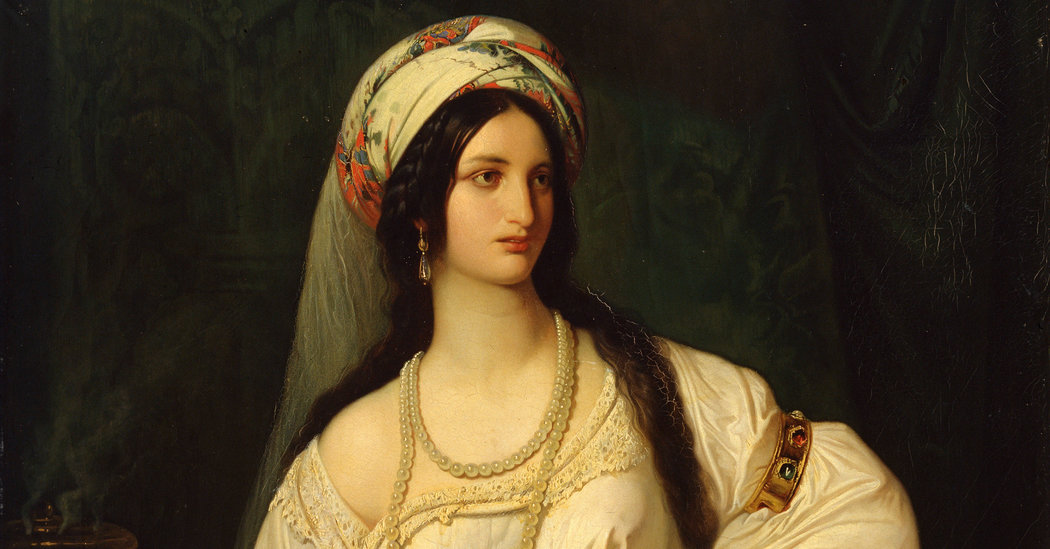
That it was Rabbi Soloveitchik who understood this isn’t a coincidence. As a young man in the 1920s, he had traveled from Eastern Europe to study philosophy in the University of Berlin. The city was then a center of Jewish intellectual and cultural achievement; Rabbi Soloveitchik would have met coreligionists who saw themselves as both German and Jewish, who had served the kaiser in the First World War and were patriotically committed to their country’s future. They would have spoken of the Enlightenment, and progress, and religious acceptance in their society. Then that very same society embraced a Haman-figure, and the lives Jews knew in Europe disappeared forever. Small wonder, then, that a rabbi who escaped this inferno would recognize the frightening implications of Jewish vulnerability inherent in Esther’s tale.
Why, then, is Purim marked as a holiday? If the conclusion of Esther is more nerve-racking than is often thought, what is the source of our joy? The answer, in part, is that it is this very vulnerability that makes Jewish heroism possible, and that is why, on Purim, we focus on the woman that gave this biblical book her name: it is Esther whom we celebrate. Precisely because of the constancy of Jewish vulnerability, we glorify Esther’s initiative, courage, and wisdom to inculcate these same virtues in our posterity.
Here we must understand how different the Book of Esther is from every other book in the Hebrew Bible. In this tale no mention is made of the divine; the Jews inhabit a world devoid of revelation. Whereas in every other scriptural tale political engagements are under prophetic instruction, in the Persian court God gives no guidance to the Jews facing a terrible danger. Esther, Rabbi Soloveitchik wrote, faced an unprecedented question: “How can the Jew triumph over his adversaries and enemies if God has stopped speaking to him, if the cryptic messages he receives remain unintelligible and incomprehensible?”
In this sense, Esther is the first biblical figure, male or female, to engage in statesmanship. Previous heroes — Moses and Elijah, Samuel and Deborah — are prophets who are guided and guarded by the Divine, but Esther operates on instinct, reflecting a mastery of realpolitik. As Isaiah Berlin wrote in his essay “On Political Judgment,” great leaders practice affairs of state not as a science but an art; they are, more akin to orchestra conductors than chemists. Facing a crisis, they “grasp the unique combination of characteristics that constitute this particular situation — this and no other.” Esther is the first scriptural figure to embody this description, emerging as a woman for all seasons, a hero celebrated year after year.
Purim thus marks the fragility of Jewish security, but also the possibility of heroism in the face of this vulnerability. It is therefore a holiday for our time. Around the world, and especially in a Europe that should know better, anti-Semitism has made itself manifest once again. As Esther’s example is celebrated, and Jews gather in synagogue to study her terrifying tale, we are reminded why, in the face of hate, we remain vigilant — and why we continue to joyously celebrate all the same.
Meir Soloveichik, the rabbi of Congregation Shearith Israel in New York, is the director of the Zahava and Moshael Straus Center for Torah and Western Thought at Yeshiva University.
The Times is committed to publishing a diversity of letters to the editor. We’d like to hear what you think about this or any of our articles. Here are some tips. And here’s our email: [email protected].
Follow The New York Times Opinion section on Facebook, Twitter (@NYTopinion) and Instagram.
Related reporting
More World News →
Paul Biya’s Re-Election: What Cameroon’s Political Longevity Reveals About Leadership and Governance in Africa

From Power to Prison: The Fall of France’s Former President Nicolas Sarkozy

The War in Ukraine: A Comprehensive Analysis of the Conflict
