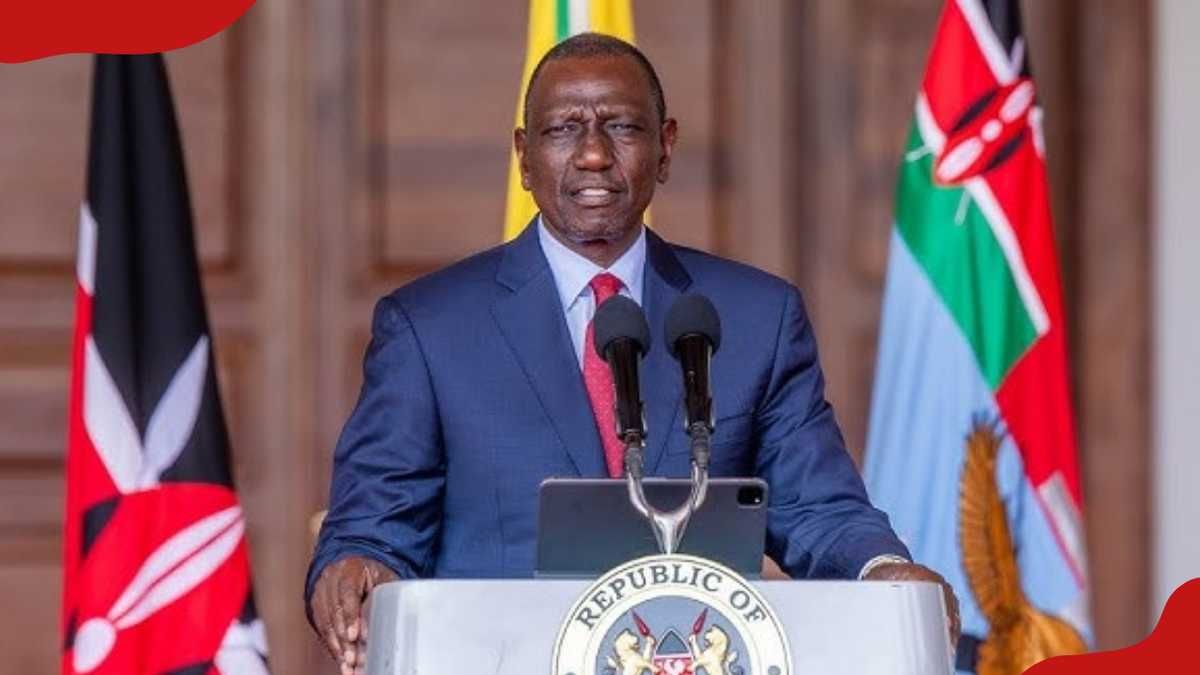
President William Ruto announced that politicians are prohibited from serving as directors of profit-making government enterprises, saying the move is intended to avoid conflicts of interest that could compromise commercial decisions.
The declaration was made on Friday, October 9, during the Agriculture and Food Security Summit at Jamhuri Park in Nairobi, where the president said the government had overhauled its approach to managing state-owned companies and introduced new regulations for such enterprises.
Ruto argued that a politician who loses an election could be pressured by voters to act in electoral rather than business interests, noting that “when a politician takes such a position, a voter might approach them and say, ‘Do this for me, and I will vote for you next time,’ thereby introducing extraneous issues into the mix.”
He illustrated the problem by saying, “Someone loses an MCA race and ends up becoming a director somewhere. That is precisely where the problem lies. That is why we have changed the approach to government companies and introduced regulations for government-owned enterprises.”
The president stressed that the restriction is a governance measure, not a judgment on politicians’ professionalism, adding, “We have stipulated that politicians cannot serve as directors for profit-making government enterprises. It is not that there is anything wrong with politicians, they are good people and professionals, but conflicting interests get in the way.”
Ruto did not disclose the date the regulations take effect, the specific enterprises covered, or the mechanisms for monitoring compliance.
Opposition voices highlighted a perceived inconsistency in the president’s record. National Assembly minority leader Junet Mohamed of Suna East raised the issue while debating the nomination of former Health Cabinet Secretary Susan Nakhumicha as Kenya’s permanent representative to UN-Habitat, arguing that sacked civil servants and failed politicians should be barred from roles intended for trained professionals.
The criticism echoed a January 2025 controversy in which the Institution of Engineers of Kenya called for the removal of Aisha Jumwa as chairperson of the Kenya Roads Board, contending that her appointment did not meet the requirements of the Kenya Roads Board Act and that she lacked the necessary engineering background.
Critics also noted that Ruto has previously faced scrutiny for appointing political allies and dismissed officials to public positions, suggesting a tension between the new policy and past practices.
The reforms form part of a broader effort to separate political leadership from the management of state corporations whose primary objective is to generate profits, with a greater emphasis on commercial performance and professional decision-making.
Related reporting
More Politics →
Senator Tabitha Karanja Leaves UDA to Run for Nakuru Governor on DCP Ticket
High Court Dismisses MP Gikaria Challenge, Upholds KSh2.5 Million IEBC Fine
Senator Okiya Omtatah Flags AFCON 2027 Election Overlap and Road Project Delays