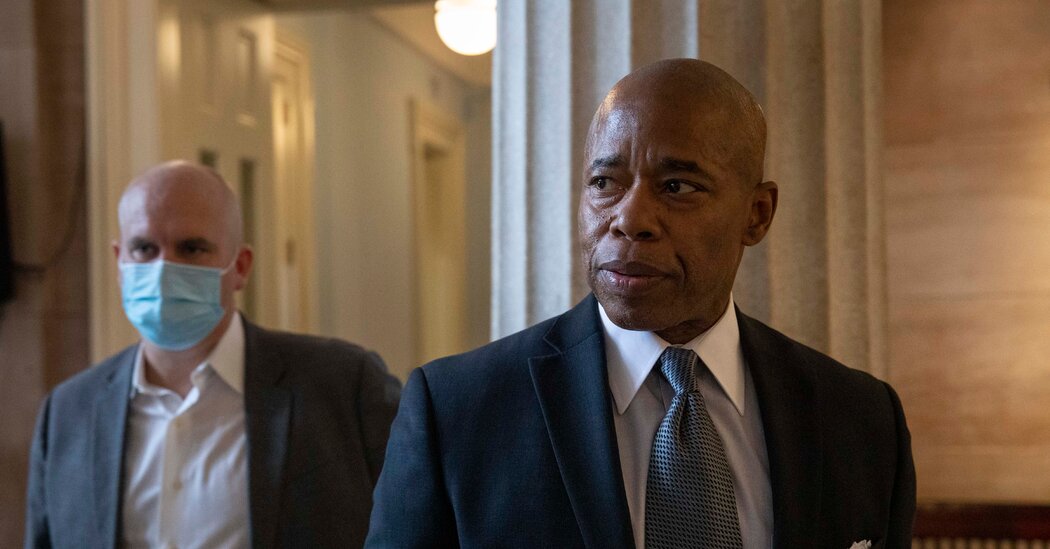
It was billed as an inauguration ritual steeped in symbolism: Eric Adams, the second Black man to be elected mayor of New York, would be sworn in at Kings Theater, a lavishly restored cultural icon in Brooklyn, whose residents, he said, chose “one of their own” to lead the city’s recovery.
But the event will now serve as a less welcome symbol, reflecting the rising concerns about the rampant spread of the Omicron variant.
Mr. Adams, who takes office on Jan. 1, canceled the ceremony on Tuesday, one of several developments that underscored how the latest wave of coronavirus cases has thrown New York City’s recovery into doubt and shifted priorities as the year ends.
The number of reported cases in the city has surged in recent days to more than 15,000 on Monday, the highest level since at least January and about four times the number of cases recorded just one week earlier.
Covid-19 hospitalizations in the city have been rising over the past month but are still at less than half the level of last winter’s peak, reaching about 270 new admissions a day on Monday, according to New York State figures.
Northwell Health officials say that their 53 urgent care facilities in the New York City area are seeing unprecedented volume. About 4,000 to 5,000 patients are coming into those facilities daily, up from 2,000 normally, and most are seeking testing, said John D’Angelo, Northwell Health’s chief of integrated operations. Positivity rates of those tests have gone from 7 percent a week ago to 14 percent now.
“I would expect that if that is going to translate to a steeper trajectory on the inpatient side, we should be seeing that in the next week or so,” Mr. D’Angelo said. “So we’ll see.”
The Omicron variant made up 37 percent of cases in New York State over the last two weeks, according to state data, and 92 percent of new cases in a larger area that includes New York and New Jersey, according to a Centers for Disease Control and Prevention estimate released Monday. Now Mayor Bill de Blasio and his successor, Mr. Adams, face painful decisions about how to handle the next stage of the pandemic.
Will schools fully reopen in January? Will a New Year’s Eve party in Times Square be canceled? How can the city avoid another broad shutdown or a shortage of hospital beds?
Already, Broadway shows have canceled performances, a handful of schools and some classrooms have closed, sporting events have been postponed and holiday travel plans have been abandoned. Some elected officials are calling for setting up a mass testing site at Javits Center in Manhattan, which served as a temporary hospital during the height of the pandemic.
Mr. de Blasio, who is considering a run for governor next year, reiterated on Tuesday that he did not want to shut down the city. He said he would make a decision about the New Year’s Eve celebration soon and noted that it would take place outdoors and vaccination would be required for attendees.
“We need to all work together now to get through these weeks to come out the other side and continue our recovery, but no shutdowns, because that would devastate the lives of so many New Yorkers,” Mr. de Blasio said.
With hourslong lines now common outside testing sites, Mr. de Blasio said city officials were working to expand testing to 112 locations and were expected to get help from the Biden administration. The city has been testing more people than ever before, reaching nearly 130,000 P.C.R. tests one day last week.
In a sign of how severely the local testing infrastructure is being strained, the privately owned CityMD chain of urgent-care clinics said in a message posted on its website late Tuesday that it was temporarily closing 19 of its 150 locations in New York and New Jersey starting Wednesday “to preserve our ability to staff our sites.”
Thirteen of the affected clinics are in New York City, three are in New Jersey, two are on Long Island and one is in Westchester County.
“It is our hope that closing sites now will best allow us to avoid future closures as this surge continues,” the company said in its message.Press representatives for CityMD did not immediately respond to requests for additional information, including how long the closings might last.
UpdatedDec. 21, 2021, 8:38 p.m. ET
The mayor also announced on Tuesday a new $100 incentive for New Yorkers who receive a booster shot — an urgent effort to blunt the worst impact of the surge in cases.
Mr. de Blasio said he was prepared to “spend whatever it takes” to make boosters a priority. More than 82 percent of adults in New York City are fully vaccinated, but only about a quarter of adult New Yorkers have received a booster shot, city officials said.
At a separate news conference, Mr. Adams, the mayor-elect, said that it was best to postpone his inauguration because he did not want to put people in a dangerous environment indoors. He had chosen the location in Flatbush, a working-class neighborhood in Brooklyn, as a tribute to his roots as the son of a house cleaner.
“I don’t need an inauguration — all I need is a mattress and a floor to execute being the mayor of the City of New York,” said Mr. Adams, who famously slept in his office during the height of the pandemic as Brooklyn borough president. It was not clear whether he would be sworn in at a private event.
Mr. de Blasio and Mr. Adams are both Democrats and political allies, and Mr. Adams has said he agrees with Mr. de Blasio’s approach to the pandemic, including setting vaccine mandates for city workers and indoor dining. The current and future mayors appeared at a news conference together on Sunday to show a united front.
Mr. Adams has made a flurry of appointments in recent days, but he has not said whom he would name as health commissioner — a key role in leading the city’s pandemic strategy.
Mr. Adams is planning to keep Dr. Dave Chokshi, whom Mr. de Blasio named to the post in August 2020, as health commissioner for several months to keep continuity in the city’s Covid response, according to someone who is familiar with the mayor-elect’s plans.
Dr. Ashwin Vasan, the president of Fountain House, a mental health and public health charity, will take over as health commissioner in the spring, Politico reported late Tuesday.
The Coronavirus Pandemic: Key Things to Know
Mr. Adams was elected in November when cases were much lower in the city. Even when he won the Democratic primary over the summer, the conversation around the pandemic centered on the city’s ability to recover from it.
But the Omicron-fueled surge will confront Mr. Adams with an immediate and vexing challenge when he takes office.
One major question he will face is how to handle the reopening of schools in January. Teachers and school staff are required to be vaccinated, and Mr. de Blasio has said he is considering requiring a booster shot as well. But Mr. de Blasio has been adamant that he does not want to set a vaccine mandate for students, as Los Angeles has, because it could prompt some parents to keep their children at home.
Brad Lander, who will take office as city comptroller on Jan. 1, has urged Mr. Adams and Mr. de Blasio to create a plan for all students and staff — which would mean close to a million students, 75,000 teachers and thousands of other staff members — to be tested during the weekend before school resumes.
Mr. Lander, Mr. Adams and Jumaane Williams, the city’s public advocate who recently tested positive for the virus, issued a joint statement on Tuesday announcing that they were postponing the inauguration ceremony and urging New Yorkers to get boosted.
“We encourage all New Yorkers to get vaccinated, get boosted and get tested,” the statement said. “That is our pathway out of this pandemic, and we will come out of it together.”
(Representative Nicole Malliotakis, a Republican who represents Staten Island and part of Brooklyn, disclosed on Tuesday that she has also tested positive; she said she had been vaccinated and was experiencing mild symptoms.)
With many New Yorkers’ holiday plans at risk and with cases surging, the time it takes to get test results has also increased at some locations. Letitia James, the New York state attorney general, issued a warning letter to LabQ Diagnostics, a Brooklyn-based laboratory with dozens of mobile locations across New York City, about falsely advertising that results are available within 48 hours.
A new vaccine mandate for all private employers in New York City takes effect on Dec. 27. But some businesses have already closed because of outbreaks or asked employees to work remotely. Citigroup gave its New York and New Jersey staff the option to work remotely, and CNN closed its U.S. offices to all employees who are able to work remotely.
On Broadway, a half-dozen or so shows were suspended because of virus concerns; on Monday, the rock musical “Jagged Little Pill” became the first major show to permanently close, in part, because of the resurgent pandemic.
Andrew Rigie, the executive director of the New York City Hospitality Alliance, said that the spike in cases was another “gut punch” for restaurants and bars. He said that his organization had heard from dozens that had closed for a few days or were considering it.
“It’s a struggle — these restaurants have been devastated over the past almost two years,” he said. “They were hoping for a busy holiday season to pay off debt and move forward.”
Restaurants and bars in New York City employed nearly 325,000 people before April 2020, which then plummeted to fewer than 90,000, according to data from the Federal Reserve Bank of St. Louis. The industry now employs about 225,000 people.
Kathryn Wylde, head of the Partnership for New York City, a business group, said that most big companies had canceled in-person events for the rest of the year and postponed mandatory return-to-office policies. She said she was increasingly hearing April as a probable date for asking workers to return to offices.
“As this lingers,” she said, “it makes a return to what was prepandemic normal even more difficult.”
Reporting was contributed by Jeffery C. Mays, Sharon Otterman, Ed Shanahan, Eliza Shapiro and Karen Zraick.
Related reporting
More World News →
South Sudan’s Oil Looters: How Young Elite Gatekeepers Plunder Nation While Citizens Starve

General to Private: Kiir Crushes Economic Vice President in South Sudan's $1.7 Billion Corruption Purge
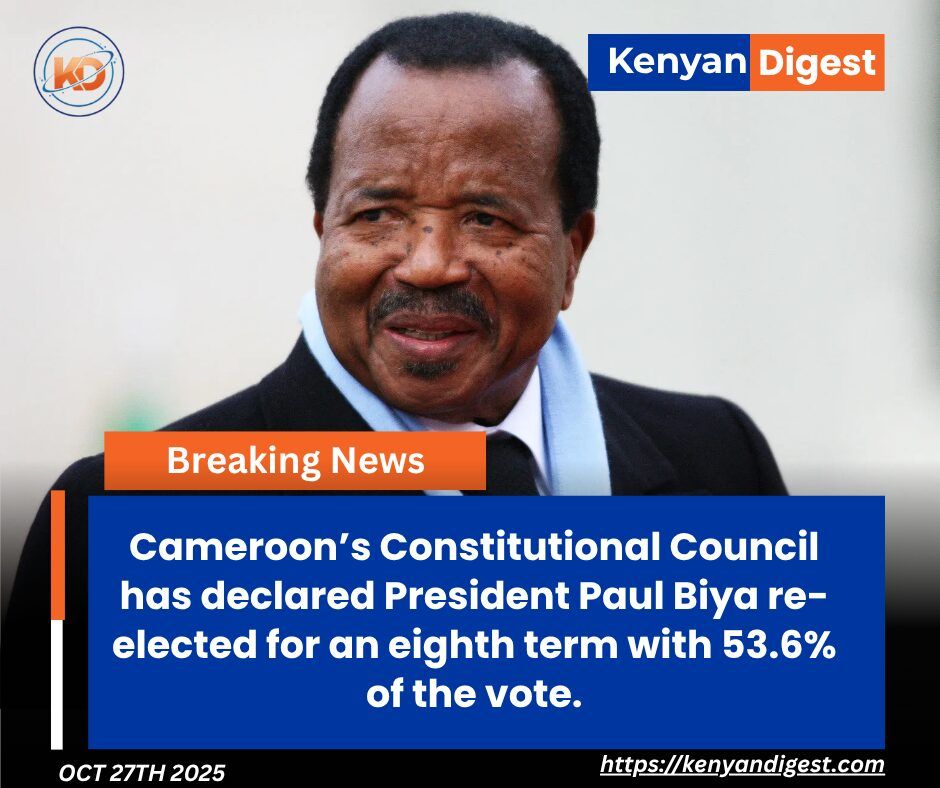
Paul Biya’s Re-Election: What Cameroon’s Political Longevity Reveals About Leadership and Governance in Africa