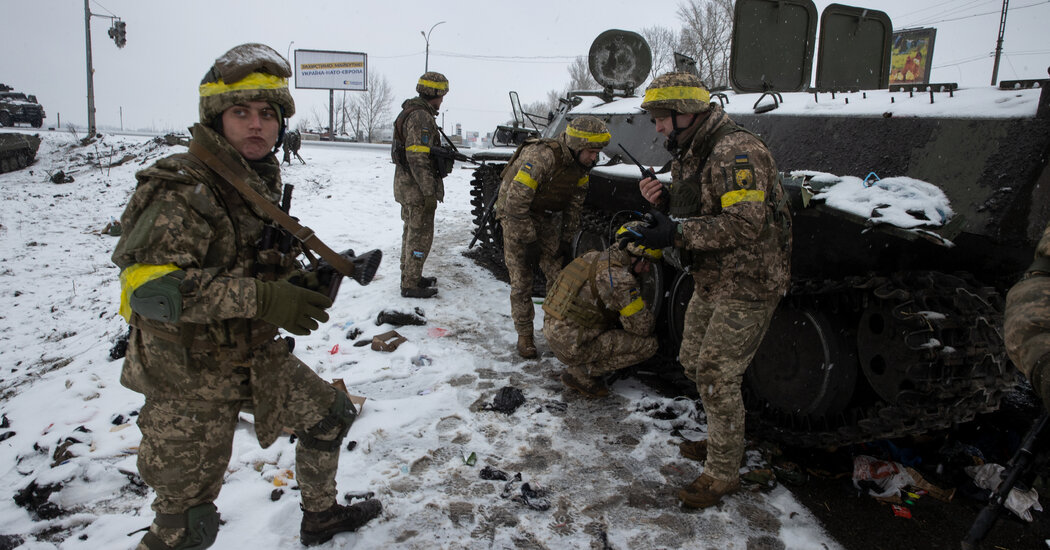
For her 13-year-old grandson, Danil, the main worry now is the potential for World War III.
“If things will become totally inflamed, then Europe will join in, and if they start launching nuclear weapons then that’s it,” he said.
Understand Russia’s Attack on Ukraine
Card 1 of 7
What is at the root of this invasion? Russia considers Ukraine within its natural sphere of influence, and it has grown unnerved at Ukraine’s closeness with the West and the prospect that the country might join NATO or the European Union. While Ukraine is part of neither, it receives financial and military aid from the United States and Europe.
Are these tensions just starting now? Antagonism between the two nations has been simmering since 2014, when the Russian military crossed into Ukrainian territory, after an uprising in Ukraine replaced their Russia-friendly president with a pro-Western government. Then, Russia annexed Crimea and inspired a separatist movement in the east. A cease-fire was negotiated in 2015, but fighting has continued.
How has Ukraine responded? On Feb. 23, Ukraine declared a 30-day state of emergency as cyberattacks knocked out government institutions. Following the beginning of the attacks, Volodymyr Zelensky, Ukraine’s president, declared martial law. The foreign minister called the attacks “a full-scale invasion” and called on the world to “stop Putin.”
Up on the surface, most of the stores and restaurants were closed and few people walked the streets. One of the few exceptions was Tomi Piippo, a 26-year-old from the Finnish city of Iisalmi, who said he came to Kharkiv on holiday on Monday and now couldn’t get out.
“I don’t know how to leave. No planes,” he said.
While Russian officials have said their military was endeavoring to avoid civilian areas, the body of a Smerch rocket, which Ukrainian officials said was fired by Russian forces, was stuck vertically in the middle of the street outside the headquarters of the National Guard. A few kilometers away, the rocket’s tail section had buried itself in the asphalt across from an onion-domed Orthodox church.
A team of emergency services officers, dressed in flack jackets and helmets, was attempting to extract the tail from the pavement, but having difficulties. A member of the team said that the tail and the body were different stages of the rocket, likely jettisoned as the explosive ordnance hurtled toward its target near the front lines.
“This is 200 kilos of metal,” the emergency officer said, pointing to the rocket’s tail. “It could have fallen through a building or hit people.”
Even as the artillery barrages intensified, not everyone was ready to hide. Walking with intention toward the source of the artillery booms on the outskirts of Kharkiv was Roman Balakelyev, dressed in camouflage, a double-barreled shotgun slung over his shoulder.
“I live here, this is my home. I’m going to defend it,” said Mr. Balakelyev, who also pulled out a large knife he had strapped to his back as if to show it off. “I don’t think the Russians understand me like I understand them.”
Related reporting
More World News →
South Sudan’s Oil Looters: How Young Elite Gatekeepers Plunder Nation While Citizens Starve
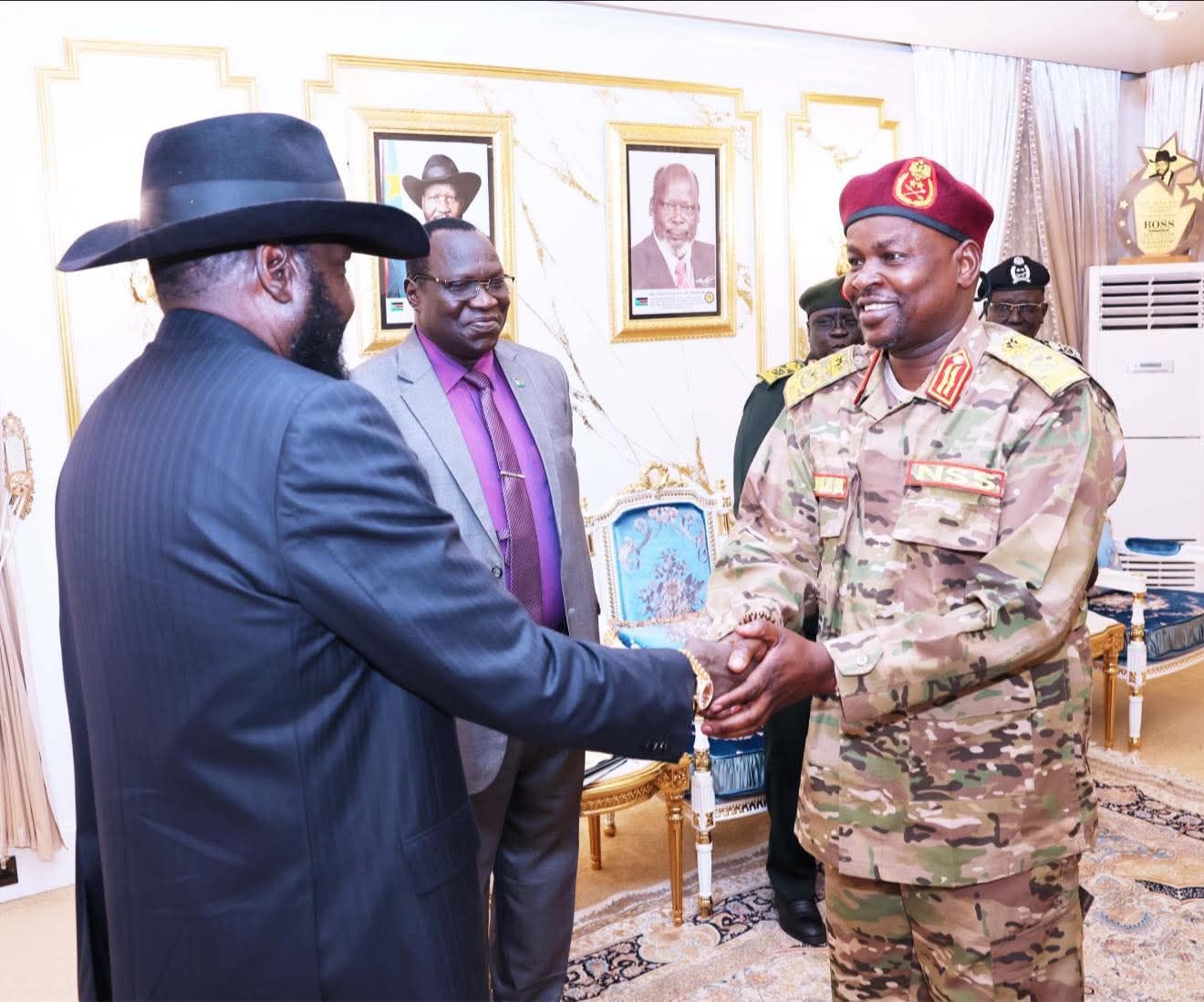
General to Private: Kiir Crushes Economic Vice President in South Sudan's $1.7 Billion Corruption Purge
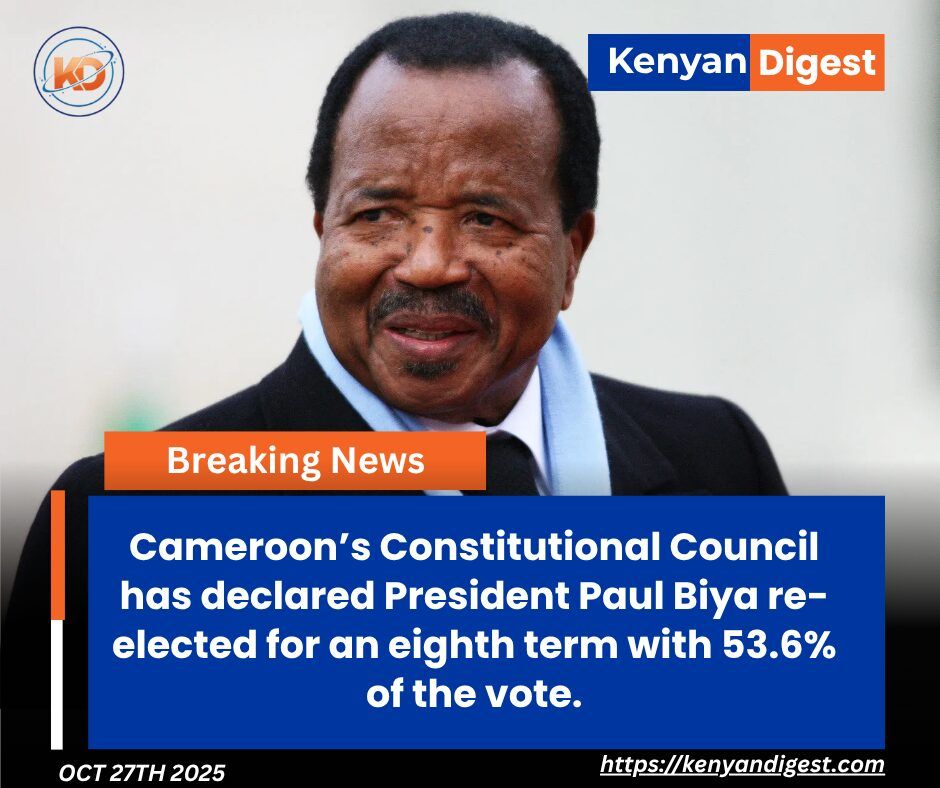
Paul Biya’s Re-Election: What Cameroon’s Political Longevity Reveals About Leadership and Governance in Africa