Such an effort would start with responding to the concerns Mr. Manchin has long expressed, including dropping some spending efforts in order to focus on a smaller list of programs that would last a full decade and be paid for largely by raising taxes on high earners and large corporations.
UpdatedDec. 17, 2021, 5:39 p.m. ET
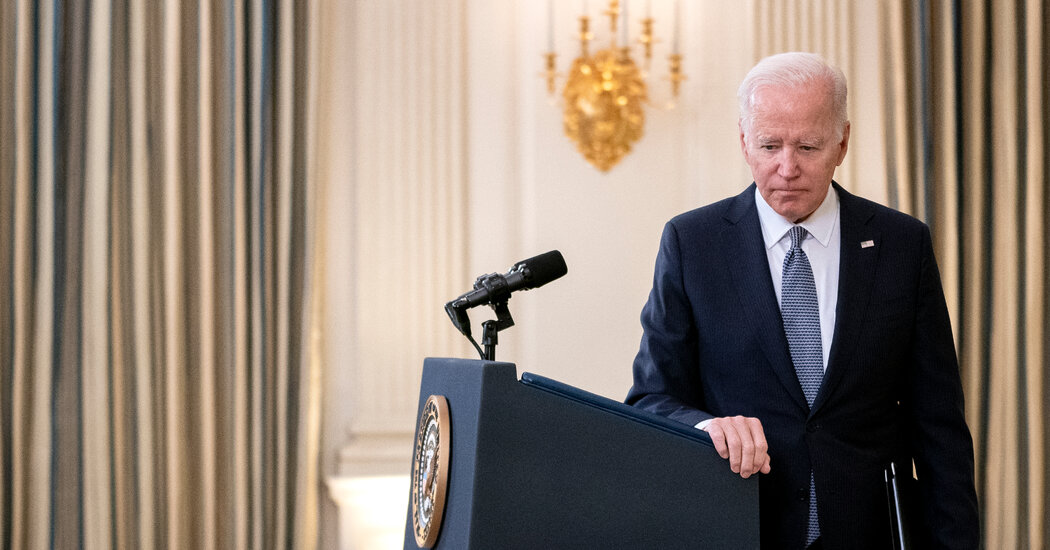
That would force the White House to make difficult choices about which party priorities to leave on the cutting room floor — a decision that would undoubtedly anger progressive Democratic lawmakers and many of those who voted for Mr. Biden, who ran on much of the agenda contained in what is commonly called the Build Back Better bill.
Mr. Biden began the year with a $4 trillion agenda to overhaul the government’s role in the economy, fight climate change and invest in America’s children. He sliced off some of it for a bipartisan infrastructure bill he signed into law this fall, and has whittled down the rest in negotiations with moderates and progressives in his party, which controls the House and Senate by exceedingly narrow margins.
This fall the president believed he had found the sweet spot. Shortly before traveling to meet with world leaders in Rome and attend a global climate summit in Scotland, he announced a framework that he said would be able to get House majority support and 50 votes, the bare minimum to pass using a parliamentary process called budget reconciliation, in the Senate.
As they scaled back the bill, Democratic leaders had essentially two choices. They could focus on a few programs, like tax credits for climate change, an expanded benefit for parents that is meant to fight child poverty and making pre-K free for 3- and 4-year-olds across the country. Or they could pack as many programs as possible into the bill, setting some of them to expire after as little as a year in order to avoid ballooning the budget deficit, and hope that lawmakers would extend them in the future.
Leaders chose the “pack-it-in” strategy, in part because so many interest groups in their coalition, like environmentalists, early childhood advocates and labor unions, had competing priorities for the legislation. Budget hawks like the Committee for a Responsible Federal Budget and centrist Democratic groups like the Progressive Policy Institute urged a more targeted approach: fewer programs, but made permanent.
Mr. Manchin, who is perhaps the most prominent deficit hawk left in the Democratic Party, worried that temporary spending would become permanent without offsets, adding to the debt. Republicans stoked his fears by asking the Congressional Budget Office to analyze an imaginary Build Back Better bill in which every program was permanent — and, not surprisingly, it showed ballooning deficits as a result.
Related reporting
More World News →
Paul Biya’s Re-Election: What Cameroon’s Political Longevity Reveals About Leadership and Governance in Africa

From Power to Prison: The Fall of France’s Former President Nicolas Sarkozy

The War in Ukraine: A Comprehensive Analysis of the Conflict
