
After many months of back and forth, the fate of the conservatorship that has overseen Britney Spears and her fortune since 2008 rests solely in the hands of a probate judge in Los Angeles Superior Court, where a hearing that begins at 4:30 p.m. Eastern may mark the end — or at least the beginning of the end — in a 13-year saga.
Both Ms. Spears, and, in a complete turnaround, her father, James P. Spears — who has long been the official steward of the legal arrangement — have said they want the conservatorship terminated.
“The time has come for Ms. Spears’s freedom,” the singer’s lawyer, Mathew S. Rosengart, wrote in a court filing late last month. Lawyers for Mr. Spears, who is known as Jamie, put it this way in their own status report this month: “Jamie believes that the Conservatorship should end, immediately.” Jodi Montgomery, the singer’s personal conservator, has also consented, according to court filings, and has worked with Mr. Rosengart on what he called a “termination plan.”
But it’s not quite as simple as the apparent consensus on both sides.
Typically in deciding whether to end a conservatorship, a judge will consider whether the conservatee has regained “capacity” — a term that generally refers to benchmarks in a person’s functional and cognitive ability as well as their vulnerability to harm or coercion.
But Ms. Spears’s case has been considered extremely unusual because she continued to work extensively as a performing musician and global celebrity, bringing in millions of dollars, while simultaneously being considered unable to care for herself by the court.
Since June, the singer has been adamant that the arrangement end without her having to undergo additional mental evaluations, and there is no public record of Judge Brenda Penny, who is overseeing the case, having recently called for one.
In a since-deleted Instagram caption, Ms. Spears seemed to allude to the possibility that the judge would concur. “This week is gonna be very interesting for me,” she wrote, using emojis for emphasis. “I haven’t prayed for something more in my life.”
When Britney Spears broke her public silence in June and asked to be released from the court-imposed oversight that has controlled her money and personal life for 13 years, she told the judge: “I want to end the conservatorship without having to be evaluated.”
But legal experts have said that judges typically rely on psychological assessments and other factors when considering whether to restore independence to someone under a conservatorship. As they consider whether a conservatee has regained “capacity,” they will generally try to assess cognitive ability and decision making, and the ability to weigh the risks and benefits of things like medical care, marriage and contracts.
In most cases, a forensic psychiatrist or a psychologist with expertise in neuropsychological assessments performs evaluations, which can extend over several days. A judge doesn’t have to accept an evaluator’s findings, but they usually do.
Ms. Spears continued to work extensively as a performing musician and global celebrity while under her conservatorship, earning millions of dollars. But experts say that professional and financial successes do not directly speak to whether someone has regained “legal mental capacity.”
Since June, Ms. Spears has been adamant that she wants the arrangement ended without having to undergo additional mental evaluations. “I don’t think I owe anyone to be evaluated,” she told the court in June. “I’ve done more than enough.”
There is no public record of the judge in the case, Brenda Penny, having recently called for one. (According to confidential documents obtained by The New York Times, a court investigator said in 2016 that the conservatorship remained in Ms. Spears’s best interest despite her ongoing requests to end it, but called for a path to independence.)
Ms. Spears’s lawyer, Mathew S. Rosengart, noted that in a recent filing, lawyers for Ms. Spears’s father, James P. Spears, had stated “no less than three times that no mental or psychological evaluation is required under the Probate Code,” to which Mr. Rosengart added: “Ms. Spears fervently agrees.”
Related reporting
More World News →
South Sudan’s Oil Looters: How Young Elite Gatekeepers Plunder Nation While Citizens Starve

General to Private: Kiir Crushes Economic Vice President in South Sudan's $1.7 Billion Corruption Purge
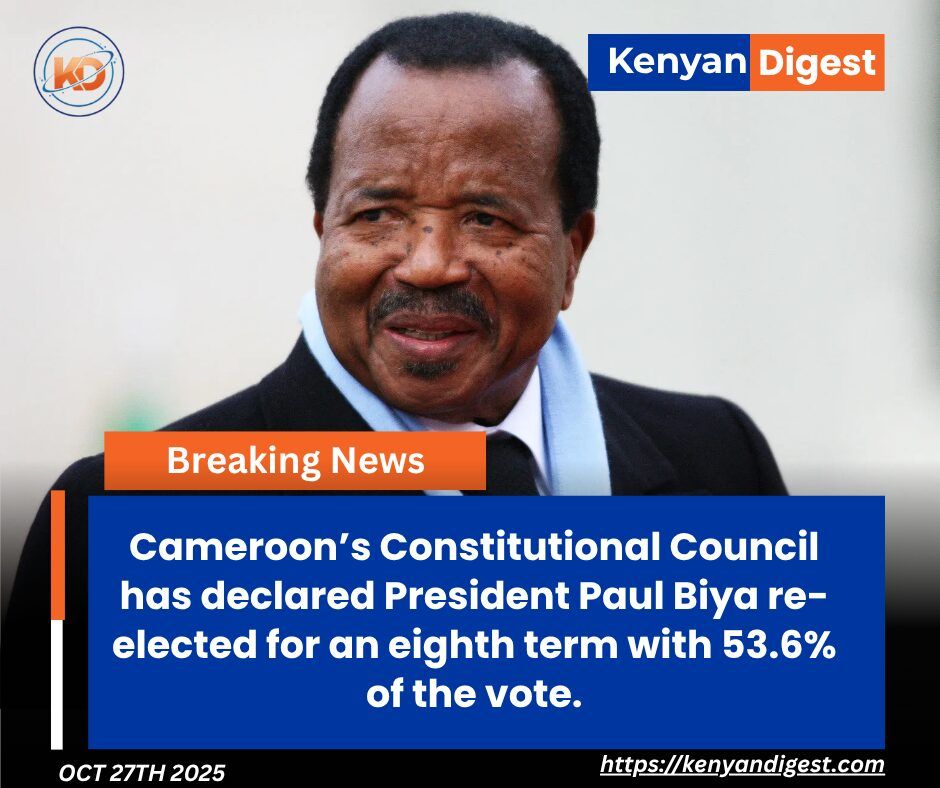
Paul Biya’s Re-Election: What Cameroon’s Political Longevity Reveals About Leadership and Governance in Africa