When Karen Benavidez’s 3-year-old daughter developed scabs on her face two months into the coronavirus quarantine she didn’t think much of it, until a neighbor told her that the scabs looked like impetigo, a bacterial skin infection.
“I was expecting to have a healthier than normal spring since we were all at home and being so careful,” said Benavidez, who lives in Tallahassee, Florida, and also has an 8-year-old son. “I could not figure out how she could have been exposed.”
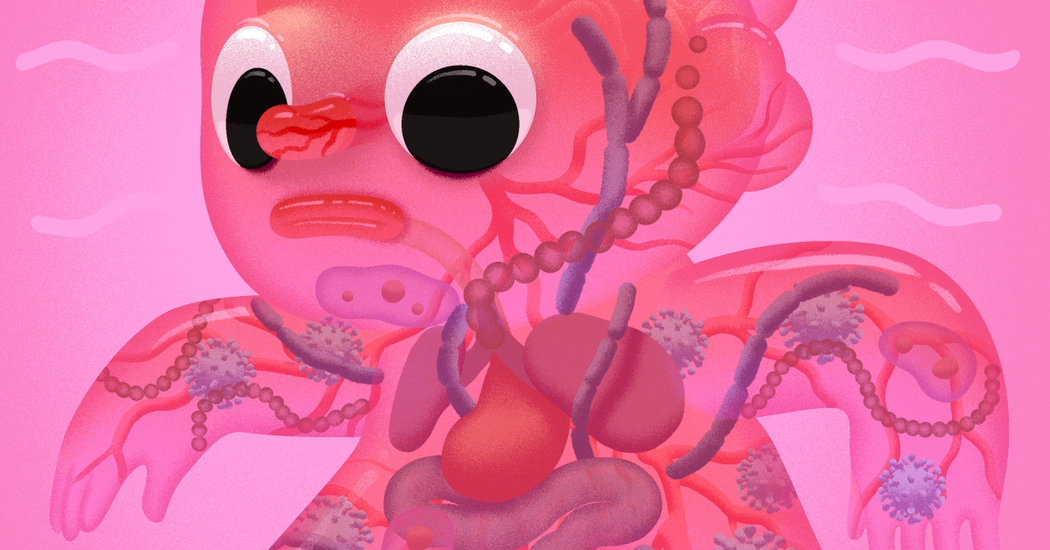
When she brought her daughter to the pediatrician, the doctor explained that the bacteria that cause impetigo — typically staphylococcal or streptococcal bacteria — can live in people’s noses and then inadvertently infect the skin through cuts or scratches. Ear infections, pneumonia, boils and urinary tract infections can also be caused by “normal” bacteria that have migrated to the wrong place.
Many infections and infestations also have long incubation periods, meaning it takes a while from the time a child is exposed until they start showing symptoms. The incubation period for scabies, for instance, can be as long as eight weeks. Lice, too, can take quite a while to populate a head; often it’s just one or two that migrate over, then they have to lay eggs, which incubate for 10 days before hatching and take another 10 to 15 days to grow into adults. Plus, kids may not even notice their lice for as long as six weeks, as it can take that long for them to become sensitized to the lice saliva and start to feel itchy. So if your child has just started scratching their scalp and you discover lice, it’s possible they’ve been there for some time.
Parents spread germs, too
Even though many families are isolating right now, that doesn’t mean they’re completely cut off from outside germs. If parents go to stores periodically, they could be exposed to viruses or bacteria that they then bring back to their kids — even if the parents themselves, who have more well-developed immune systems, never get sick.
“Dad runs to the grocery store and gets something on his hands and comes back in and gives the kid a hug right when he walks in, before he washes — and there’s a kid who hasn’t been around anyone but all of a sudden has a cold,” said Dr. Clay Jones, M.D., a pediatric and newborn hospitalist at Newton-Wellesley Hospital in Newton, Mass.
Adults can also shed germs from previous infections and unwittingly make their children sick. Roseola, which commonly infects kids under the age of 2, causing a high fever and a distinctive pink rash, is caused by human herpesvirus 6 (HHV-6), a virus that can live dormant inside of our cells after we recover from it. The latent virus can then periodically get reactivated, particularly when we’re under stress — like, perhaps, when we find ourselves living through a global pandemic. When this happens, adults can shed the virus and infect their young children; research suggests that many babies actually become infected with roseola via their parents. This same scenario can also occur with coxsackieviruses, which can cause hand, foot and mouth disease, said Dr. Danielle Conley, M.D., a pediatrician in Buffalo, N.Y.
Related reporting
More World News →
South Sudan’s Oil Looters: How Young Elite Gatekeepers Plunder Nation While Citizens Starve

General to Private: Kiir Crushes Economic Vice President in South Sudan's $1.7 Billion Corruption Purge

Paul Biya’s Re-Election: What Cameroon’s Political Longevity Reveals About Leadership and Governance in Africa