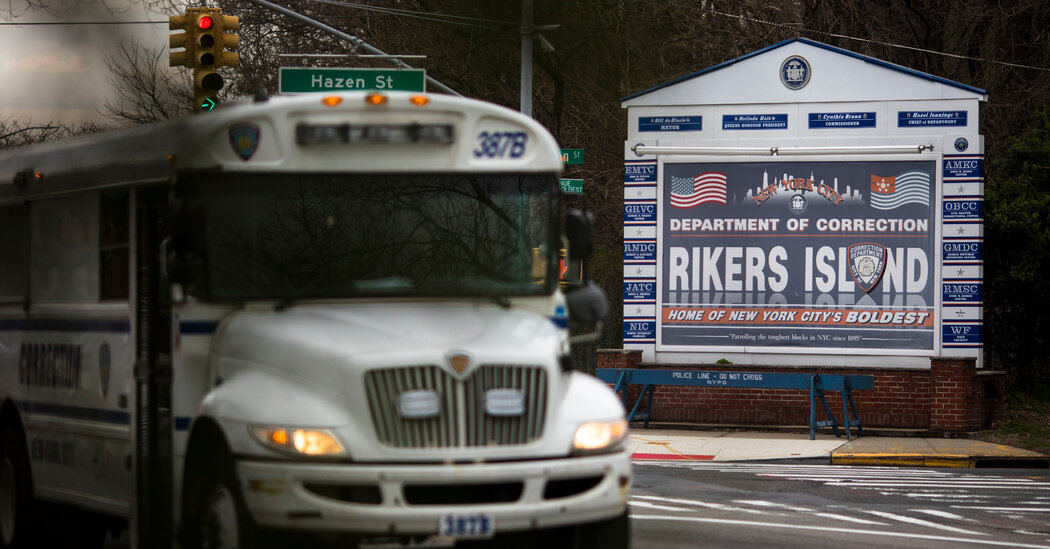
Given that incidents of domestic violence were sure to rise during the pandemic, anyone who made contact with a partner he or she had abused in the past was eligible for re-arrest, an official in the Cuomo administration explained. So too, was a sex offender who made contact with a minor.
The modern parole system began in New York State in the 19th century as a means of helping ex-convicts adjust to society. Parole officers were volunteers; the whole idea was rooted in a benevolent paternalism.
But in the 1970s, as crime escalated, the system became more punitive. The faith that people who did bad things could transform began to wane, and the goal shifted to preventing recidivism. While the state has succeeded in detaining far fewer people on technicalities in recent years, the policy, exercised at the discretion of corrections officials, nevertheless remains.
In a speech two years ago, Governor Cuomo acknowledged the problems inherent in it. “Jails and prisons should not be filled with people who may have violated the conditions of their parole but present no danger to our communities,” he said. New York State spends hundreds of millions of dollars each year enforcing these violations. “Cops troll hospitals looking for violators,’’ Mr. Schiraldi said. “While the guy is dying, they slap a technical on him. At a certain point you routinize the deprivation of people’s liberties so much, you’re just checking a box.”
That routinization comes with all the predictable disparities. In New York City, Black people re-enter the jail system on these technicalities at a rate more than 12 times that of whites.
Before Christmas, Mr. Russell, who had already violated his parole on other occasions by leaving the shelter and going home to his family, sent a text to his parole officer explaining that he could not tolerate his circumstance any longer and might as well be in jail. “With this being said,” he wrote her, “send me back if that’s what you want to do because I’m not returning to the shelter.’’ He helpfully provided his home address.
The Coronavirus Outbreak ›
Frequently Asked Questions
Updated July 27, 2020
Should I refinance my mortgage?
- It could be a good idea, because mortgage rates have never been lower. Refinancing requests have pushed mortgage applications to some of the highest levels since 2008, so be prepared to get in line. But defaults are also up, so if you’re thinking about buying a home, be aware that some lenders have tightened their standards.
What is school going to look like in September?
- It is unlikely that many schools will return to a normal schedule this fall, requiring the grind of online learning, makeshift child care and stunted workdays to continue. California’s two largest public school districts — Los Angeles and San Diego — said on July 13, that instruction will be remote-only in the fall, citing concerns that surging coronavirus infections in their areas pose too dire a risk for students and teachers. Together, the two districts enroll some 825,000 students. They are the largest in the country so far to abandon plans for even a partial physical return to classrooms when they reopen in August. For other districts, the solution won’t be an all-or-nothing approach. Many systems, including the nation’s largest, New York City, are devising hybrid plans that involve spending some days in classrooms and other days online. There’s no national policy on this yet, so check with your municipal school system regularly to see what is happening in your community.
Is the coronavirus airborne?
- The coronavirus can stay aloft for hours in tiny droplets in stagnant air, infecting people as they inhale, mounting scientific evidence suggests. This risk is highest in crowded indoor spaces with poor ventilation, and may help explain super-spreading events reported in meatpacking plants, churches and restaurants. It’s unclear how often the virus is spread via these tiny droplets, or aerosols, compared with larger droplets that are expelled when a sick person coughs or sneezes, or transmitted through contact with contaminated surfaces, said Linsey Marr, an aerosol expert at Virginia Tech. Aerosols are released even when a person without symptoms exhales, talks or sings, according to Dr. Marr and more than 200 other experts, who have outlined the evidence in an open letter to the World Health Organization.
What are the symptoms of coronavirus?
Does asymptomatic transmission of Covid-19 happen?
- So far, the evidence seems to show it does. A widely cited paper published in April suggests that people are most infectious about two days before the onset of coronavirus symptoms and estimated that 44 percent of new infections were a result of transmission from people who were not yet showing symptoms. Recently, a top expert at the World Health Organization stated that transmission of the coronavirus by people who did not have symptoms was “very rare,” but she later walked back that statement.
The logic behind sending him to a shelter to serve out his parole, in the first place, involved a single domestic-violence charge that had been filed against him years earlier. One evening in 2013, Mr. Russell and his current girlfriend were drinking on their stoop and began to argue. According to his recollection, the fight did not get physical, but a neighbor called the police and once officers arrived, he became “unruly’' with them, he said.
Related reporting
More World News →
South Sudan’s Oil Looters: How Young Elite Gatekeepers Plunder Nation While Citizens Starve

General to Private: Kiir Crushes Economic Vice President in South Sudan's $1.7 Billion Corruption Purge

Paul Biya’s Re-Election: What Cameroon’s Political Longevity Reveals About Leadership and Governance in Africa