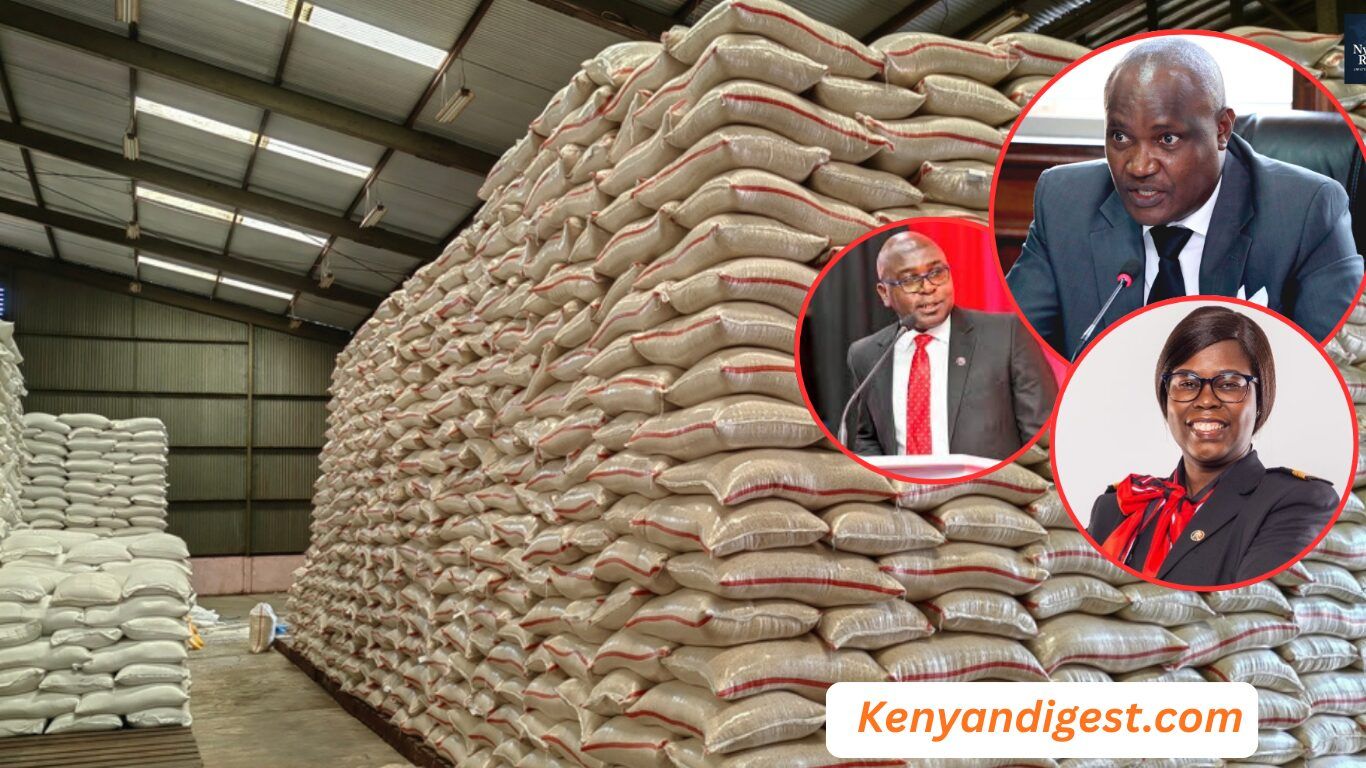
Kenya is confronting a major governance scandal after court filings accused Treasury Cabinet Secretary John Mbadi, Kenya Revenue Authority Commissioner Humphrey Watanga, and Border Control chief Lilian Nyawanda of facilitating the illegal importation of rice valued at Sh5.5 billion in open defiance of court orders.
According to documents filed in court, senior government officials allegedly allowed more than 55,000 tonnes of duty-free rice to enter the country despite clear judicial directives suspending rice imports.
Petitioners argue that the actions amount to a deliberate assault on the rule of law and raise serious questions about the integrity of state institutions charged with protecting public interest.
As the case unfolds, the rice import scandal has become a defining test of accountability within President William Ruto’s administration and a clear measure of whether court orders in Kenya still carry authority when powerful officials and billions of shillings are involved.

How the Rice Imports Were Cleared Despite a Court Freeze
Court filings outline a troubling sequence of events.
In October 2025, the vessel Spica Eternity arrived at the Port of Mombasa carrying 35,000 tonnes of white rice from Kandla Port in India.
The cargo was exported by Olam Agri India Private Limited and consigned to Ecoview Commodities Ltd and Njema Commodities Ltd.
In December 2025, a second shipment followed when the vessel IVS Crimson Creek docked with 20,000 tonnes of white rice from Thailand.
This consignment was exported by Olam Thailand Limited and Golden Granary Co. Ltd and delivered to Preferred Grains Ltd.
At an average retail price of Sh100 per kilogram, the combined value of the two consignments stands at approximately Sh5.5 billion.
The controversy arises from the fact that these imports occurred while a court order was in force freezing all rice imports pending judicial review.
Gazette Notice Sparks Allegations of Contempt of Court
The matter escalated further after government officials issued a gazette notice extending rice import permits until May 2026.
Critics argue that the notice was deliberately crafted to defeat a court order issued by Justice Edward Muriithi, which had suspended rice imports until the court issued further directions.
Legal experts warn that using executive instruments to override judicial orders could constitute contempt of court, a serious violation with personal legal consequences for public officials involved.
If upheld by the court, the allegations would point to a dangerous precedent in which executive authority is used to neutralize the judiciary, weakening constitutional governance.
Court Evidence Points to Alleged State Cartel Collaboration
Petitioners led by Kirinyaga Senator Kamau Murango and Baragwi Ward Representative David Mathenge have submitted cargo manifests, internal correspondence, and regulatory records as evidence.
They argue that the documents reveal a coordinated effort between state officials and private importers to bypass judicial authority.
In response, the court issued interim orders directing the Kenya Revenue Authority to detain the disputed rice consignments and emphasized that no further rice imports should be cleared without explicit court approval.
Justice Edward Muriithi warned that officials who ignored previous court directives may face legal sanctions.
Food Security Justification Under Sharp Scrutiny
Government representatives have defended the imports by citing a looming rice shortage. According to official figures, national rice reserves stood at approximately 110,000 tonnes at the beginning of 2026 while projected consumption between January and June is estimated at about 750,000 tonnes.
Critics have challenged this justification, questioning why the government did not formally seek court exemptions and why import benefits appeared to favor a limited number of private companies.
Civil society groups argue that food security concerns are being used as a pretext to protect commercial interests rather than uphold the law.
A Defining Test for the Rule of Law
Public pressure is intensifying as court filings and media reports paint a picture of alleged political protection for rice import cartels at the expense of local farmers and consumers.
The scandal now goes beyond rice imports. It raises a fundamental question about governance in Kenya.
Will the rule of law be enforced equally, or will political power and commercial interests override judicial authority?
As the courts deliberate, the nation awaits an answer that will define the credibility of Kenya’s institutions and the accountability of those entrusted with public power.
Related reporting
More Politics →
Opposition Leaders Nyoro and Matiang’i Condemn Bill to Ban Election Result Livestream

Opposition Leaders Pressed to Forge Unified Agenda Ahead of 2027 Election

Kalonzo Musyoka Meets Gachagua as Opposition Leaders Discuss 2027 Presidential Ticket