Trade unions such as Kuppet and Knut and the umbrella body Cotu have opposed the about-to-be implemented 7.5 percent deduction from the salaries of teachers and civil servants for the Contributory Pension Scheme (CPS).
However, although they are right on the immediate negative effect of CPS on the workers, its long-term benefits far outweigh the short-term adverse effects — such as financial instability on contributors. The rate, however, needs to be revised downwards.
In 1951, International Labour Organisation (ILO) was of the opinion that a worker had freedom on how to use his money. It tolerated arguments such as a worker should live as he deemed fit and choose what to do with his money without being burdened with pension issues.
But today, ILO approves that, upon retirement, we need something to fall back to. Pension management is one of the solid security attributes that ILO Convention No. 102 recognised.
Nowadays, retirees wait for months, or years, to collect their entitlement. Pensioners have failed to meet their statutory obligations of submitting pension entitlement within the statutory time frames. For instance, teachers had to fight court battles for 18 years to have their pension processed. This is due to pressure that the national government faces.
When workers contribute to a pension fund, there is an accumulation of capital that, if well invested, can have a positive effect on retirees’ welfare.
The Chilean pension reform of 1981 made it possible for retirement benefits to be paid promptly. Nigeria adopted Chile’s contributory system with a little modification and it’s a success.
CPS accommodates the compassionate allowance. With the current arrangement, pension benefit is lost for an employee whose service is terminated for reasons such as misconduct, incompetence and inefficiency. Pension is not admissible under such conditions.
With CPS, however, one is entitled to benefit because it is his savings. Even when one transfers his services to other organisations, nothing is lost; he transfers his benefits. This enhances labour mobility.
And one does not need to first retire to get his entitlement. A worker can access part of his pension even when still working.
Engagements with the government on pension reform should aim at protecting the worker from too much saving at the expense of current living. CPS of most models is 15 percent of pensionable income. The employee and the employer each gives 7.5 percent. In Nigeria, the government gives 12.5 percent to the disciplined forces’ pension and they pay only 2.5 percent.
As has been proposed, the government ought to start with 2.5 percent, then adjust to five percent after some years and, ultimately, make it 7.5 percent. At least that will check against the one-third take-home policy.
Related reporting
More General News →
Kenya Police Set to Get New Uniform as Ruto Prepares for Kiganjo Unveiling

Ruto Announces KSh1.2 Billion University for Emurua Dikirr
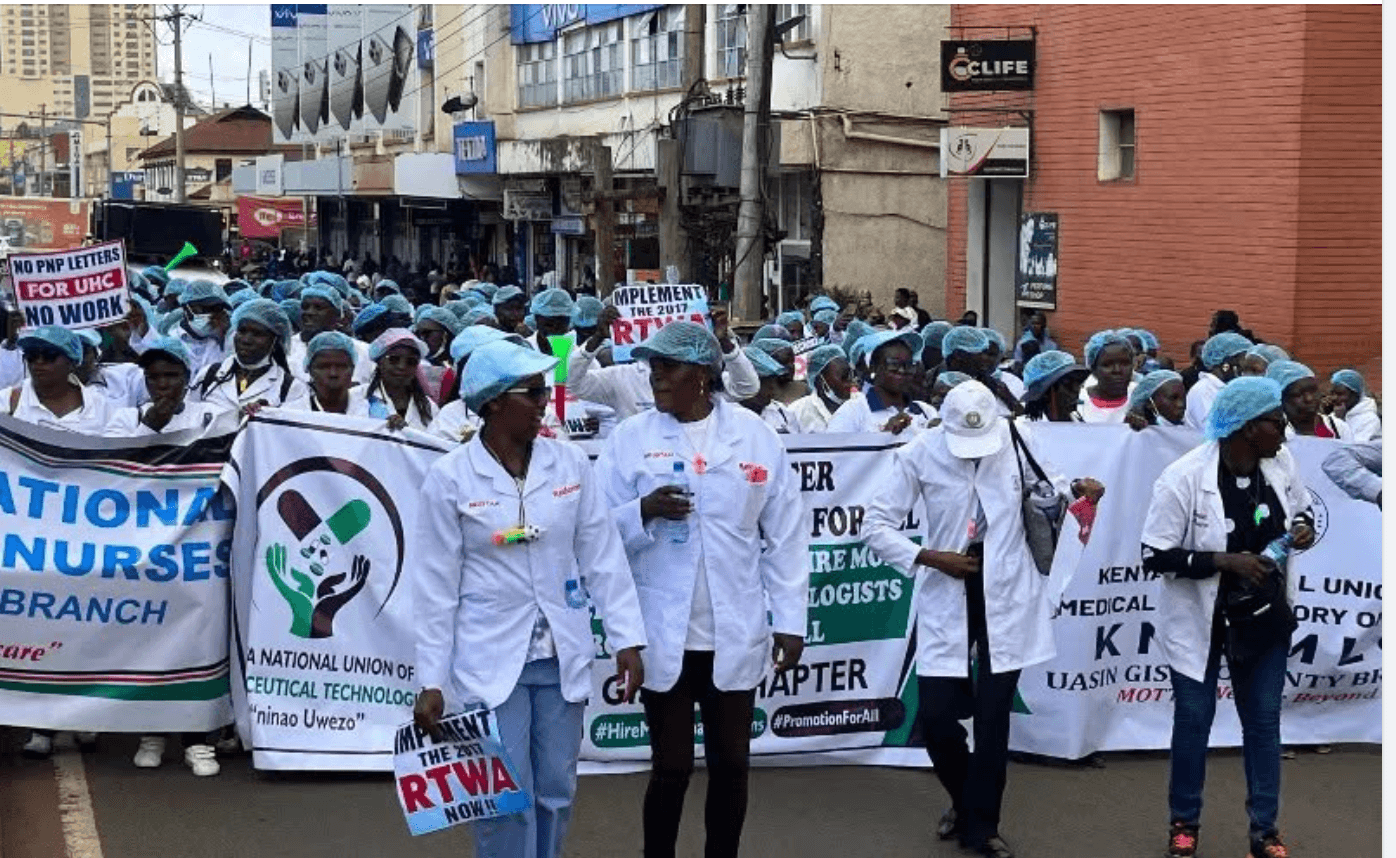
Kenya Nurses' Strike Enters Fourth Week as Talks With Counties Show Progress