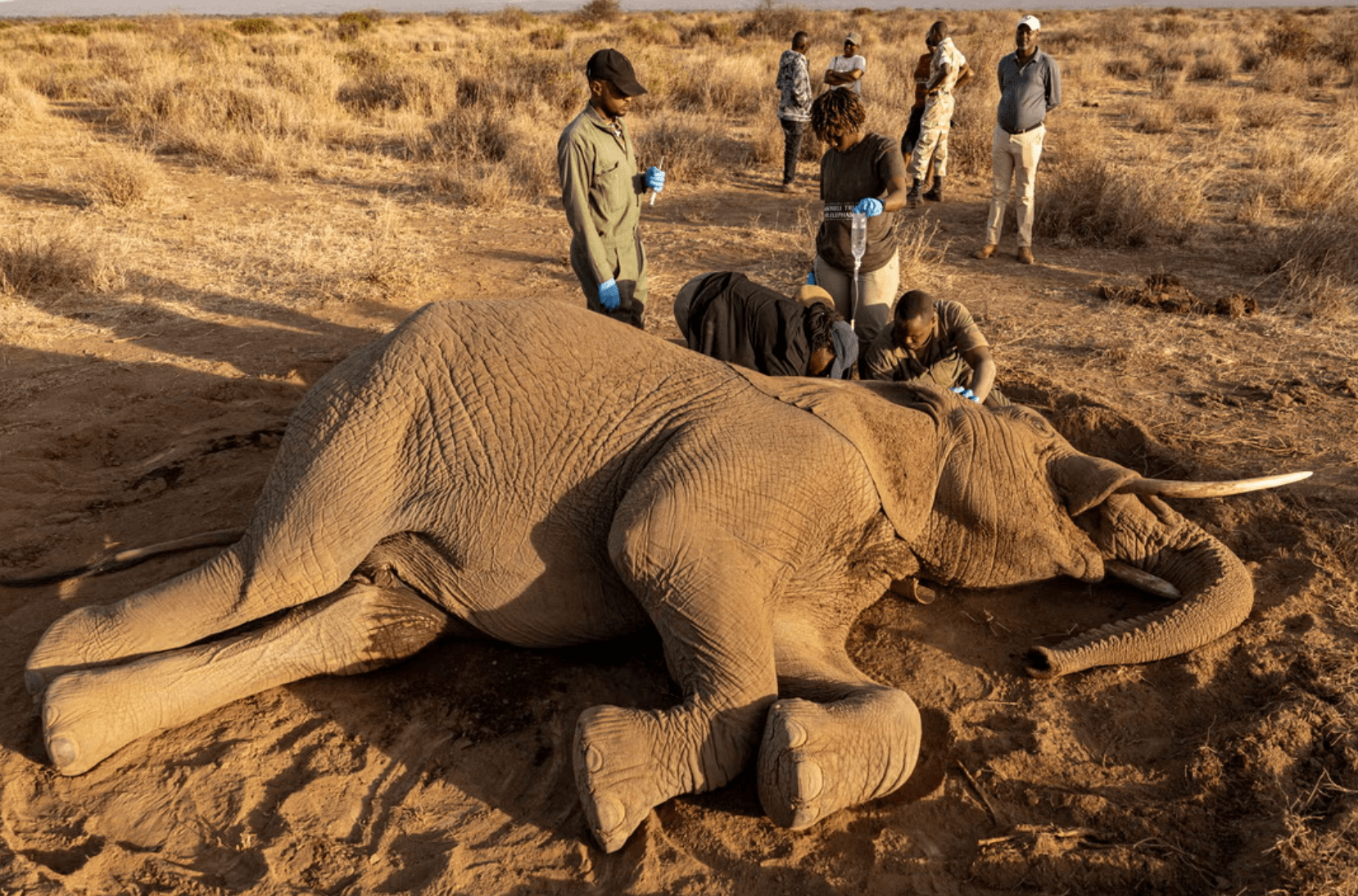
Kenyan authorities have arrested four people as investigations continue into the deaths of 18 elephants in the Amboseli ecosystem.
The arrests followed a multi-agency investigation after the elephants were found dead in parts of the Amboseli ecosystem, including Amboseli National Park, Kimana Sanctuary and Kuku Ranch. The deaths were recorded between June 24 and July 24, 2026.
The Kenya Wildlife Service said the four suspects were subsequently released on bail as investigations continued. Authorities also seized assorted substances, including chemicals believed to be toxic, during a search in the Tikondo area of Loitoktok Sub-County.
Possible poisoning under investigation
Preliminary laboratory results have pointed to the possible involvement of a toxic substance.
Earlier indications suggested that the elephants could have been poisoned after consuming tomatoes contaminated with pesticides on farms bordering the national park.
However, the poisoning theory has not been conclusively established.
Some wildlife experts have questioned whether pesticide-contaminated crops were responsible for the deaths, noting that other animals in the area have not reportedly experienced similar deaths.
The government has therefore continued to treat the matter as an active investigation, with further laboratory analysis and forensic work expected to establish what caused the deaths.
Human-wildlife conflict
The Amboseli ecosystem has long experienced tensions between wildlife conservation and communities living around the park.
Elephants frequently move beyond protected areas into neighbouring farms, where they can damage crops and disrupt livelihoods. This has made human-wildlife conflict an ongoing concern in the region.
Authorities have also been searching for a fifth person who is believed to have information relevant to the investigation.
The Ministry of Tourism and Wildlife has stressed that the arrests and seizure of chemicals do not, on their own, establish criminal responsibility.
The investigation is expected to determine whether the deaths resulted from deliberate poisoning, accidental exposure to agricultural chemicals or another cause.
The deaths have raised renewed concerns about the protection of Kenya's wildlife and the need for stronger measures to prevent harmful interactions between conservation areas and neighbouring communities.
Related reporting
More General News →
Government Removes KSh300 ID Fee and Border Vetting in Registration Reform

Former Old Mutual Officer Charged With KSh89.5 Million Theft

KPC, KCB and M-PESA Foundations Launch Joint Scholarship Scheme for Learners With Disabilities