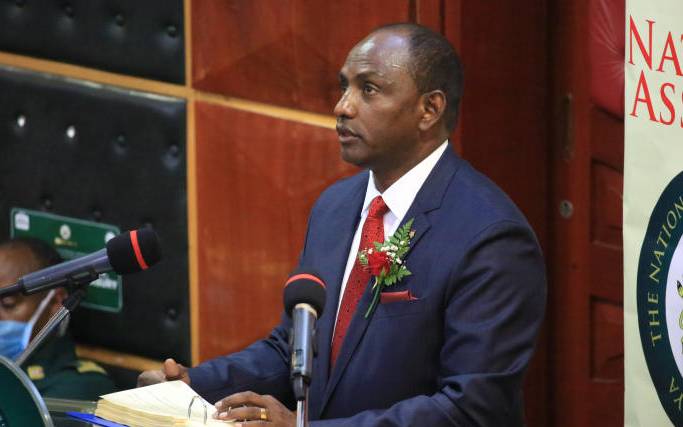
Finance CS Ukur Yatani reads the Budget of 2020/21 at the Parliament buildings, Nairobi. June 11, 2020.
Business
To balance the needs in the seemingly impossible arithmetic, it was easy to see that there were hardly any winners after the one-and-half
SEE ALSO: Yatani bets big on jobs, taxes and loans to rescue limping economy
Effectively, Yatani gave with one hand before grabbing an even bigger chunk using the other, meaning Kenyans have been left worse off after yesterday’s Budget. While he has previously indicated that some of the exemptions to be done away could be longer-term in nature, yesterday he was clear that his attempts would start immediately. “Whereas these tax incentives are well intended, they have limited the capacity of government to fund critical expenditures,” said the CS in his speech. He justified that by reversing the exemptions. “In addition, a critical review of the incentives shows that consumers have not benefited through a commensurate reduction in the cost of goods and services,” he added.SEE ALSO: Yatani gives with left and grabs more with the right
It follows soaring resource needs which have today been compounded by the Covid-19 whose implications on the economy have been depressed consumption and lost incomes. In his own words, the revenues have been “severely depleted” since the outbreak was first reported in mid-March as several sectors including travel, hospitality and entertainment have remained shut. In the race to balance the needs in the seemingly impossible arithmetic, it was easy to see that there were hardly any winners after the one-and-half hour address. “…we aim to strike an appropriate balance between support for economic recovery and continued fiscal discipline,” he said. Among the measures that will eat into the tax revenues is the decision by President Uhuru Kenyatta to lower the top tax rate from 30 per cent to 25 per cent for individuals and companies.SEE ALSO: Why proposed alternative minimum tax will sink most companies deeper
Mr Kenyatta also slashed the VAT by two per cent to 14 per cent to counter the impact of declining incomes while ensuring workers retained more of their salaries to spend. It might, however, have not attained the much-needed result of handing more money to workers as a multitude of employers have followed it up with pay cuts. Further, millions of jobs have already been lost in many sectors, including in hotels which employed 1.2 million workers like waiters and chefs, according to industry statistics provided by the hoteliers lobby. Yet, Yatani has stepped up his pursuit of raising revenues through taxes by successfully pushing through Parliament proposals of the minimum tax which is levied on revenues rather than profits. A company that receives sales worth Sh100 million per year, for example, would now be required to part with Sh1 million to the Kenya Revenue Authority (KRA) as minimum tax, whatever the size of losses booked. With the uncertainty on when the economy could reopen and whether life would get back to normal, many companies would inadvertently be liable to this tax this year.Related reporting
More Business News →
High Court Blocks Oigara Bank Fraud Probe as Stanbic CEO Escapes Questioning

15 Proven Ways to Make Money Online in Kenya; No Scams!

High Court Halts Equity Bank's Takeover Bid on Swafi Foods in Landmark Ruling
