It's no secret that education has been regarded as the key to success since time immemorial. People spend decades in schools and colleges to acquire degrees and with the hope of living a better life in future.
But at the same time, the tale of non-degree holders including tech moguls such as Microsoft CEO Bill Gates and Facebook founder Mark Zuckerberg have become folklore by this point, which has seen a crop of new influential executives rise to the top without finishing university.
Kenyans.co.ke takes a look at these CEOs who have defied odds to lead multi-million shilling companies and become forces to reckon in different sectors of the economy.
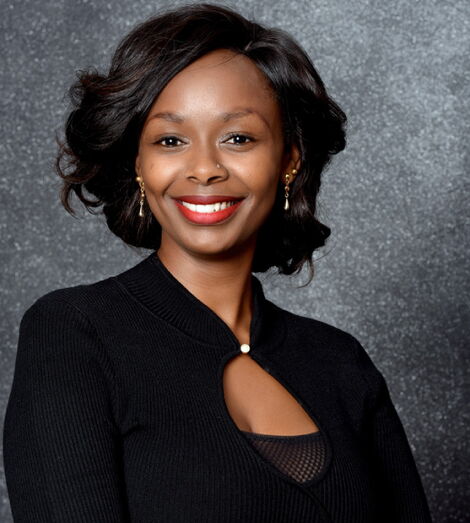
Cheriez Properties Limited CEO, Leah Wambui, poses for a photo.
Courtesy
Leah Wambui
Leah Wambui embodies the tale of grass to grace, after she rose from being orphaned at the age of 16 to become the owner of a Ksh3 billion company.
At the time, she was unable to join university due to lack of fees-however, this did not deter her zeal to become successful. Starting out as a receptionist, Wambui later quit the job and used her savings to start a small liquor store in Kiambu County. Over the years, she ventured into the real estate, buying a five-acre piece of land in Kitengela which birthed her company, Cheriez Properties Limited.
Through ups and downs, with many clients alienating her and numerous cases of theft from employees, Wambui was able to break even and stabilize the company. Currently, the firm boasts of 200 houses with each unit going for an average of Ksh15 million.
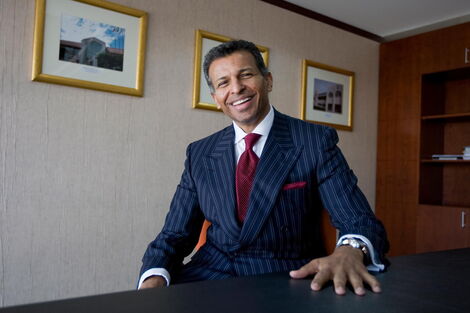
GEMS Educations Schools Founder Sunny Varkey poses for a photo.
Courtesy
Sunny Varkey
Varkey is one of the few billionaires who made his fortunes by investing in education despite not graduating with a college degree.
Varkey's parents, who were Indian teachers, migrated to Dubai in 1959 and established Our Own English School which offered English language education in the Arab country.
By the age of 23, Varkey took over the management of the school in 1980 after just completing secondary education.
The school then expanded to GEMS educations schools- which currently owns over 80 schools. The school recently managed Hillcrest International school before it was acquired by Braeburn schools.
According to Forbes in March 2019, Varkey's net-worth was estimated at Ksh272 billion. The business mogul is also lauded for establishing the prestigious Global Teacher Prize Award.
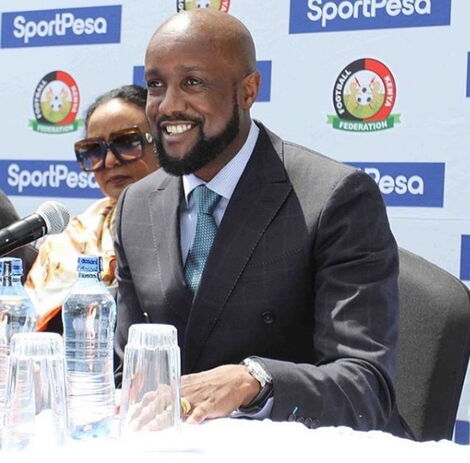
Sportpesa CEO Ronald Karauri in one of Narok NYC's designs addresses the press in June 2019. On his left is Sports CS Amina Mohammed.
Ronald Karauri
Ronald Karauri is the name synonymous with gaming company, Sportpesa. Born in Meru County, Karauri moved to Nairobi due to his father's political ambitions and ultimately went to Harambee primary school in Buruburu.
He later joined Mang'u High School from where he scored top grades in KCSE. Karauri later enrolled at the University of Nairobi, pursuing a Degree in Mechanical engineering.
However, at the time an opportunity at Kenya Airways opened up- a slot that Karauri did not let pass by. He revealed at a past media interview that he dropped out in his third year in order to become a trained pilot.
After working at KQ for 11 years, he later took over the management of Sportpesa as CEO from its founder Guerassim Nikolov.
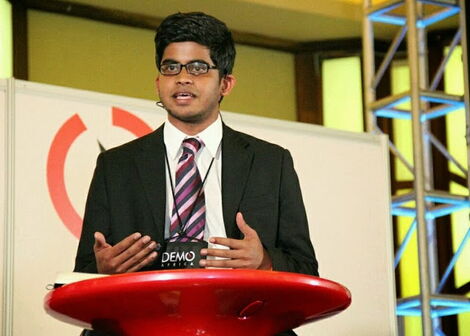
CEO of de Silva group, Heshan de Silva, speaks during a past conference.
Courtesy
Heshan de Silva
Heshan de Silva is undoubtedly one of the youngest millionaires in the country, making his first millions by the age of 25. His tale reverberates around the lifestyle of a street smart child who exploited an opportunity to make money.
At the age of 16, he enrolled in an American University and was immediately engulfed in the lavish lifestyle of his classmates driving swanky cars such as Ferraris and Lamborghinis.
Losing interest in attending classes, Silva realised that his peers desired to party than study-hence sought to write their assignments and essays for them. Making a whopping Ksh50,000 a night for the assignments, Silva began making a killing which later led to a life of partying, and ultimately dropped out of school.
His parents, however, brought Silva back to Kenya and checked him into a coupe of rehabilitation centres before he reformed his life. While at in one of the rehab centres, Silva met three friends and they had an idea of selling travel insurance to long-distance bus passengers.
They founded the company, De Silva Group, which has since scaled up to a multi-billion enterprise.
Related reporting
More General News →
Eldoret Airport Smuggling Expose: Millions Lost as Gadgets Flow Illegally to Ethiopia
Raila Odinga’s Sister Beryl Achieng Has Died, Family Confirms

Karen Hospital Moves to Court Over Sh25 Million Bill for 83-Year-Old Patient