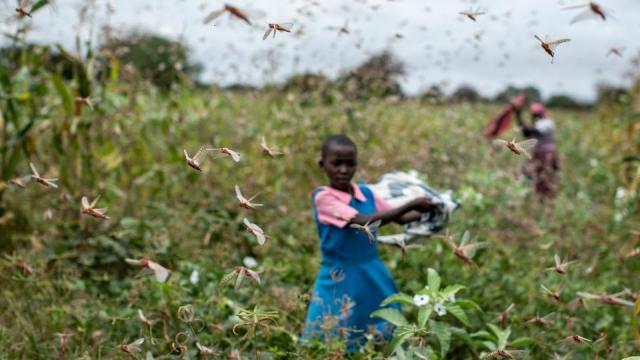
By CONTRIBUTOR, ROME, Italy, Feb 25 – The fight against the desert locust upsurge in Kenya and other affected countries in East Africa have received a Sh1 billion boost from the Bill & Melinda Gates Foundation.
The donation was submitted to the Food Agricultures Organization after the United Nations agency expanded its appeal to fight the locust outbreak, which has been described as the worst Kenya has suffered in 70 years.
In statement, the Bill & Melinda Gates Foundation said its donation would assist FAO as it supports governments in Ethiopia, Kenya, and Somalia to combat locust infestation that is posing a significant threat to food production and livelihoods in the region.
“I want to thank the Bill & Melinda Gates Foundation for its generous support as the Desert Locust threatens to provoke a humanitarian crisis,” FAO Director-General QU Dongyu said of the donation. “I urge other donors to follow their lead so we can protect rural livelihoods and assist farmers and their families.”
The UN agency has now raised its appeal to Sh13.9 billion, from the initial Sh7.7 billion a month ago, in urgent funding to assist the countries that have been impacted. So far Sh3.33 billion has been pledged or received.
Qu said the situation was extremely alarming and the next few weeks would be critical for mounting an effective containment operation.
“The upsurge is threatening people’s livelihoods and food security in a region that is already seriously food insecure,” he said. “There is no time to waste.”
Kenyan efforts
The government has undertaken a raft of measures to control the upsurge; already, it has allocated more than Sh200 million through the National Treasury and hired a consultant to assess the damages caused so far.
Experts have predicted that a humanitarian crisis is looming in the country, even as the locusts continue to breed and spread.
UN officials have warned that that immediate action is needed before more rainfall in the weeks ahead brings fresh vegetation to feed new generations of locusts.
If left unchecked, their numbers could grow up to 500 times before drier weather arrives, they say.
The locusts spread from Wajir and Garissa into Mandera, Marsabit, Meru, Isiolo, Samburu, Turkana, Tharaka-Nithi, Laikipia, Kitui and Kirinyaga counties.
Related reporting
More Business News →
High Court Blocks Oigara Bank Fraud Probe as Stanbic CEO Escapes Questioning

15 Proven Ways to Make Money Online in Kenya; No Scams!

High Court Halts Equity Bank's Takeover Bid on Swafi Foods in Landmark Ruling
