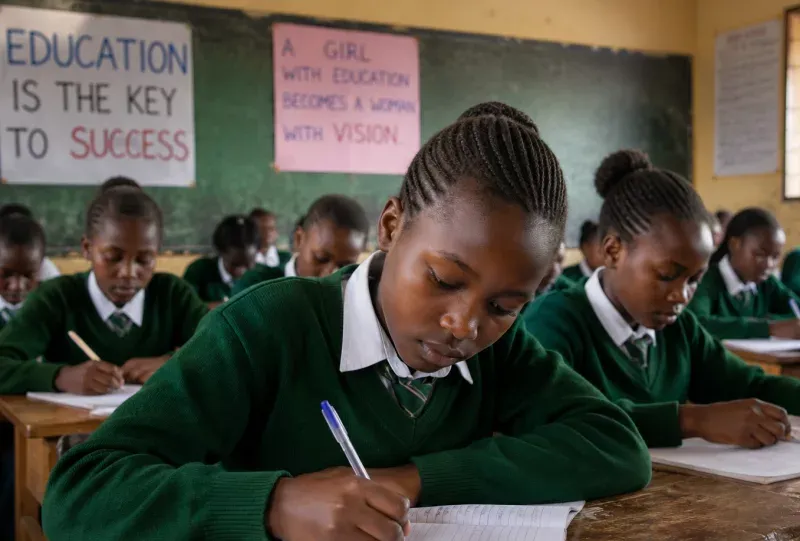
The Elimu Bora Working Group has released a survey indicating that almost all Kenyan households are either paying or expect to pay unlawful charges at public secondary schools, prompting many to borrow money or sell assets.
The study found that 98 percent of households either paid an illegal levy in 2025, anticipated one in 2026, or expected to exceed the gazetted school fee, while 61.6 percent described the extra levies as difficult or impossible to afford. Nearly 37 percent said they very often resorted to borrowing or asset sales to meet the costs.
Remedial tuition and motivation fees were the most frequently reported charges, affecting 49.2 percent of households with a median price of KSh5,000. Development levies impacted 32.2 percent of families, also at a median of KSh5,000, though some respondents reported demands as high as KSh50,000 to KSh60,000. Development levies were most often linked to threats of exclusion, with 83.3 percent of affected households reporting that children could be sent home for non-payment.
The consequences for learners were severe: 45.9 percent of those surveyed were occasionally sent home or barred from class because of unpaid levies, and 17.5 percent said this happened very often. The report notes that inability to pay can keep children out of school.
Day-school pupils were hit hardest, with 64.9 percent reported as being sent home or barred, compared with 40.5 percent of boarding pupils. Among day-school learners, 60.6 percent missed school days, 51.1 percent missed examinations or tests, 48.9 percent lost motivation to attend, and 42.6 percent faced discrimination because of unpaid charges.
Poverty amplified the impact: 61.3 percent of learners from households earning less than KSh10,000 a month were occasionally sent home, versus 23.1 percent from households earning between KSh30,001 and KSh60,000.
Parents of boarding students expected to pay an average of KSh62,715 per child in 2026, above the gazetted parental fee of KSh53,554. When levies, uniforms and bedding are added, total costs at some schools reached KSh160,000. Nearly one in five boarding households anticipated paying more than KSh80,000, and 14.1 percent quoted expected fees above KSh100,000. Day-school parents expected an average of KSh20,619 annually despite tuition being covered by government capitation.
Uniforms and bedding added further expense, with median costs of KSh14,500 for uniforms and KSh7,550 for bedding. Where parents were limited to school-designated suppliers, the median uniform price rose to KSh20,000, compared with KSh15,000 when any supplier could be used.
Collection practices were often coercive: two-thirds of parents reported receiving verbal demands for payment, 44.3 percent said they were threatened with sending learners home, and some were summoned or publicly called out for owing money.
Consultation was limited, with only 19.1 percent of parents properly consulted before levies were introduced, 58.2 percent receiving no meaningful explanation of how the money would be used, and 87.4 percent not lodging complaints, mainly out of fear of victimisation.
The rapid cross-sectional survey covered 12 counties, gathered 423 responses and retained 388 valid entries after cleaning and verification. Data were collected through a structured mobile questionnaire administered by trained EBWG enumerators and supplemented by a review of Ministry of Education circulars, fee guidelines and publicly reported cases.
The findings clash with the constitutional guarantee of free and compulsory basic education, and with High Court rulings that public schools may not impose charges without approval nor deny education for failure to pay approved levies. The government has repeatedly warned school administrators against arbitrary fee increases.
EBWG calls for a national audit of school fee structures, sanctions against schools imposing unauthorised charges, reimbursement for parents who have paid illegal levies, publication of official fee schedules, regulation of school-linked uniform and bedding suppliers, stronger confidential complaints mechanisms and timely release of capitation. It also urges schools to bank levies through official accounts, issue receipts, publish annual budgets and receive clear directives barring exclusion of learners for non-payment.
“Illegal levies are a barrier to the right to education, and the government must not allow schools to impose them and then punish children for their parents’ inability to pay,” the report states.
Related reporting
More General News →
Former Alego Usonga MP Otieno Mak’Onyango Dies While Receiving Treatment in Nairobi
Registrar of Companies Announces Dissolution of 63 Firms and Intended Strike-Off of 62 Others
Chief Justice Martha Koome Establishes New High Court Division for International and Organised Crimes