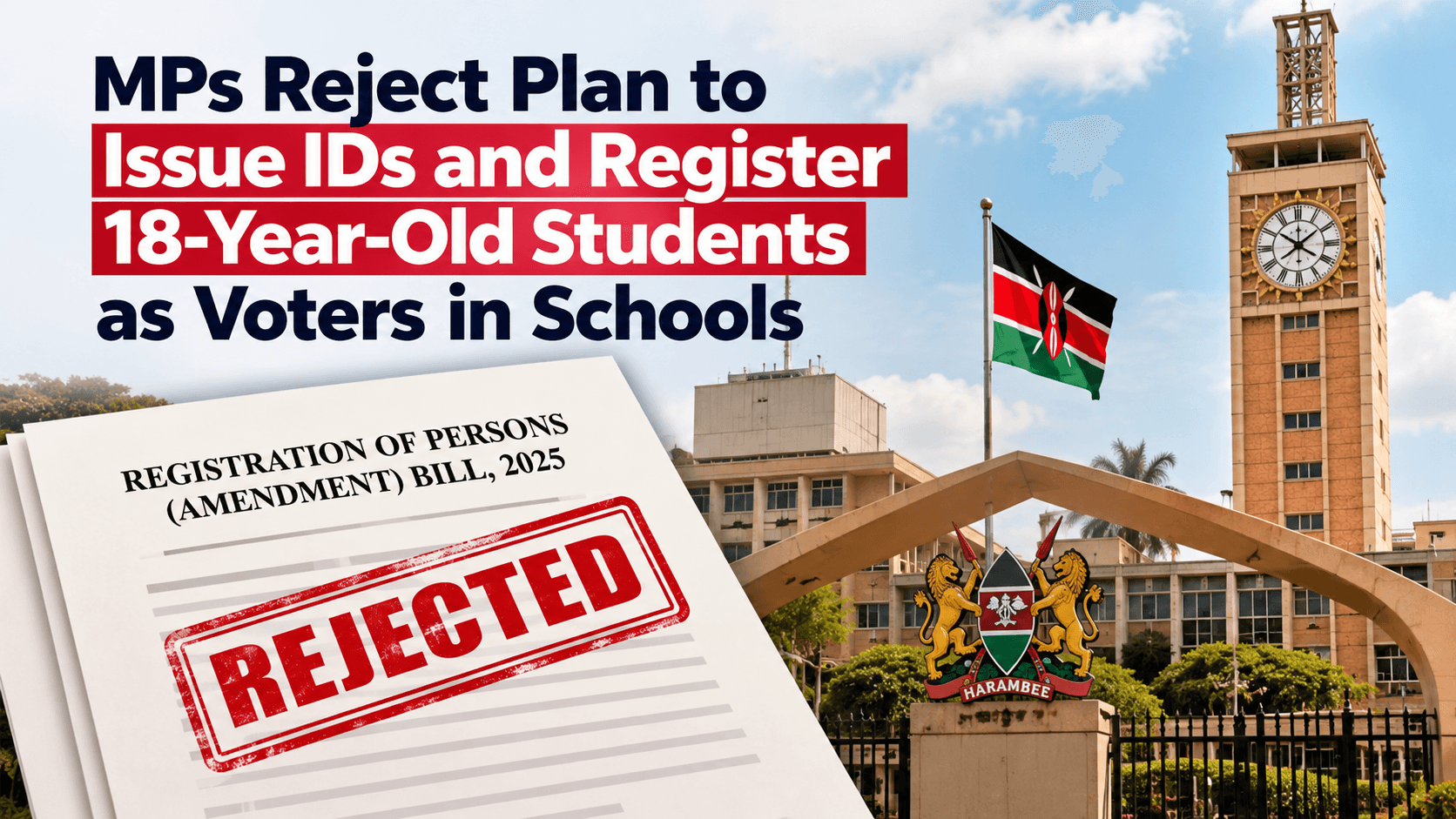
A parliamentary committee has rejected a proposal that would have allowed secondary school students who turn 18 to receive national identity cards through an annual registration exercise conducted in schools.
The Registration of Persons (Amendment) Bill, 2025, sponsored by Suba South MP Caroli Omondi, proposed requiring the Principal Registrar to conduct a national registration programme for eligible secondary school students every year.
The proposal was also intended to make it easier for eligible young people to subsequently register as voters.
However, the National Assembly Administration and Internal Security Committee has recommended that Parliament reject the Bill in its entirety.
The committee said conducting a large-scale registration exercise during the school calendar could disrupt learning. It also argued that focusing specifically on secondary school students could leave out other young people who have turned 18, including those in vocational institutions, informal education or outside the education system altogether.
Bill Proposed Free IDs Delivered Through Schools
Under the proposed law, the Principal Registrar would have been required to identify eligible students by the end of August each year and collect the information needed to register them between September and December.
Students would not have been charged for the national ID, with the documents delivered to their schools or another designated collection point for those who had already completed secondary education.
Supporters of the proposal argued it could simplify access to identification for young people who require IDs when applying for services such as university placement and higher education financing.
It was also expected to increase the pool of young Kenyans eligible to register as voters.
The committee, however, concluded that the existing Registration of Persons Act already allows Kenyans who reach 18 to register for national identification and that low registration rates are primarily an implementation issue rather than a gap requiring new legislation.
It recommended that challenges facing newly eligible applicants instead be addressed through measures such as improved government service delivery, additional funding, public awareness and administrative reforms.
The Bill will therefore not proceed in its proposed form if the National Assembly adopts the committee’s recommendation.
Related reporting
More General News →
Long-Distance Drivers Association Warns of Insecurity After Six Kenyan Truckers Reported Captured in DRC

President Ruto Sets April 2027 Deadline for Digital Equipment in All Public Junior Schools

High Court Orders Lamu Villagers to Serve Dangote in Refinery Dispute