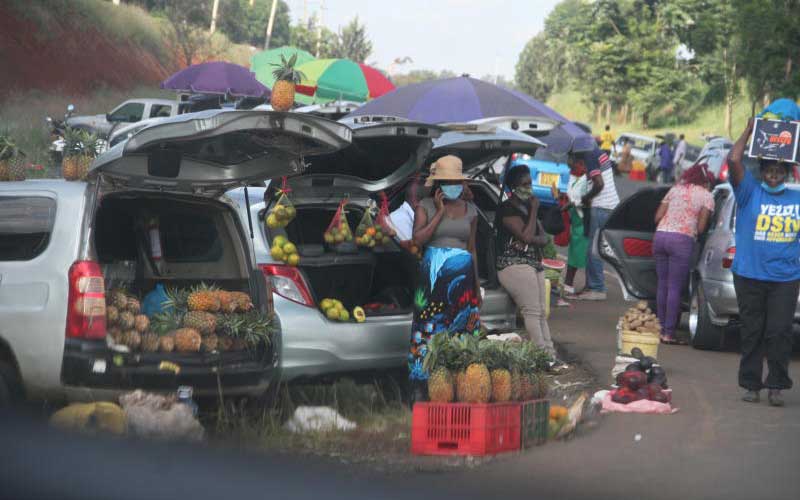
A vibrant car boot sale has sprung up along the Northern bypass, where fresh food and vegetables are the most sought after commodities.
Business News
Many of those who are doing boot sales have been laid off recently.
SEE ALSO: 'I had no choice': Sex for rent rises with coronavirus poverty
Kimani, who was dressed in a striped light blue V-neck T-shirt and a pair of jeans looked out of place selling farm produce out of his German machine, fancy watch and all. But there did not appear to be any judgement from fellow sellers, who included a group of market women in their red or green aprons seated across the road and busy trying to catch the attention of passers-by. "My price is slightly lower than theirs," said Kimani, revealing that he was selling one kilo of onions for Sh130. The 32-year-old IT consultant said he had been rendered jobless after international flights were stopped to curb the spread of the coronavirus disease. "The contracts I had involved a lot of flying out of the country. I cannot do that anymore so I had to find some way to keep myself occupied."SEE ALSO: Wuhan conducts 6.5 million COVID-19 tests in 10 days
Kimani’s predicament is not unique. He is among thousands of Kenyans who have lost their regular sources of income as the pandemic wreaks havoc on the economy. Determined to scrape a living, he teamed up with his cousin and they got into the business of selling onions. Consulting work "My cousin can still move out of Nairobi so he sources the onions from Nyeri while I sell them. I am here for about two hours each day and mostly in the evenings because I still do consulting work from home,” said Kimani. Also nearby was Maina Gathonjia who had turned his Toyota Fielder into an egg shop, with one tray selling for Sh290.SEE ALSO: Egypt cautiously reopens hotels for local citizens to save tourism
“I have been here for three weeks,” he said. “Some of us cannot stay home without earning. I have never done this before." "On Monday, I went to Ndaka-ini in Murang'a where I bought the stock that I have now. I came straight to the market and did not even unload it from the car." Where the coronavirus had led to the loss of opportunities, it has created others. And although it looks like a new phenomenon, car boot sales have been around for years. Farmers long used to getting short-changed by brokers discovered that the only way to earn more money was to sell directly to buyers. In Nairobi’s residential areas, the number of boot sales has skyrocketed as they allow locals to earn an income without the hassle of renting business premises. Many sellers prefer to set up shop along the Northern Bypass where cars laden with cereals, fruits and vegetables stretch hundreds of metres on both sides of the busy highway.SEE ALSO: Adidas launch face masks to help protect against coronavirus
Most sellers are new to the game, especially those from the white-collar sector who have been recently laid off, are on unpaid leave or have been forced to take salary cuts. Then there are the taxi drivers looking to supplement their income because they can no longer make trips out of the city after the government imposed travel restrictions. Valentine Majanga, 30, a mother of one who works in the hospitality industry, which is one of the hardest-hit sectors, is now selling fish and seafood to survive. She and her husband, who also lost his hotel job, used their savings to set up the business at Muthiga - a small busy town along the Nairobi-Nakuru highway. "My husband and I were affected by this pandemic. None of us currently has a salary and we need to earn a living," said Majanga.SEE ALSO: As lockdown clears the air, Cairo looks to keep pollution low
The couple buy their fish from Mbita in Homa Bay County, deep fry it and sell to passing customers. They also make home deliveries to clients who place orders via their social media account. "It is a sustainable back-up plan considering the situation we are in, and how delicate the hospitality industry is now," she said.Related reporting
More Business News →
15 Proven Ways to Make Money Online in Kenya; No Scams!
High Court Halts Equity Bank's Takeover Bid on Swafi Foods in Landmark Ruling
