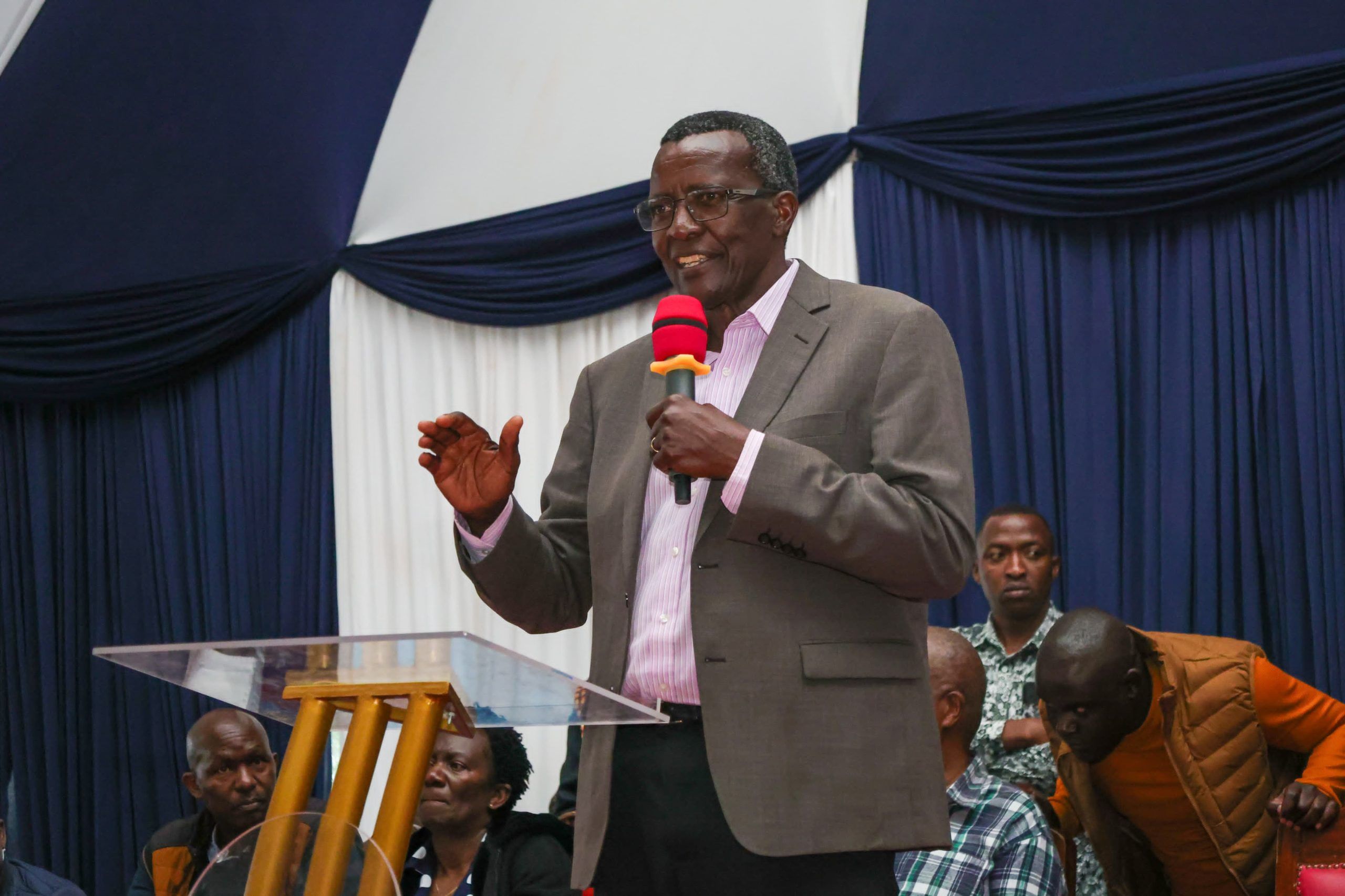
Former Chief Justice David Maraga, co-party leader of the United Green Movement (UGM), used a funeral service in Kerumbe Village, North Mugirango, Nyamira County, on Friday to launch a broad critique of President William Ruto’s administration.
Maraga said the ongoing university lecturers’ strike was leaving students at home and warned that the disruption threatened the nation’s future, declaring “Education should be a priority, not an afterthought.”
He described the public health system as being in crisis and argued that many Kenyans were forced to sell land or borrow money to obtain medical treatment, stating “A Kenyan should not have to sell land, borrow money or watch a loved one suffer simply because they cannot afford medical treatment.”
Referring to media reports that Kenya’s delegation to the United Nations General Assembly included nearly 100 people, among them seven cabinet secretaries, Maraga cited an estimated cost of about KSh500 million and questioned whether such spending reflected the country’s priorities for schools, universities and hospitals.
The former chief justice called for the opposition to unite behind a single presidential candidate for the 2027 General Election, insisting that “Kenyans will decide who will be the flag bearer.”
He urged voters to reject Ruto’s re-election bid, telling the mourners “Do not sit aside and re-elect Ruto” and urging the electorate to judge leaders on delivery of public services rather than ethnic or monetary inducements.
Maraga pledged to uphold the Constitution, enforce strict integrity standards and ensure that no individual would be above the law, adding “In my government, all must obey the law. I will not entertain corruption.”
He also said his campaign would focus on strengthening public healthcare, improving access to essential medicines, and increasing investment in education and youth employment to address what he called “weak leadership, impunity and wasteful spending.”
Related reporting
More Politics →
Rigathi Gachagua Says ODM Is a Pale Shadow on Raila Odinga Anniversary
Governors Natembeya and Orengo Lose Security Details, Murkomen Defends Withdrawals
President William Ruto Says He Will Defeat Opponents in 2027 Election