SEE ALSO: Police cannot enforce the law by breaking it
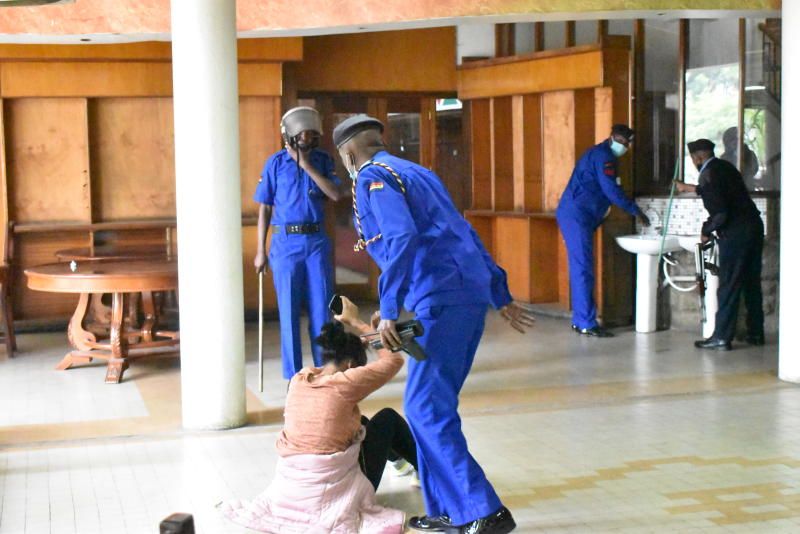
Political tensions between the governor’s allies and those supporting the Nairobi Metropolitan Services (NMS) have been boiling. To avoid fatalities, over 14 firearm licences have been revoked. On Tuesday, 16 MCAs sought to storm the County Assembly and serve Speaker Beatrice Elachi with a notice of impeachment. Chairs were thrown and the police moved in. The rest, as they say, is history. There are reasons why only six and 24 per cent of the world’s heads of states and parliamentarians are women. More than 80 and 25 per cent women MPs have experienced psychological and physical violence in parliament. Over 44 per cent have faced death, rape, beating or kidnapping. Recently, Brazilian councilor Mariella Franco and British parliamentarian Jo Cox lost their lives while serving their constituents. Violence against parliamentarians may not be exclusive to women, but they experience higher levels than their male counterparts. What happened to Musyimi is not just an attack against a woman, it is an attack on the political right of all women who seek public office and represent both men and women equally. What is also worrying about the violence this week is that a senior officer was involved. James Mwaniki Thathi, Commissioner in Charge of Operations at Vigilance House, was reported to have been actively involved in the assault. Police brutality is often dismissed as the work of junior and immature officers. While Musyimi seeks justice, this incident and others in Isiolo, Garissa and Keiyo South recently, demand we apply an institutional and behavioural lens.SEE ALSO: Nairobi MCA clobbered by police at City Hall- Photos
Ironically or timely perhaps, the Inspector General also launched an e-learning course for officers this week. The seven modules include handling gender-based violence, human rights-based crowd control approaches and what should inform the decision of officers to charge suspects. Re-training is critical. Fresh recruitment strategies should be considered. It is not only whether officers should have university degrees, professional policing requires patience, compassion and belief in the rule of law. It requires healthy mind-sets that see people breaking the law as persons in crisis first, not targets to be punished. The IG and the National Police Service Commission must now screen out “aggressive warriors” and screen in “public guardians”. Anyone watching these viral videos will see officers lack strong de-escalation, conflict mediation and people skills. Ensuring age, ethnic and gender diversity is a key component. The current policing culture separates officers from the communities they serve into “them and us”. Simply, we must re-assess the entire service and re-train them. Those that do not wish to work lawfully and compassionately should be dismissed. Those that remain must uphold national values of integrity, human rights and service to all. There is an urgent need to increase investment in emotional trauma, well-being and mental health for our officers. There must also be stronger consequences for those that break the law. Without this, the vicious cycle of impunity will continue. Lastly, rising political tensions in our county assemblies must be interrupted. The scenes in Nairobi this week have been seen elsewhere. As we head to the 2022 General Election, they will increase. The National Security Council must catalyse new thinking and leadership not only within the Executive but in every aspect of our society.SEE ALSO: Nights of terror in Keiyo South put police on the spot
- The writer is Amnesty International Executive Director. He writes in his personal capacity.Related reporting
More Columns And Opinions → Columns And Opinions  Columns And Opinions
11 perish as overloaded matatu rolls in Mwingi along Thika-Kitui road