SEE ALSO :Billions gobbled up by Nairobi County, audit reveals
“The Central Bank Act Cap 491 of 2014 provides that there shall be eight other non-executive directors of the board,” states Mr Ouko in his audit report. “During the year under review, the bank had in place five non-executive directors transacting business on behalf of the bank.” The CBK Act requires the board be constituted of 11 members, including the chairperson, the governor, the principal secretary to the Treasury or his representative and eight other non-executive directors. Vacant slots In 2016, President Uhuru Kenyatta appointed Nelius Kariuki, Charity Kisotu, Samson Cherutich, Rachel Dzombo, and Ravi Ruparel to the CBK board for a four-year term, leaving three slots vacant. The CBK laws, however, require that the president appoint directors at different times to avoid the expiry dates of serving executives from coinciding.SEE ALSO :Kenya to export agricultural products to China
With the contracts for all five non-executive board members expiring next year, pressure is mounting on Mr Kenyatta to fill the remaining slots to ensure a smooth transition and continuity of key CBK operations. However, CBK Deputy Governor Sheila M’Mbijjewe, who was appointed to the position in 2015, is set to retire after attaining the 60-year age requirement for retirement for public servants last year. “The CBK Act states there shall be two deputy governors who shall be appointed by the president through a transparent and competitive process and with the approval of Parliament,” stated the audit report. “During the year under review, only one deputy governor was in place.” In the event of Ms M’Mbijjewe’s retirement, the CBK will have no serving deputy governor. This could compromise operations of key organs at the bank of last resort such as the Monetary Policy Committee.Related Topics
CBK Deputy GovernorSheila M’MbijjewePresident Uhuru KenyattaCentral Bank of Kenyanon-executive board membersl Edward OukoAuditor-GeneralRelated reporting
More General News →
Kenya Police Set to Get New Uniform as Ruto Prepares for Kiganjo Unveiling
Ruto Announces KSh1.2 Billion University for Emurua Dikirr
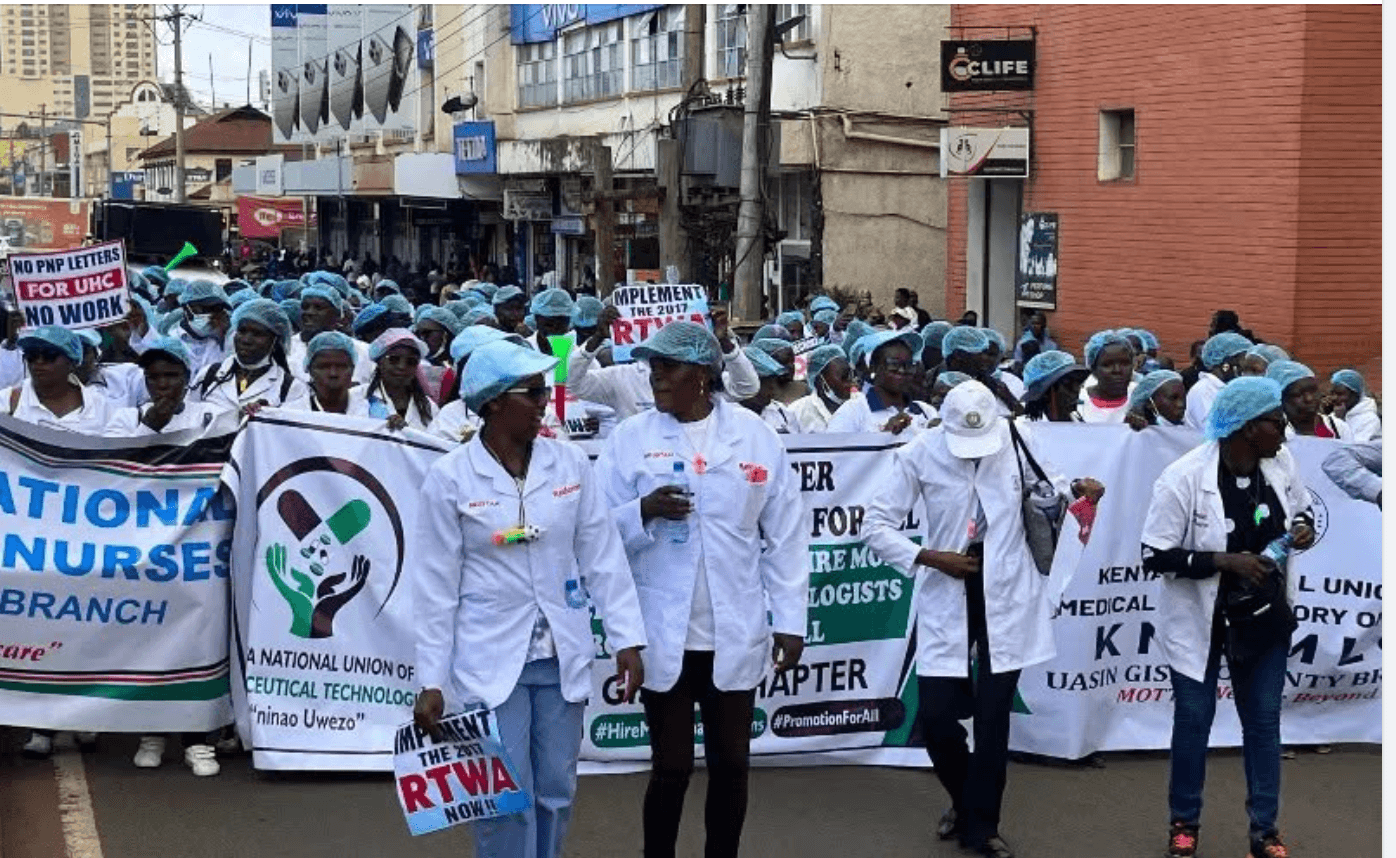
Kenya Nurses' Strike Enters Fourth Week as Talks With Counties Show Progress