Form 1 admissions end tomorrow amid disquiet in the Education ministry over its preparedness to support high transition.
Should all students be admitted this year, the total population in secondary schools is expected to stand at an all time high of 3.9 million learners. The huge intake has prompted fears of a possible decline in the quality of education, with principals, teachers, unions and parents raising concern on the measures put in place to support 100 per cent transition.
As of yesterday, most schools had recorded at least a 50 per cent admission rate. Already, principals, teachers, unions and parents have taken the government to task over the mismatch between infrastructure and the numbers enrolled.
According to a ministry report, schools elevated to national and extra-county positions in the past one year, were to be prioritised in getting infrastructure development to help accommodate more numbers.
Read: 100% transition plan impossible – Knut
There are 103 national schools and 331 extra-county schools.
The report shows, however, that facilities in only 88 of these schools were improved. None got any lab equipment. Only 164 laboratories and 700 classes were built.
According to the ministry guidelines, a standard classroom should have 45 students. This means the new classes can hold only 31,500 learners. Ministry data further reveal that 989 new secondary schools have been built in the last one year, pushing the number of schools to 10,655, from 9,966.
Kenya National Union of Teachers secretary general Wilson Sossion says the variance threatens to constrain the already limited resources and will hurt learning.
In the past two years, the government has absorbed about 1.89 million learners in secondary schools.
In national schools such as Maranda Boys, Utumishi Boys and Machakos Boys, principals have increased streams to eight from five to accommodate this year’s intake.
Read: Boarding schools to open day wings to achieve 100% transition
The ministry, in a report to the Treasury, acknowledges that the implementation of the 100 per cent transition from primary to secondary school may fail due to lack of funds.
The education sector’s Medium Expenditure Framework Budget clouds realisation of five key projects. They are free day secondary education, a collective bargaining agreement for lecturers and teachers, implementation of differentiated unit cost and implementation of TVET capitation, and loan. According to the report signed by Basic Education PS Belio Kipsang, the sector falls short of Sh113 billion required to ensure smooth implementation of the projects.
In the wake of the looming crisis, the ministry has convened a meeting next week to discuss measures to protect quality.
Kenya Secondary Schools Heads Association chairperson Indimuli Kahi said some schools will have to accommodate more students in their classes — more than the recommended 45 — even though this will interfere with the teacher-student ratio.
“Most schools have a big challenge. Some classrooms have up to 60 or 70 students after last year’s admission, instead of the recommended number. School heads can’t create extra streams because of inadequate number of teachers,” Kahi said on the phone.
The Teachers Service Commission this year recruited an additional 7,000 teachers to handle the high admission.
Sossion yesterday said the number is far much lower than the recommended figure.
Kenya Parents Association chairman Nicholas Maiyo urged the government to ensure admission does not compromise the quality of education. He called for more investment.
More: Lack of space dims government's plan for 100% form one transition
Related reporting
More General News →
Former Attorney-General Paul Kihara Kariuki Dies at 72
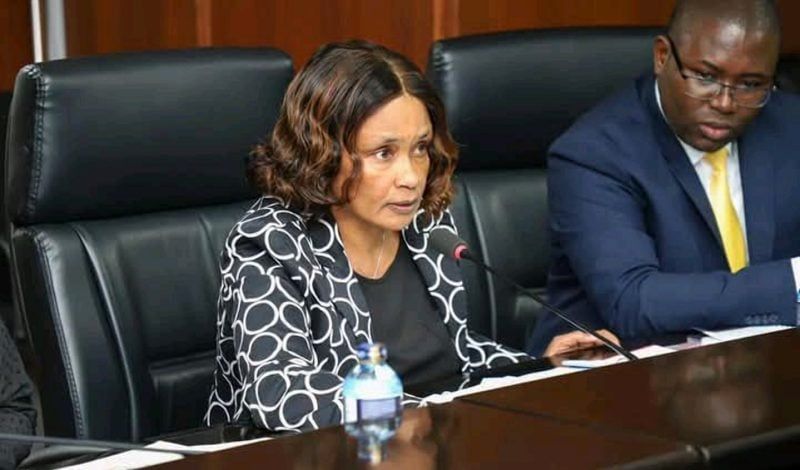
Teachers Service Commission Shortlists Five Candidates Including Acting CEO Evaleen Mitei for CEO Position

Mining Cabinet Secretary Hassan Joho Sets Fireworks Rules for Diwali 2026