More by this Author
How is the infighting in the ruling party likely to impact on the management of the economy? Will this coalition hold? Can we expect major realignments in political parties in the coming months?
These questions keep coming up whenever I meet diplomats or foreigners with interests in Kenya. Instead of excitement, what you read in the air is anxiety. Our leaders are engaged in activities that will keep the country in a permanent electioneering mood until 2022.
If Jubilee leaders persist in dissipating energy in internecine warfare, the party will degenerate into a lethargy with no capacity to resolve the economic woes that the country faces.
The most pressing challenge for the government in the coming months is finding the money to repay the principal of the first Eurobond we borrowed in 2014. We have to raise the money to service the syndicated loan we took out two years ago. The National Treasury must quickly raise Sh150 billion from somewhere.
Since we did not set up a sinking fund to accumulate this repayments, it is obvious that the only option open to Cabinet Secretary Henry Rotich is to incur more debt.
When they tell you that our indebtedness is bearable and that we are still within debt-to-GDP sustainable frameworks and thresholds by multilateral agencies, they are dead wrong. The litmus test is for you to show that the asset you invested the borrowed money on is generating enough revenues to cover both its operating cost and loan repayment.
The other day, President Uhuru Kenyatta told a panel of journalists in Mombasa that he was not worried about the level of our indebtedness because the borrowed money was invested in development projects. Where are the revenues generated from the projects the 2014 Eurobond proceeds were invested in?
How can you claim that your commercial borrowings are sustainable when you have to borrow more money to repay old loans?
Clearly, we are in very hard times. And the political environment is going to worsen the situation because there is a likelihood that we are headed for more factional intrigues within the ruling party in the coming year.
Mr David Murathe, who has just exited as vice-chairman of Jubilee, has served notice that he will still be playing in the same space. I see mutual suspicions within the ruling party intensifying in the coming months, depending on several factors.
First, the pace and direction which the ongoing corruption investigations and prosecution of public officials takes will be a major factor. Mr Murathe has stepped aside against the backdrop of deep feelings of uncertainty and anxiety by sections of the Kalenjin elite, who harbour the view that the anti-corruption crusade targets only public officials from their community.
The second factor is the much-talked about Cabinet reshuffle.
Should, in reshuffling the Cabinet, President Kenyatta radically upset the 2013 power sharing formula that stipulated how top positions in the Cabinet and key parastatals were dished out between the two ethnic communities that form the bedrock of Jubilee’s support — namely, the Kalenjin and the Kikuyu — internal strife within the party may go several notches higher.
The third source of likely conflict will be the goings-on around the so-called Building Bridges Initiative, especially the debate around the proposal for referendum on a new constitutional dispensation. So far, President Kenyatta has strenuously played his cards close to his chest, resisting the temptation to openly show his hands, especially on the big and divisive issues rocking his party.
Mark you, the official position is that Mr Murathe resigned of his own volition. Go tell that to the birds!
The fourth factor quietly fuelling mutual suspicions is a subterranean struggle between factions for patronage of big Chinese contractors.
Today, being the go-between a big Chinese contractor and the government has become a very lucrative business for the political elite.
Away from the limelight, Mr Murathe has been attracting a great deal of envy and resentment from sections of the party membership for dominating dealings with big Chinese contractors and for the high-level contacts and relationships he has cultivated with them.
His status and influence was on display last year, when he accompanied President Kenyatta on an official visit. He would be seen sitting side by side with the President during negotiations with top Chinese government officials.
His activities in China elicited loud murmurs with his critics within the Jubilee leadership questioning why he had been allowed to assume a profile higher than even Cabinet secretaries during the negotiations.
We must bring political temperatures down.
Related reporting
More General News →
Kenya Police Set to Get New Uniform as Ruto Prepares for Kiganjo Unveiling
Ruto Announces KSh1.2 Billion University for Emurua Dikirr
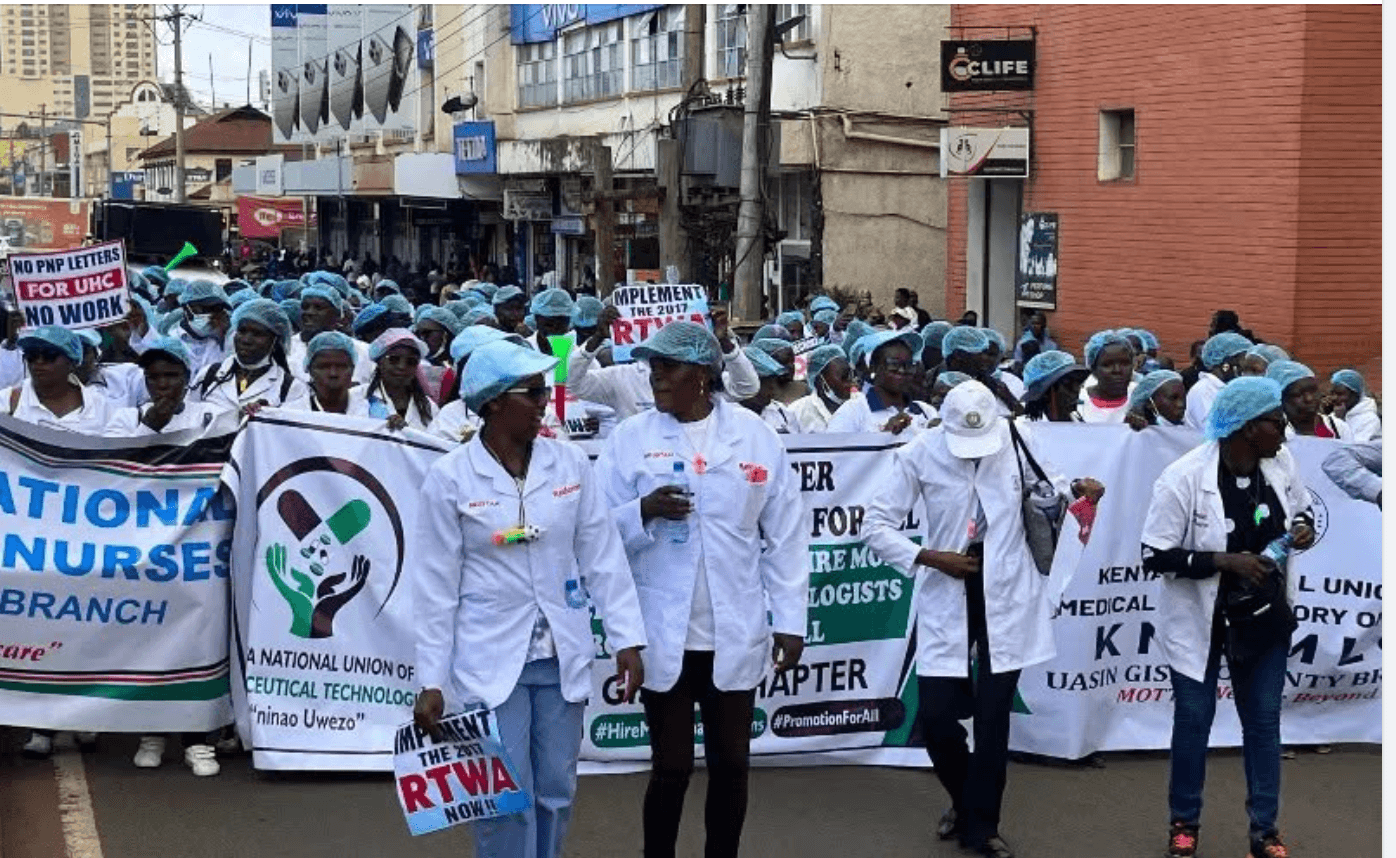
Kenya Nurses' Strike Enters Fourth Week as Talks With Counties Show Progress