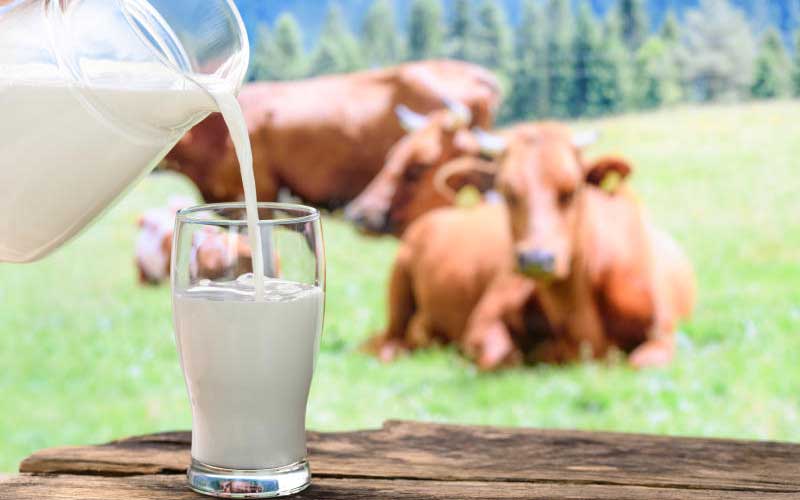
Production fell from 63 million litres to 40 million
SEE ALSO: Paul Pogba tests positive for coronavirus
Mr Munya said if the low production is not reversed, the country may be forced to import milk to cover the deficit. “The market is now relying on previous stock. If farmers won’t go back to production, we will be forced as a ministry to order importation of milk to cover the deficit,” he said. Kenya has one of the biggest dairy sectors in Africa, producing 5.2 billion litres annually and supporting more than 1.8 million small-scale farmers. According to data from the board, Kenya leads the pack in the East Africa region with per capita consumption standing at 110 litres per year. The industry contributes four, 12 and 44 per cent to the national gross domestic product (GDP), agriculture GDP and livestock GDP respectively, official data indicates. It employs 1.2 million people directly and indirectly. Earlier this year, the government ordered State-owned processor New KCC to buy milk from farmers at Sh33 per litre, up from Sh25, in a move aimed at boosting farmers income and morale. But the sub-sector has been slow to modernise, which has hindered its huge potential. Farmers still use traditional means of production that only gives them 7-8 litres per day of milk, while heavily relying on rainfall to feed livestock. Thus when there is enough rain the sector experiences a glut and the converse during the dry season, leading to uneven supply of milk and price fluctuation in the market. To safeguard the sector from this challenge, Munya assured farmers that the government will not turn away any farmer due to excess supply of the product.Related reporting
More Business News →
High Court Blocks Oigara Bank Fraud Probe as Stanbic CEO Escapes Questioning

15 Proven Ways to Make Money Online in Kenya; No Scams!

High Court Halts Equity Bank's Takeover Bid on Swafi Foods in Landmark Ruling
