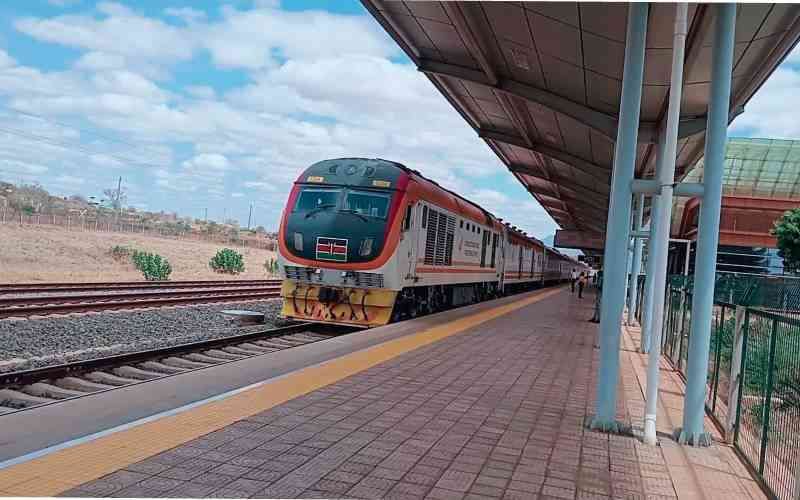
President William Ruto responded to opposition leaders’ criticism of the Standard Gauge Railway, saying the World Bank report they cite is being selectively quoted and that the railway was built under a previous administration.
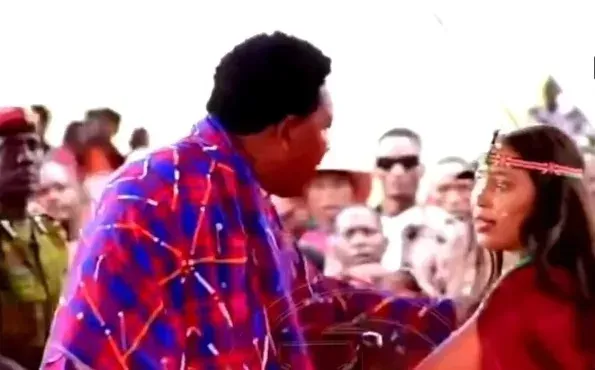
He made the remarks at a church service in Narok at St Mary’s Girls High School, urging opponents to read the entire World Bank report rather than focus on sections about procurement irregularities and governance failures.
Ruto suggested that some opposition figures may be financing their campaigns with proceeds from SGR tenders and warned them against lecturing the government while benefiting from the contracts.
The World Bank’s November 2026 Kenya Economic Update highlighted governance weaknesses in public procurement, non-competitive contracting and questionable land compensation, using the Mombasa-Nairobi SGR as a key example.
The report estimated that Kenya could have saved up to US$900 million, about KSh117 billion, in the initial construction of the railway if it had been built at the same cost per kilometre as Tanzania’s Dar es Salaam-Dodoma line.
It placed the cost of Kenya’s railway at roughly KSh988 million per kilometre, compared with KSh741 million for Tanzania’s electrified line and KSh689 million for the Djibouti-Addis Ababa line, and said at least 30 percent of the potential savings could have been achieved by addressing direct contracting, land speculation and alleged fraud in land matters.
Nairobi Senator Edwin Sifuna, a vocal critic, said the findings confirm long-standing concerns about opaque government transactions and noted that public procurement accounts for about 10 percent of Kenya’s GDP but only KSh410 billion of procurement information was published for the 2024/25 financial year.
He added that detailed information on contract values and successful bidders was available for only KSh186 billion, underscoring a disclosure gap that hampers public oversight.
Ruto pointed to reforms his administration has introduced, including the electronic government procurement system, the expansion of the eCitizen platform and the Conflict of Interest law, which he said the World Bank report recognises.
He also defended the government’s plan to extend the SGR from Narok towards Bomet, Kisii and Malaba, noting that the World Bank acknowledged these extension plans.
Ruto concluded that critics are ignoring the reforms and achievements while focusing on historical procurement failures.
Related reporting
More Politics →
Ndindi Nyoro Urges President Ruto to Respect Retired President Uhuru Kenyatta
Former Makueni Governor Kivutha Kibwana Warns Opposition Divisions Could Hand Ruto Easy Re-election in 2027
President William Ruto Remarks on KMPDU Secretary Davji Atellah’s Lang’ata MP Bid