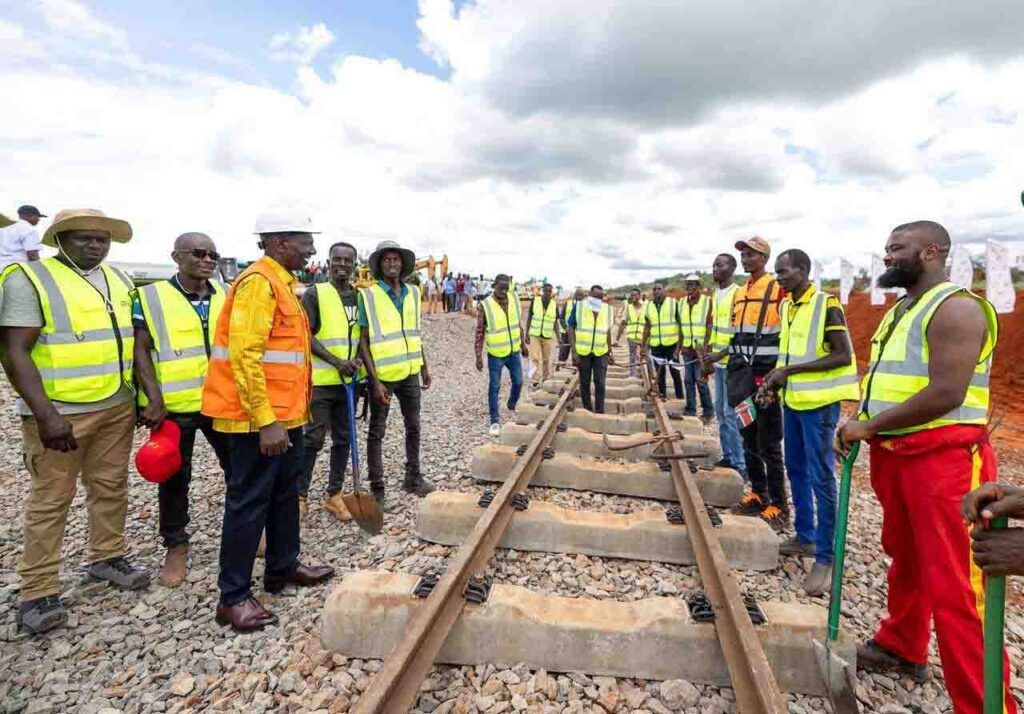
The World Bank’s Kenya Economic Update released on November 4, 2026 says Kenya could have saved up to KSh117 billion on the initial construction of the Mombasa–Nairobi Standard Gauge Railway if the project had been built at the cost per kilometre of Tanzania’s Dar es Salaam–Dodoma line.
The report puts Kenya’s cost at about KSh988 million (US$7.6 million) per kilometre, compared with KSh741 million (US$5.7 million) for Tanzania and KSh689 million (US$5.3 million) for the Djibouti–Addis Ababa railway.
Applying Tanzania’s unit cost to the Kenyan line would have reduced spending by roughly KSh116-117 billion, of which the World Bank attributes at least 30 percent to governance challenges such as direct contracting, land speculation and fraud in land titling, valuation and compensation.
The World Bank notes that Kenya spent about KSh247 million more per kilometre than Tanzania – a 33 percent premium – and KSh299 million more per kilometre than the Djibouti line.
The report cites a June 2026 Transparency International Kenya assessment that flagged the SGR as highly vulnerable to corruption, and a draft 2027 Budget Policy Statement from the National Treasury released in October 2026 that recorded Kenya borrowing approximately KSh648 billion from China to fund the railway from Mombasa towards Naivasha.
Beyond the railway, the World Bank highlights broader procurement issues, saying government agencies often prefer direct procurement over competitive tendering and that some public-private partnership projects arise from unsolicited proposals lacking transparency.
The lender also points to power purchase agreements, noting a 2021 assessment by the Energy and Environmental Development Advisory and the Energy for Growth Hub that found only 24 percent of 42 PPAs signed by Kenya Power underwent competitive procurement.
Regarding informal workers, the World Bank estimates they may lose up to 20 percent of daily earnings to bribes, with boda boda riders paying between 5 and 20 percent of earnings – roughly KSh50 to KSh100 per day – and overall payments to traffic police amounting to about KSh88 billion annually.
To curb such practices, the World Bank recommends fully implementing reforms to de-criminalise minor traffic offences and introducing an instant-fine system, as well as coordinated measures by national and county governments to reduce harassment of informal workers by inspectors.
Related reporting
More General News →
Education Ministry Publishes 2027 School Calendar With Term Dates and Exams
Bungoma Police Arrest Kibabii University Student Over Alleged KCSE 2026 Paper Leak
High Court Rejects Urgent Petition Over Public Funding for Bayern Munich-Ajax Friendly