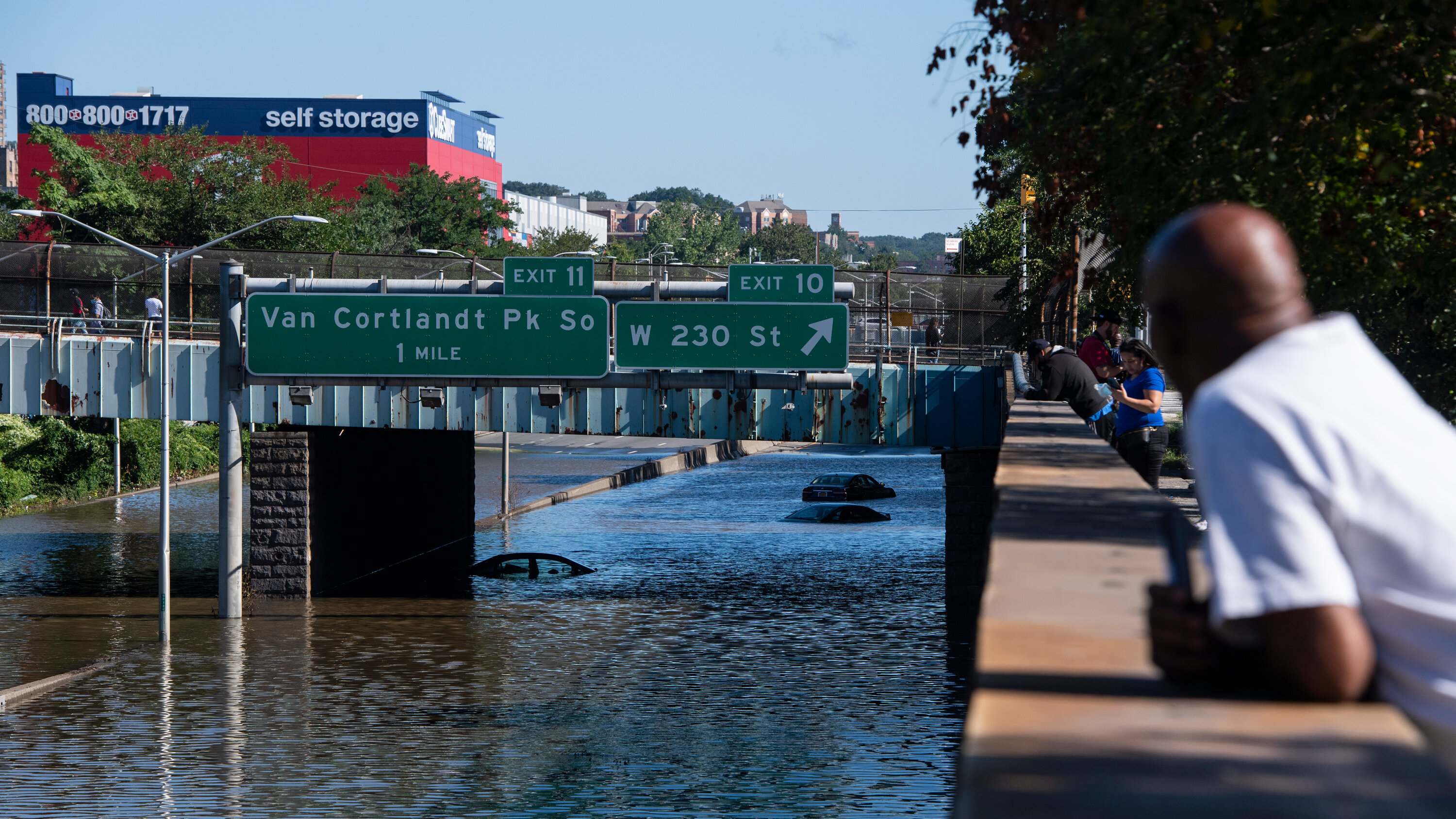
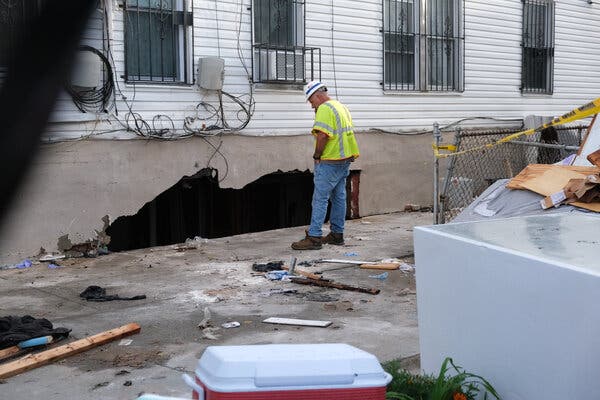
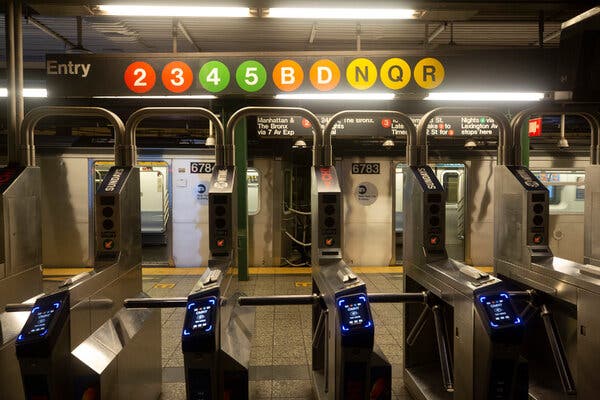
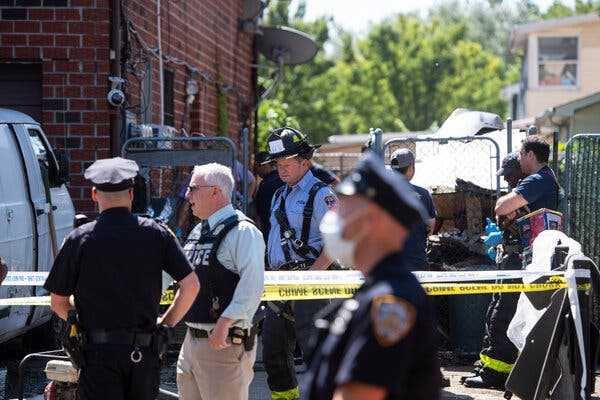
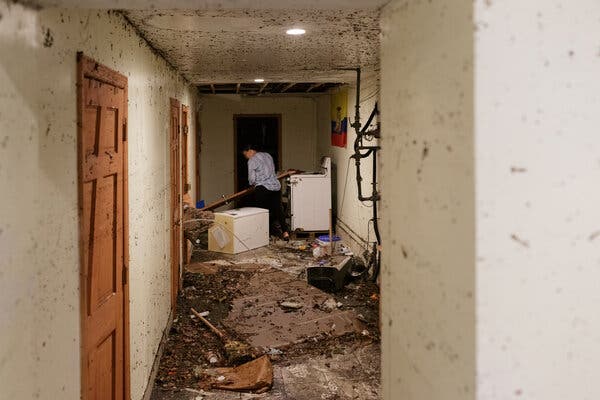
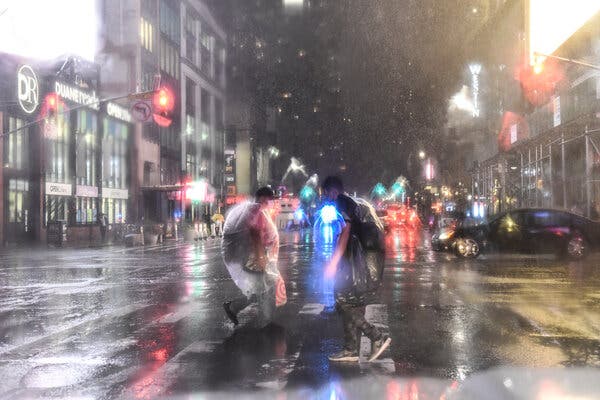
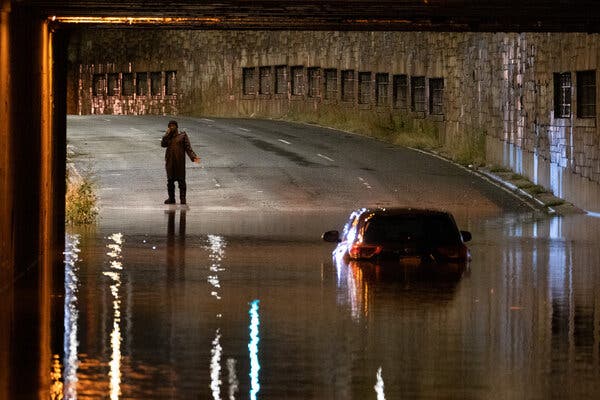
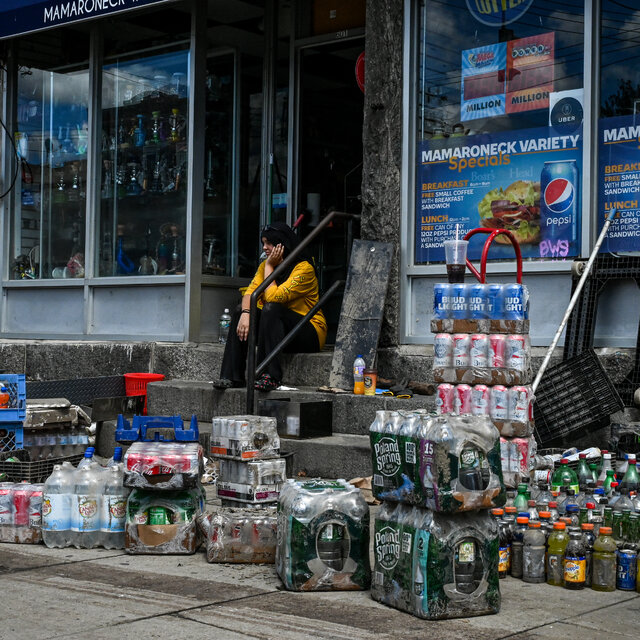
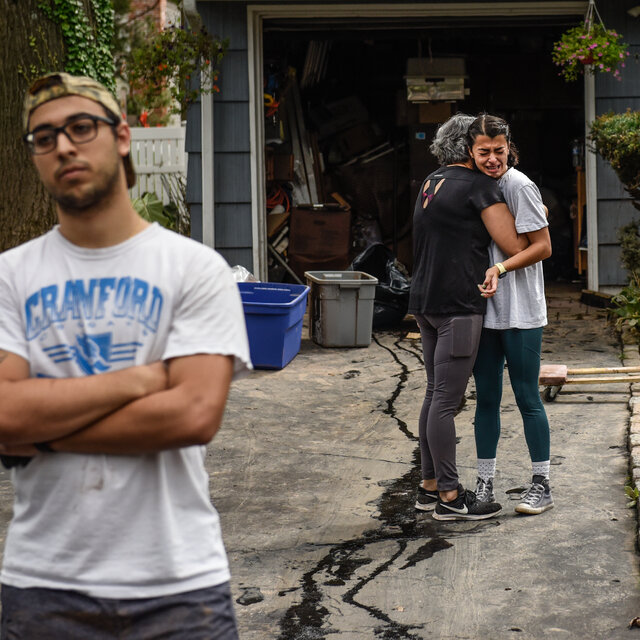
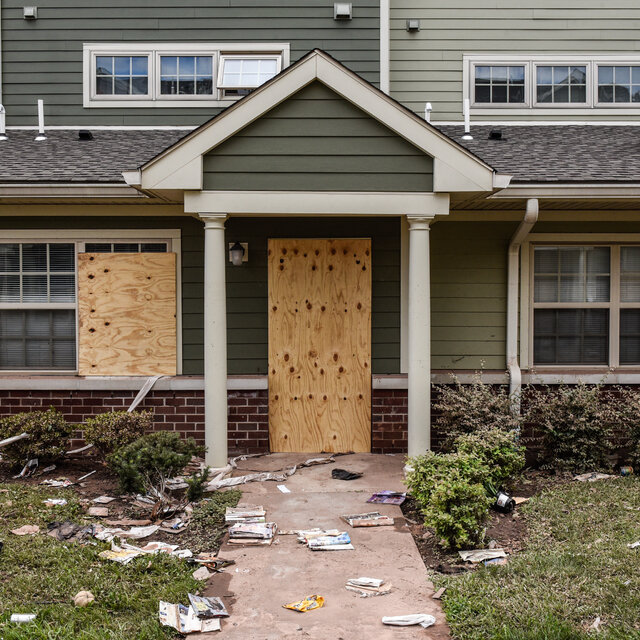
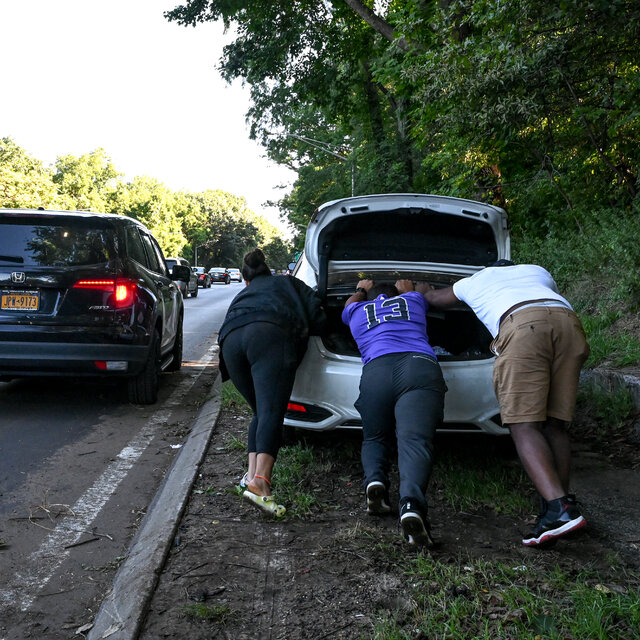
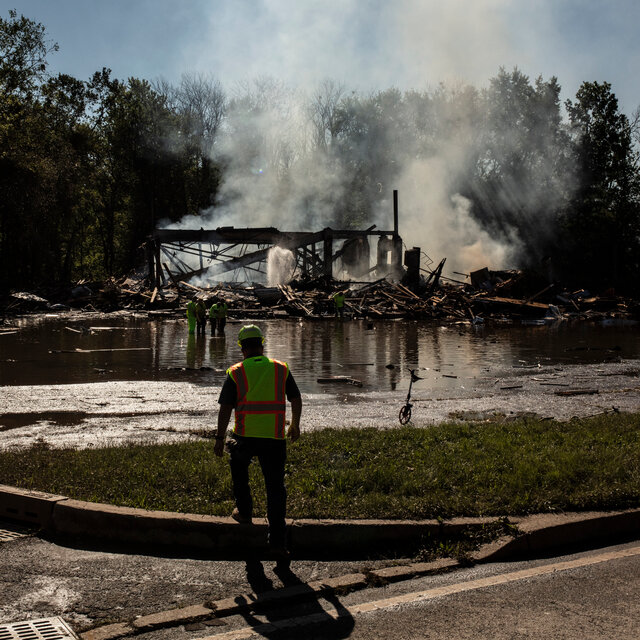
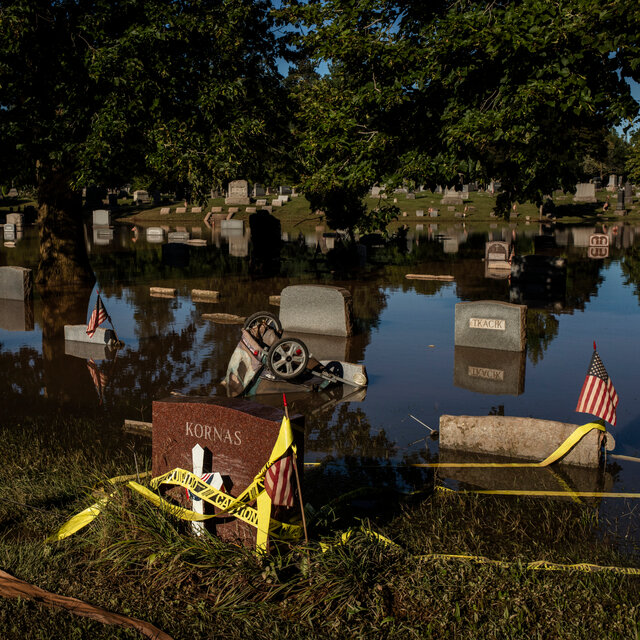
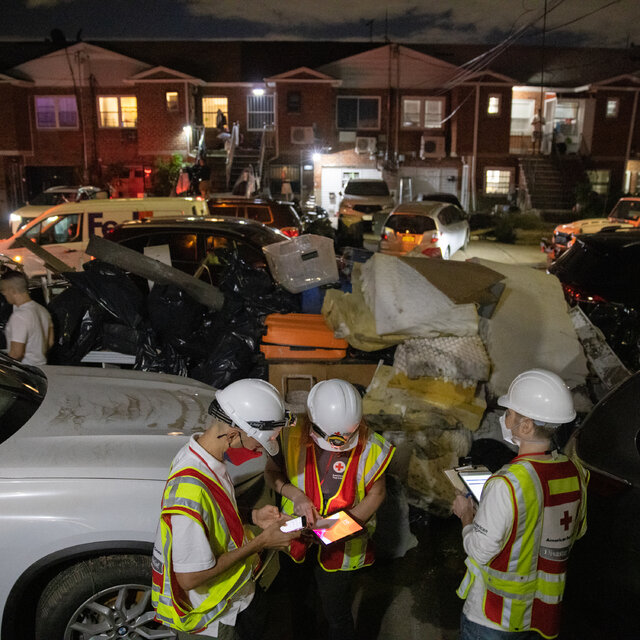
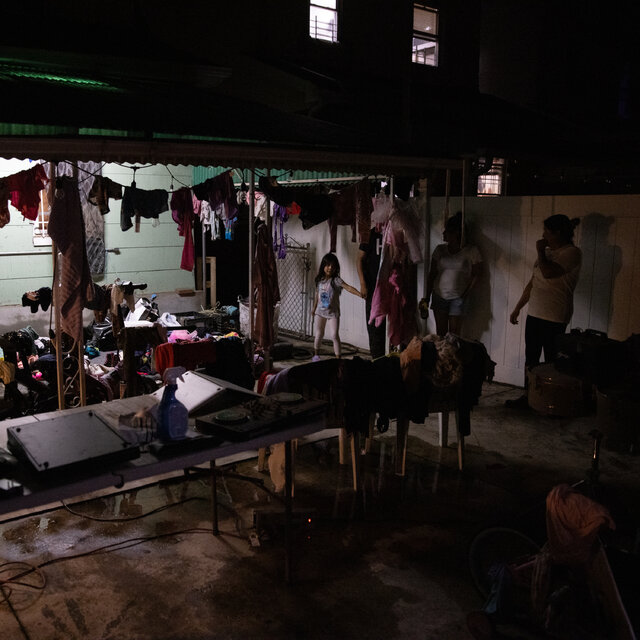
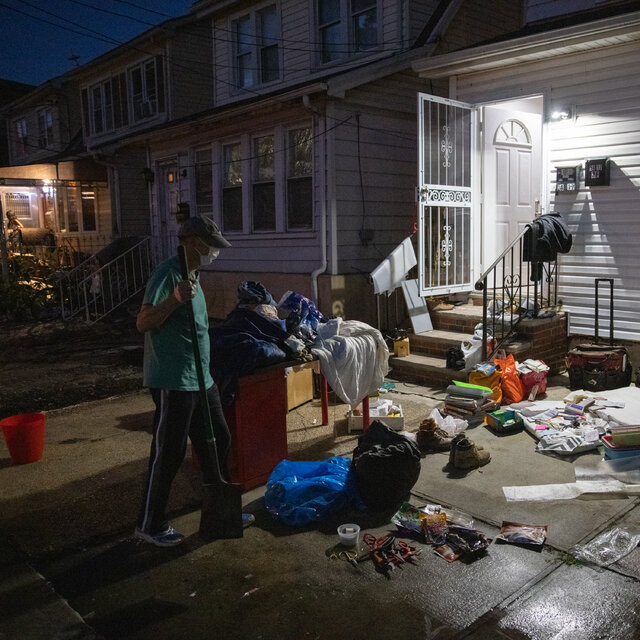
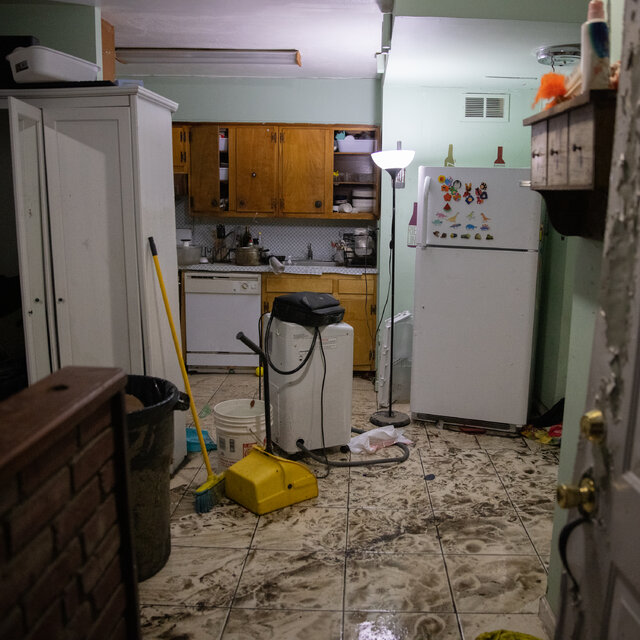
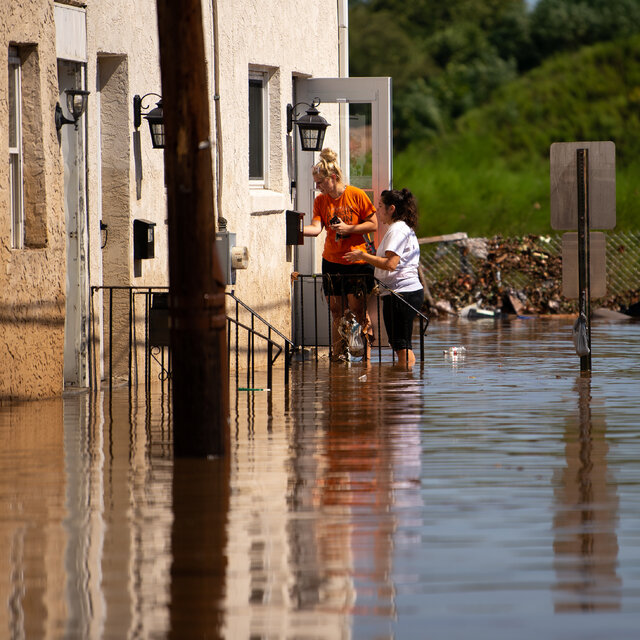
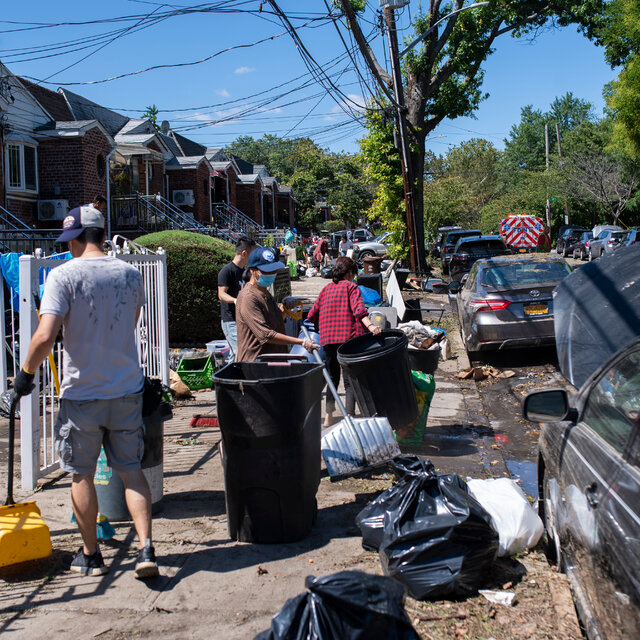
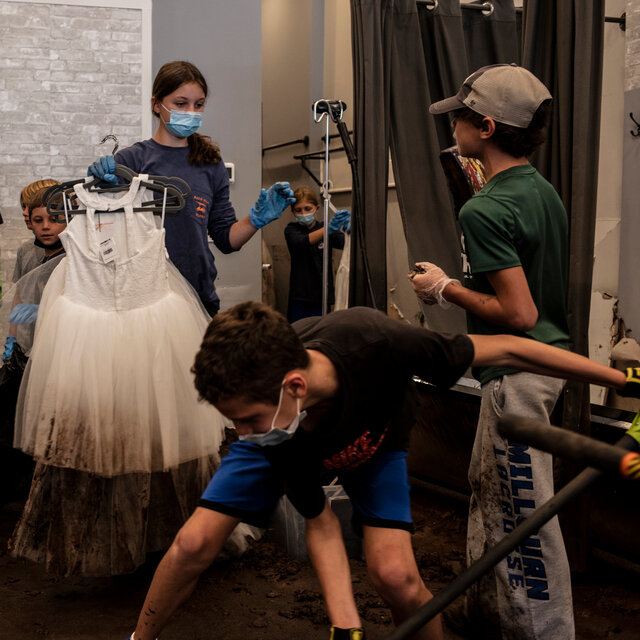
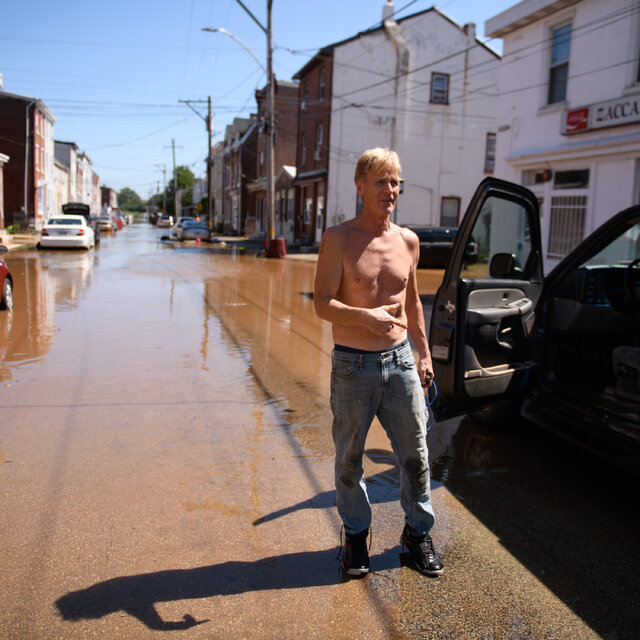
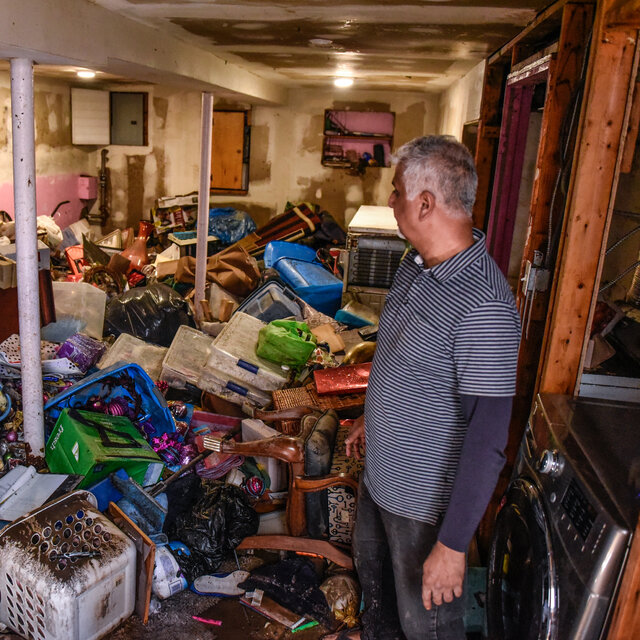
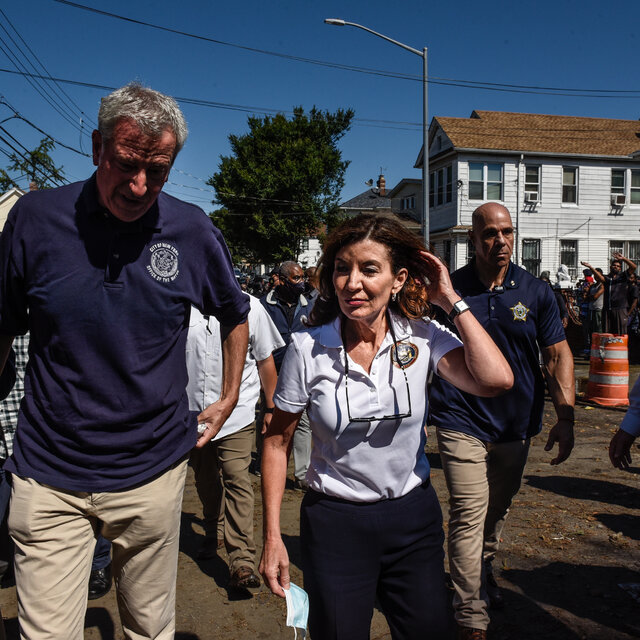
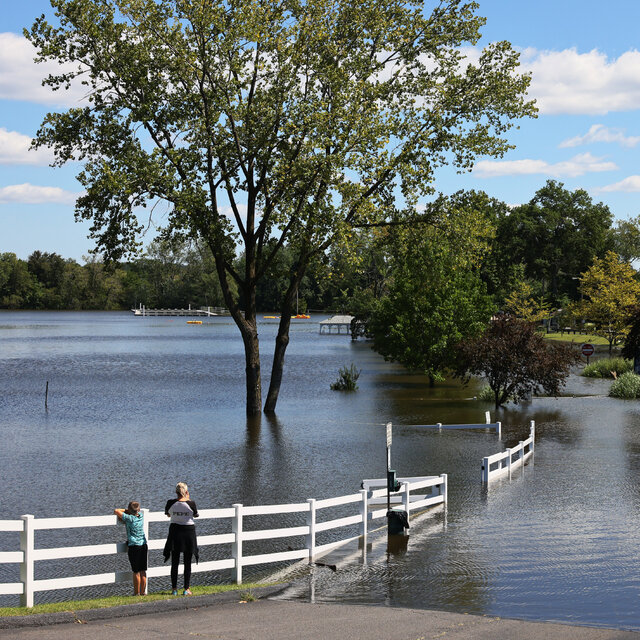
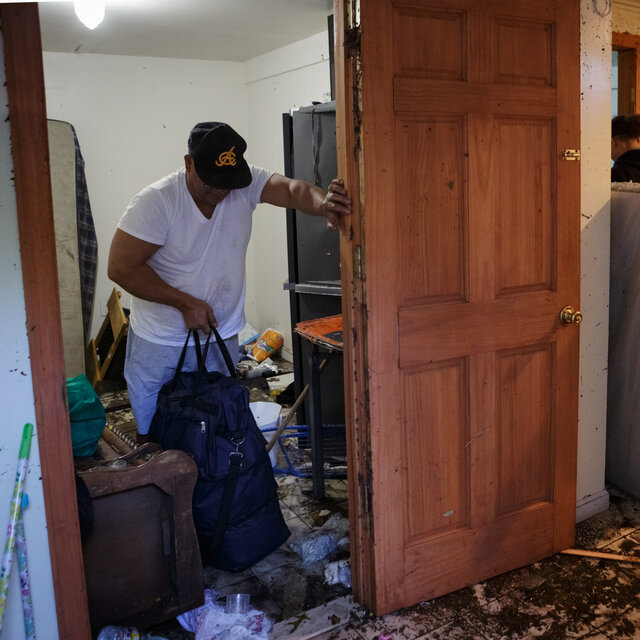
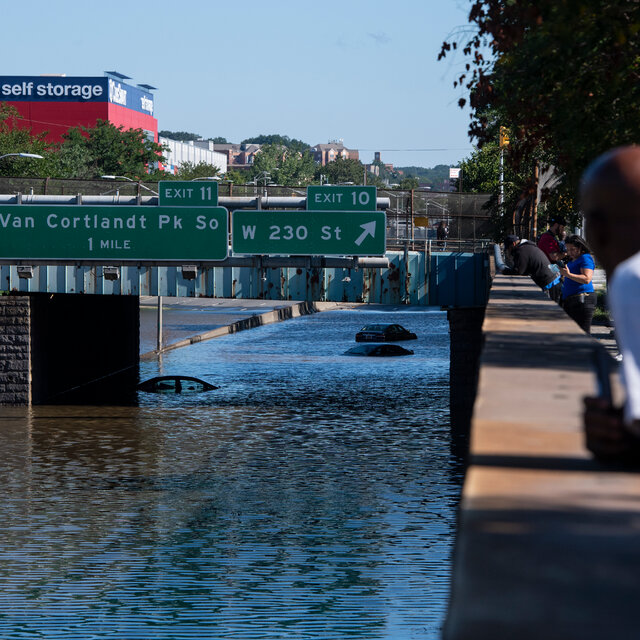
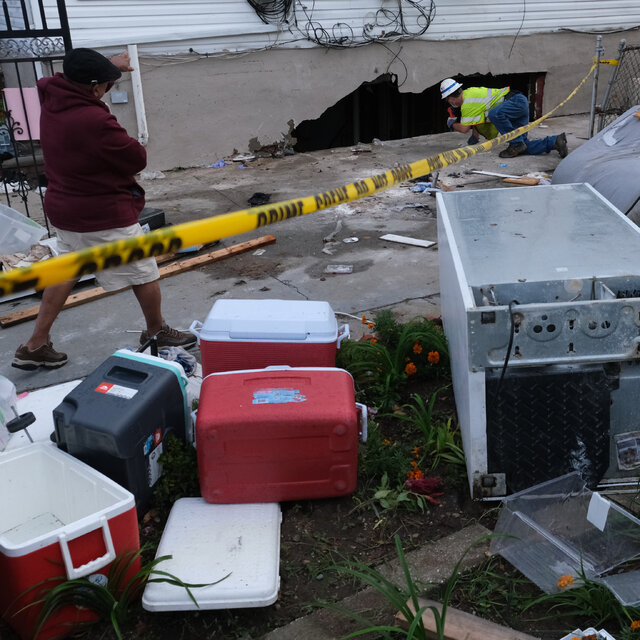
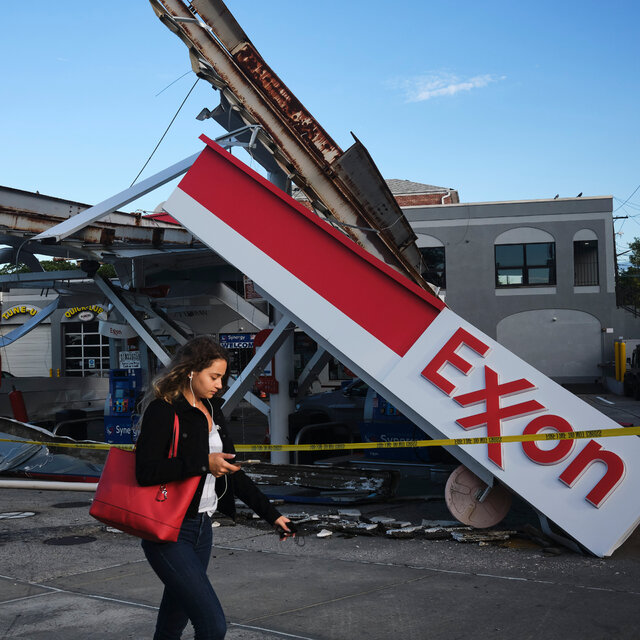
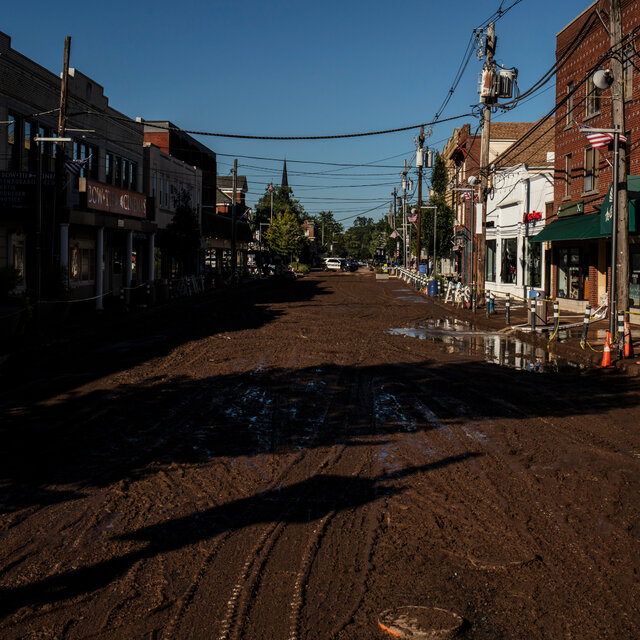
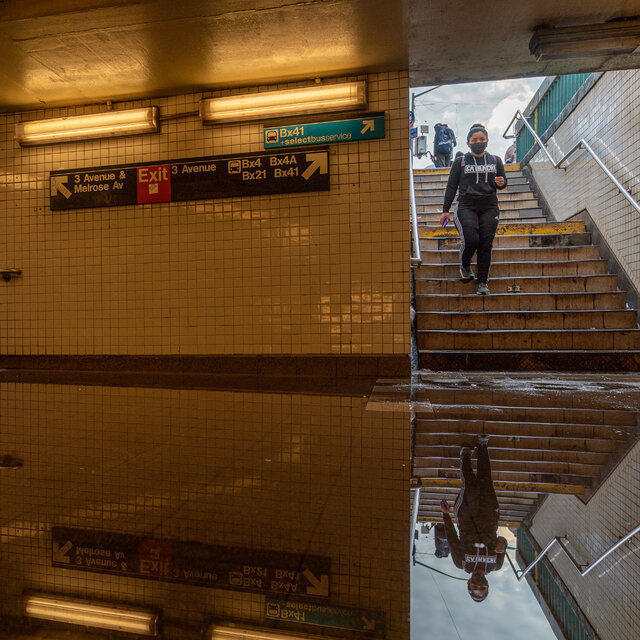
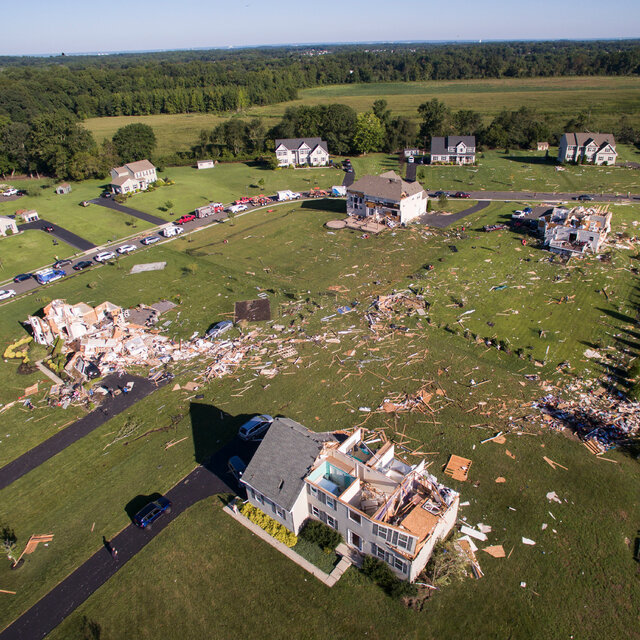
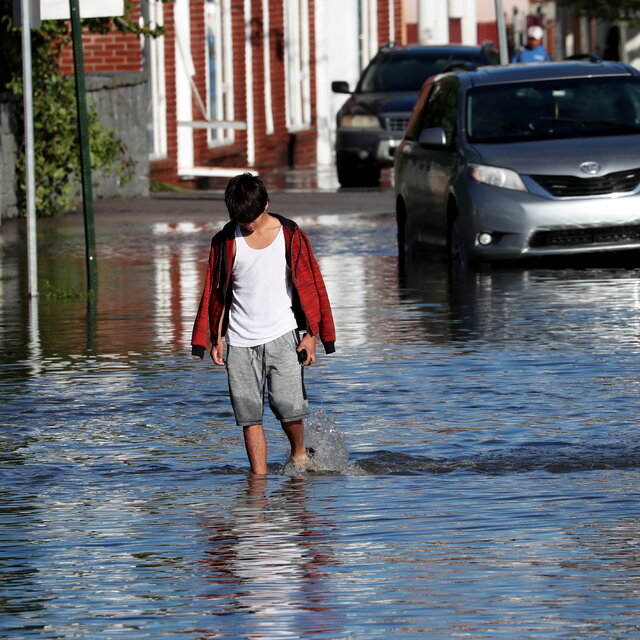
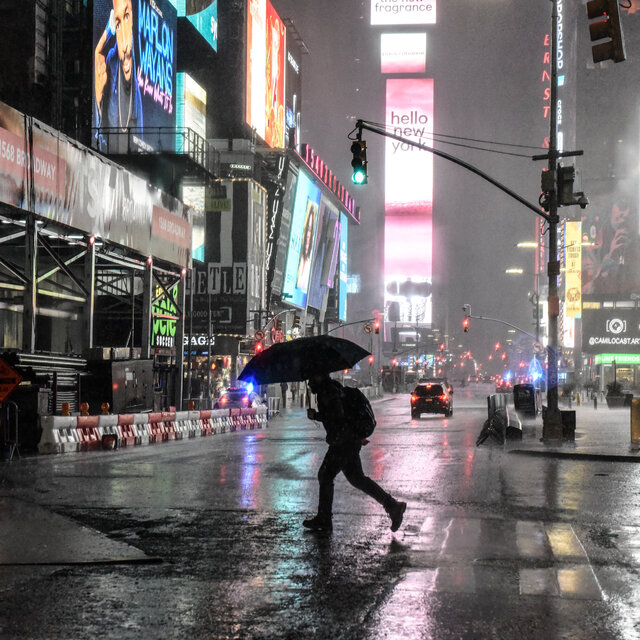
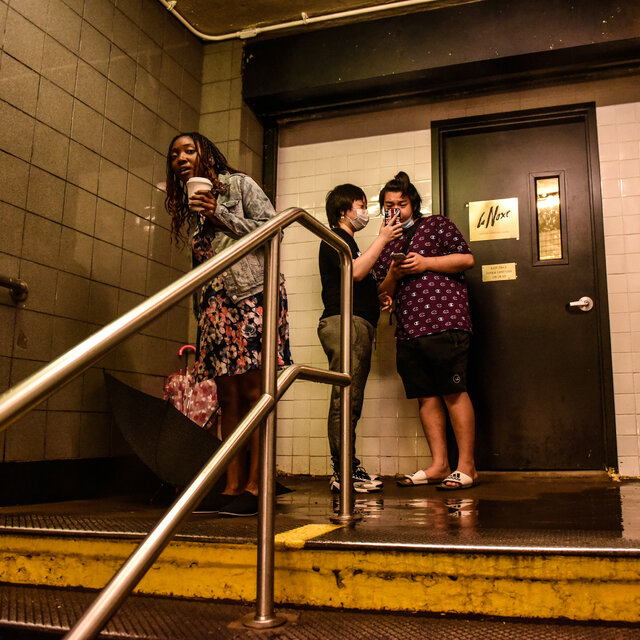
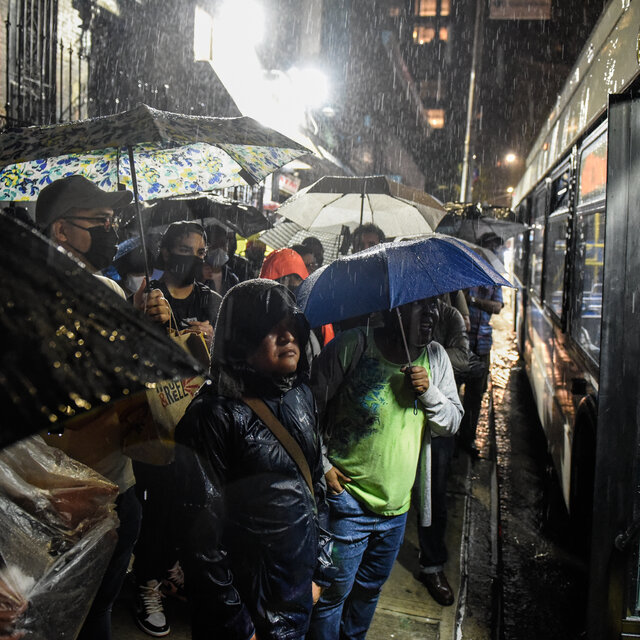
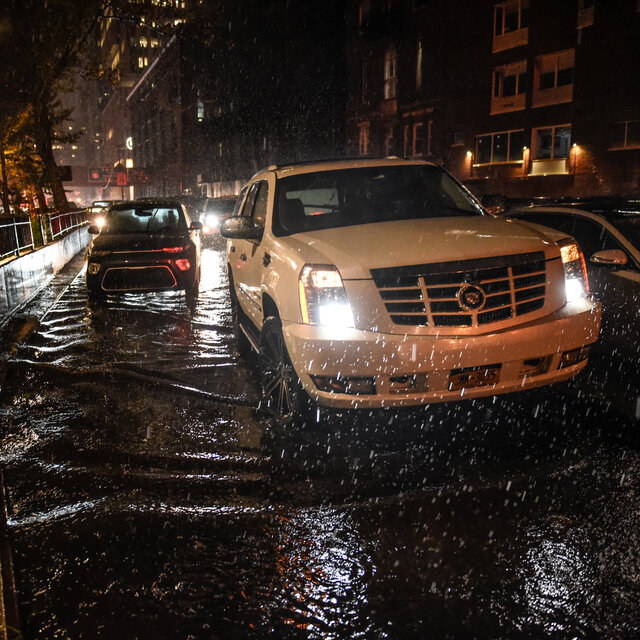
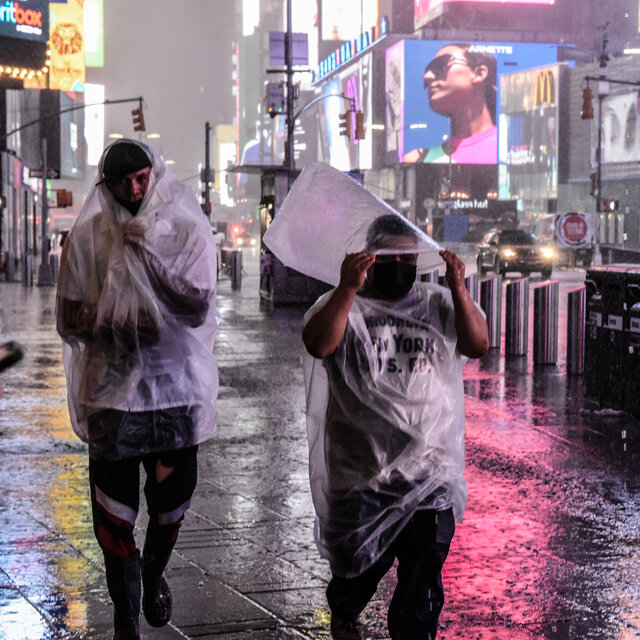
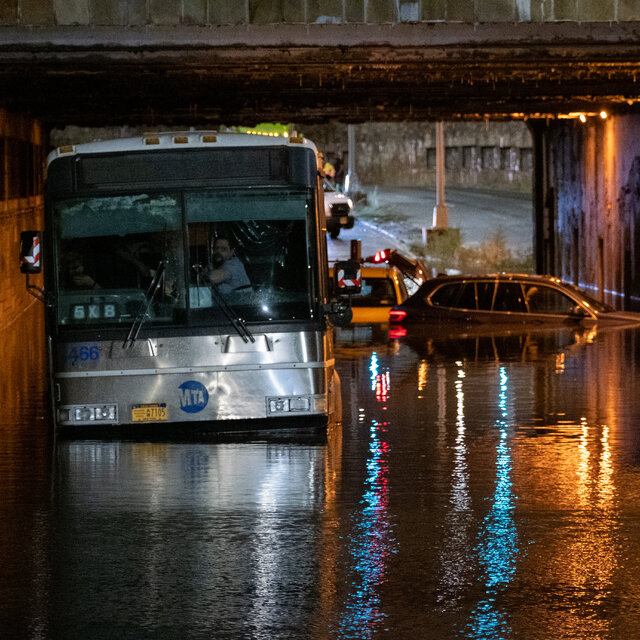
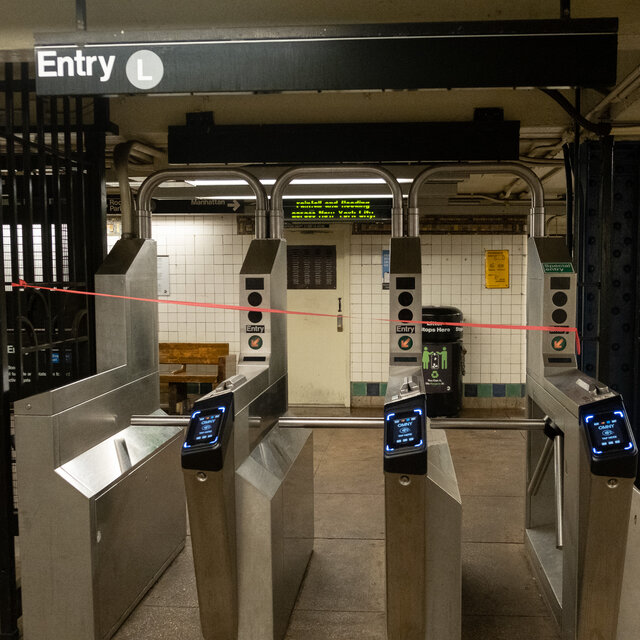
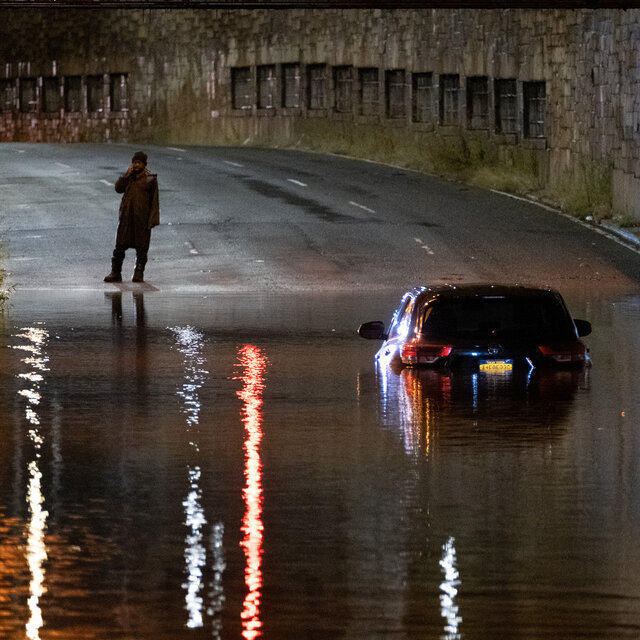
The remnants of Hurricane Ida caused flash flooding and a number of deaths and disrupted transit across parts of New York and New Jersey.
Look!
The remnants of Hurricane Ida caused flash flooding and a number of deaths and disrupted transit across parts of New York and New Jersey.CreditCredit...Gregg Vigliotti for The New York Times
The death toll from the remnants of Hurricane Ida grew on Friday with the announcement of two more deaths in New Jersey, bringing the total number of lives lost to 45 across four states hit that were hit by the storm Wednesday evening.
Authorities fear the toll will increase further: Gov. Phillip D. Murphy of New Jersey said at least six people were still missing in the floods. “This was a deadly and dangerous storm, and we continue to face its aftereffects,” he said at a morning news conference. The dead include 25 people in New Jersey, 15 in New York, four in Pennsylvania and one in Connecticut.
In New York City, where most of the deaths occurred when people were trapped in flooded basement apartments, Mayor Bill de Blasio announced on Friday that going forward, when flash floods were forecast, the city would go door-to-door in neighborhoods with high concentrations of such apartments and evacuate residents.
New Jersey officials released a county-by-county breakdown of deaths. They were concentrated in a belt across the upper middle region of the state, with most occurring in Hunterdon County (6 deaths), Union County (5), Essex County (4) and Somerset County (4).
As the region undertakes the daunting task of assessing damage, digging out and cleaning up, Mr. Murphy, speaking in Millburn, a Newark suburb whose downtown was overwhelmingly flooded, said the state would quickly make $10 million in aid available to small businesses.
The aid will be distributed in grants of $1,000 to $5,000. “If you’ve been crushed and you can prove it, you’re eligible,” Mr. Murphy said.
Mr. Murphy and Gov. Kathy C. Hochul of New York both said that they were expecting large infusions of recovery aid from the federal government once a federal disaster has been declared, something that President Biden is expected to do after his declaration Thursday night of federal emergency status for New York and New Jersey.
Ms. Hochul said the state would easily surpass the $30 million threshold required for the federal government to eventually issue a so-called major disaster declaration, which would loosen a wider range of federal assistance for individuals and infrastructure projects.
There are no figures yet on the extent of property damage caused by the storm, which dumped half a foot of water in just a few hours across parts of the region, but many hundreds of homes, at least, were damaged. The Red Cross said it housed nearly 400 people in temporary shelters in New Jersey, Pennsylvania and New York Thursday night.
On Friday, New York City’s Department of Education said that 234 of its roughly 1,600 public school buildings were affected by the storm, mostly by basement flooding, but that all the buildings will reopen when school starts Sept. 13.
As of Friday afternoon, more than 30,000 homes in the region were still without power, including 20,000 in Pennsylvania and more than 7,000 each in New Jersey and New York.
The status of mass transit in the region remains spotty. Most New York City subway lines are running regular service. But on commuter rails, all service of Metro-North Railroad is either suspended or limited, and three New Jersey Transit lines — the Gladstone, Pascack Valley and Raritan Valley — remain shut down. Long Island Rail Road service is back to normal.
“We have to change everything,” Mayor Bill de Blasio said about the city’s storm response.Credit...Dakota Santiago for The New York Times
In the wake of the deaths of at least a dozen people in New York City from this week’s flooding, most of them in basement apartments, Mayor Bill de Blasio announced Friday that the city would increase the use of evacuation orders and travel bans, issue stronger flood warnings to those living in basement apartments and send emergency responders door-to-door to help evacuate residents.
“We have to change everything,” Mr. de Blasio said of the effort he called “Climate-Driven Rain Response.”
“It’s not like the rain we used to know,” he added. “It’s a different reality, a speed and intensity that we now have to understand will be normal.” The city recorded its heaviest one-hour rainfall ever on Wednesday, 3.15 inches, breaking a record set only days earlier by Tropical Storm Henri.
Mr. de Blasio said that the city will now issue travel bans more quickly. And instead of using evacuation to remove people from coastal areas, the city will now move to evacuate people in basement apartments and other areas that face flooding from heavy rain.
“This is a very forceful measure. It’s not just saying to people you have to get out of your apartment, it’s going door-to-door with our first responders and other city agencies to get people out,” Mr. de Blasio said.
The city will target special phone alerts to neighborhoods, particularly in Queens, with heavy concentrations of basement apartments. The apartments are collectively home to tens of thousands of New Yorkers, largely immigrants, and are mostly illegally converted and subdivided units.
In spite of warnings from the National Weather Service that New York City would see heavy rain and flash floods, Mr. de Blasio said the intensity of Wednesday’s rainfall was unprecedented and caught city officials off guard.
“I’m telling you, this was not part of any previous playbook, but we’ve got to literally change the whole way of thinking because as good as some of the projections are, they can’t always keep up with weather that changes this rapidly and this radically,” he said on MSNBC.
Essence Crockett was wrapping up a visit to her mother, who has advanced Alzheimer’s disease, when she heard her mother’s home health aide scream from the other side of the garden apartment in Forest Hills, Queens.
“She started yelling from the next room, ‘Come, come! There’s water coming in!’” Ms. Crockett said. “I ran out into the living room and water was just forcing its way through her front apartment door and also her second garden door.”
The two women — Ms. Crockett and the aide, Obianuju Okoro — began to frantically grab chairs and other items they thought might block the gushing water. But it would not stop pouring in.
Claire Adams, 88, who cannot walk, was trapped in rising water that reached her neck before help came in through a window.Credit...Essence Crockett
Ms. Crockett’s mother, Claire Adams, 88, can no longer walk, so the women ran to her room and began the laborious process of transferring her from her hospital bed to her wheelchair using a hydraulic lift.
By the time they wheeled Ms. Adams into the living room, the force of the water had sealed both doors firmly shut. Water rose to their ankles, and then their knees. They were trapped.
Panic set in. Ms. Adams, whom her daughter described as “agitated” even on a good day, began to scream, “I’m cold! I’m wet!” as the water rose around her in her wheelchair.
“There was no way to explain what was happening to her,” Ms. Crockett, 60, said.
As the water rose, she and Ms. Okoro began to lose hope. Looking at the windows, they realized they could push the air-conditioners out and perhaps scramble to safety. But they could not take Ms. Adams with them.
“I thought this is the end,” Ms. Crockett said through tears on Friday. “I thought, it doesn’t make sense for us to all perish. I thought my mother’s aide should not sacrifice her life. And then I turned and said goodbye to my mother.”
As they climbed, Ms. Crockett said, Ms. Okoro wept and kept saying, “Your mother, your mother!”
When they got onto the street in front of the building, they were greeted by the panicked screams of their neighbors. Eight other garden apartments in the building were also being flooded. The lobby had filled with several feet of murky water, and the pressure of the rushing water had made its doors difficult to open.
They tried to call 911, Ms. Okoro said, but the call would not connect. So she ran into the building to get help, wading through several feet of cold, leaf-strewn water in the lobby and climbing the stairs to the second floor to bang on the doors of Ms. Adams’s neighbors. Most of them were too afraid to go into the water.
But soon she found a longtime neighbor of Ms. Adams, Michael Lettieri, who agreed to swim back through the lobby with her and followed her outside.
“The whole lobby was flooded,” Mr. Lettieri said. “I never thought I’d see a thing like that in my life — it was like a white water river coming in through the door.”
When he heard that Ms. Adams was trapped in her apartment, Mr. Lettieri climbed through the same window that Ms. Crockett and Ms. Okoro had fled through. Ms. Okoro and another man soon followed him. They found Ms. Adams in her wheelchair with water up to her neck, but were able to lift her back onto her bed, they said.
“It was just her head that was out of the water,” Ms. Okoro said. “She was screaming, ‘I am cold!’”
Credit...Essence Crockett
The rising floodwaters had lifted the mattress off the hospital bed’s metal frame, and Ms. Adams was able to float on it like a raft. Mr. Lettieri stood there with her as water rose to his chest, making sure she stayed safely onboard, Ms. Crockett said.
With Ms. Adams bobbing on the water in her flooded apartment, Ms. Okoro said she climbed back out the window and, with Ms. Crockett, flagged down a passing police car. Two officers came with them and broke down the apartment’s garden door so Ms. Adams could be taken to Forest Hills Hospital, where she was resting on Friday.
Her home of 43 years has been “destroyed,” her daughter said. But they hope to rebuild.
“We are here; mother is still here,” Ms. Crockett said. “This was a miracle. And I will forever be grateful for our neighbors and my mother’s aide, who was an absolute champion.”
Gov. Kathy Hochul of New York spoke about the state’s death toll on Friday: “It’s hard to even read those numbers, because those numbers are people.”Credit...Stephanie Keith for The New York Times
New York State officials were in the preliminary phases of assessing Ida’s damage on Friday, a day after President Biden approved an emergency declaration that will open up additional federal resources, including $5 million for affected counties.
Even so, state leaders said they would need additional federal assistance to fully recover from Ida’s torrential rains, which inundated the region and killed at least 15 people in New York, where more than 7,000 people were still without electricity.
Gov. Kathy Hochul said on Friday the state would easily surpass the $30 million threshold required to request a so-called major disaster declaration, which would loosen a wider range of federal aid for individuals and infrastructure projects.
“I don’t ever want again to see Niagara Falls rushing down the stairs of one of the New York City subways,” Ms. Hochul said during a morning briefing in Westchester County. “I can’t prevent it right now, but I know we have to take action to mitigate that.”
Power had been restored to more than 80,000 customers, but more than 6,400 households in Westchester County alone still lacked electricity. About a dozen roads, from the Bronx to Rockland County, were fully or partially closed. And the Metro-North Railroad system had sustained severe damage and “was not in good shape right now,” stressing that repairing it was “not going to happen very quickly.”
Ms. Hochul said officials from the Department of Financial Services would fan out to help homeowners and businesses file insurance claims to receive reimbursements for damages, urging property owners to keep “good records.”
“Homeowners, keep track of everything you have to spend to get your houses cleaned up and restored as best you can and then we’ll take it from there,” she said.
Questions have already emerged over whether city and state officials were adequately prepared for the storm. While the state deployed emergency resources before the storm, for example, Ms. Hochul did not declare a state of emergency until early Thursday, when the brunt of Ida’s rains had already inundated roads and train tracks.
“We did not know that we’d be in the same vulnerable situation with loss of life and property destruction,” she said, referring to the damage from Ida just days earlier in Louisiana and Mississippi.
Ms. Hochul stressed that the staggering amount of rainfall that drenched the state in such a short window of time caught officials and meteorologists off guard on Wednesday night. “I think the meteorologists are surprised,” she said, adding that “Mother Nature does what she wants.”
She said that people were properly warned about the flash floods via text, but that perhaps the warnings should have been translated into more languages or had failed to reach the “vulnerable population” living in basement apartments where many died.
“We have to get a better system for evacuations and deploy people on the ground in these events and not hope that they got a message,” Ms. Hochul said. “I’m not even sure they own a cellphone.”
Even so, she openly questioned whether the state could have done more to alert New Yorkers or to evacuate the subway system before stations began to flood. She promised to convene a task force to tackle such questions and put together an after-action report to determine if there were any “missed opportunities.”
“I want to know exactly what we did right,” Ms. Hochul said. “If there’s any areas that were shortcomings, I want to know what they are and how we address them.”
At the Atlantic Avenue-Barclays Center subway station in Brooklyn on Thursday. Service on the system was gradually improving by Friday morning. Credit...Earl Wilson/The New York Times
Most of New York City’s subway lines were back to normal Friday afternoon, two days after the remnants of Hurricane Ida barreled through the region, bringing torrential rains and deadly flooding.
As of Friday afternoon, a majority of the lines were back in service with a handful of delays and partial suspensions. (Check the latest service updates here.)
The Metropolitan Transportation Authority has been conducting round-the-clock repairs to get the nation’s largest subway system fully running again after the storm damaged tracks and turned platforms and stairwells into water slides.
“We’ve managed to restore a ton of service today but our tracks in Queens suffered the most damage,” the M.T.A. said on Twitter on Thursday night, urging those traveling in Queens to consider taking the Long Island Railroad instead.
Our teams worked tirelessly throughout the night to restore subway service on almost all lines (the 6 remains partially suspended).
While trains can run everywhere, service may not be frequent. Some lines have *extremely* limited service. In Queens, consider LIRR if possible.
Amtrak said it would resume service along the Northeast Corridor, between Washington and Boston, on Friday, but it said trains between Albany and New York City would remain canceled.
New Jersey Transit said all train lines except Pascack Valley and Raritan Valley would operate on a regular weekday schedule on Friday, with the Main-Bergen County Line temporarily suspended for a pedestrian fatality near Garfield unrelated to the storm. Bus service was running on a weekday schedule, but with some delays and detours.
The Long Island Rail Road resumed full service by Friday, with some disruptions spilling into the morning. On the Metro-North Railroad, train service resumed Friday morning for the New Haven Line and the Harlem Line after workers cleared more than 10 inches of water and debris from several stations. The Hudson Line, which suffered the most damage, remained suspended.
“Our crews have made extraordinary progress over the last 24 hours in extremely difficult conditions,” Catherine Rinaldi, president of Metro-North, said in a statement Thursday night. “I cannot thank our crew members enough for the heroic work they have been doing and will continue to do.”
Flights on Friday morning out of La Guardia Airport, Kennedy International Airport and Newark Liberty International Airport largely appeared to be on time with minimal delays.
In response to questions during a news conference Friday on how the M.T.A. could strengthen its system against future storms, Mayor Bill de Blasio called for the state to move quickly to implement congestion pricing. Mr. de Blasio also pointed to federal stimulus money included in President Biden’s proposed infrastructure bill, part of which the city would use to strengthen its public transit.
“We need resources on a vast scale to fix the M.T.A.,” Mr. de Blasio said. “Congestion pricing will bring us the regular revenue to constantly make improvements.”
The authorities responding to a basement apartment in Queens on Thursday, where flooding killed three people.Credit...Gregg Vigliotti for The New York Times
The warnings and maps seemed clear.
On Tuesday evening, the National Weather Service issued a prediction that a wide swath of the Ohio Valley and the Eastern Seaboard would soon see heavy rainfall from what had once been Hurricane Ida. And one of the reddest portions of those maps — indicating severe rainfall and a high probability of flooding — hovered directly over New York City.
Those predictions proved true. But the record intensity of the rain, with more than three inches falling in one hour, caught officials by surprise. And on Thursday, as the death toll in the Northeast increased, questions quickly arose as to whether city and state officials were caught flat-footed by the storm’s ferocity.
The destruction in the New York region seemed especially striking considering that Ida had already blown through the Gulf Coast, hitting New Orleans on Sunday with far stronger winds but with fewer deaths.
It also came in the wake of a series of ever-more-powerful tropical storms — including 2012’s Hurricane Sandy — which have been repeatedly cited as warning signs that the city’s aging infrastructure and subways are vulnerable to the violent weather caused by climate change. The subways, in particular, have come to act as a default sewer whenever heavy rains overwhelm the city’s actual sewer system.
The storm’s devastation underscored the city’s increasing fragility in the age of global warming, but also illustrated how the unpredictability of weather events can topple even the best laid of plans.
Roxanna Florentino looked at the damage in the basement of the building where she lives in Brooklyn on Thursday. Her neighbor, Roberto Bravo, died there on Wednesday night as surging waters poured in.Credit...Anna Watts for The New York Times
In Woodside, Queens, Deborah Torres said she heard the desperate pleas from the basement of three members of a family, including a toddler.
As the water rushed into the building around 10 p.m. on Wednesday, Ms. Torres said she heard the family frantically call out to another neighbor, Choi Sledge. Ms. Sledge pleaded with the family to flee.
Within moments, however, the cascade of water was too powerful, and it also kept anyone from trying to get downstairs to help.
“It was impossible,” said Ms. Torres, who lives on the first floor. “It was like a pool.”
The family did not survive.
Darlene Lee, 48, was in a basement apartment that belonged to the super of a condominium in Central Parkway, Queens. Flooding burst through a glass sliding door in the apartment, and quickly filled it with about six feet of murky water.
The water pinned Ms. Lee between the apartment’s steel front door and the door frame, leaving her wedged and unable to escape.
Patricia Fuentes, the property manager, had just gotten off work when she heard Ms. Lee screaming for help and found her stuck. Ms. Fuentes ran to the lobby to call for aid, and Jayson Jordan, the assistant super, and Andy Tapia, a handyman, jumped through the broken glass door to get to Ms. Lee.
But they could not save her. Ms. Lee was pinned and Mr. Tapia tried to help her keep her above the chin-deep water. Eventually, the men were able to pry her from the door, but it was too late, Mr. Jordan said. Ms. Lee was killed by the storm.
In Cypress Hills, Brooklyn, Ricardo Garcia was awakened by a surge of water that he said exploded through the door of his shared basement apartment at about 10:15 p.m. In moments, it was up to his knees, then his waist, then his chest.
Mr. Garcia, 50, banged on the door next to his, waking another roommate, Oliver De La Cruz, who was shaking on Thursday morning as he looked at the water stains that reached to the ceiling of his ruined room.
Ricardo Garcia, who also lives in the Cypress Hills building’s basement, salvaged what he could from his room. Credit...Anna Watts for The New York Times
“I almost died inside here, I almost died, man,” said Mr. De La Cruz, 22.
Mr. De La Cruz broke down his bedroom door to escape in his boxer shorts. Mr. Garcia said that he and Mr. De La Cruz climbed to the first floor, struggling against the water pouring down the stairs.
Mr. De La Cruz found his upstairs neighbor, Roxanna Florentino, who has lived in the building for 18 years. She said she heard another man, 66-year-old Roberto Bravo, crying out for help from a back bedroom in the basement apartment.
Roberto BravoCredit...via Pablo Bravo
Ms. Florentino said Mr. Bravo was pleading for help in Spanish, and neighbors were trying to reach him. But water was pouring through both the front door and a window. She realized Mr. Bravo’s screaming had stopped.
On Thursday, it was clear that the water had risen so forcefully where Mr. Bravo had been that it tore off the door and broke though the ceiling, leaving dank decay. The Ecuadorean flag hanging on his wall was soaked and muddied, the floor below strewn with debris, along with a water-stained photo of Mr. Bravo in a tuxedo at a formal event.
Mr. Bravo, in tuxedo, seated at the right.Credit...Anna Watts for The New York Times
Ms. Florentino made her first of four 911 calls at 10:15 p.m. Firefighters arrived an hour later. They brought out Mr. Bravo’s body.
She tried to sleep but each time she drifted off, she heard Mr. Bravo’s voice, calling a last time.
“It’s so hard when someone asks for help and you can’t help them,” she said.
Manhattan on Wednesday evening. In the Northeast, the strongest 1 percent of storms now produce 55 percent more rainfall than they did in the middle of the 20th century.Credit...Stephanie Keith for The New York Times
The torrential rains on Wednesday that soaked New York and New Jersey carried a stark warning about climate change: As the planet gets hotter, heavy rainstorms are dumping more water than ever before, threatening to devastate unprepared cities.
Across the continental United States, the heaviest downpours have become more frequent and severe in recent decades, according to the federal government’s National Climate Assessment. In the Northeast, the strongest 1 percent of storms now produce 55 percent more rainfall than they did in the middle of the 20th century.
Sept. 1, 2021
Between 8 p.m. and 9 p.m., Ida dropped a record 3.24 inches of rain in Newark — nearly an inch more rain than the previous hourly record in 2006.
July 21, 2006
Severe thunderstorms led to a one-hour precipitation total of 2.35 inches between 4 p.m. and 5 p.m.
Sept. 1, 2021
Ida also produced the seventh-highest hourly rainfall, dropping 1.82 inches between 9 p.m. and 10 p.m.
Sept. 1, 2021
Between 8 p.m. and 9 p.m., Ida dropped a record 3.24 inches of rain in Newark — nearly an inch more rain than the previous hourly record in 2006.
July 21, 2006
Severe thunderstorms led to a one-hour precipitation total of 2.35 inches between 4 p.m. and 5 p.m.
Sept. 1, 2021
Ida also produced the seventh-highest hourly rainfall, dropping 1.82 inches between 9 p.m. and 10 p.m.
Sept. 1, 2021
3.24 inches between 8 p.m. and 9 p.m.
July 21, 2006
2.35 inches between 4 p.m. and 5 p.m.
Sept. 1, 2021
1.82 inches between 9 p.m. and 10 p.m.
“There’s a lot of fluctuation year to year, but over a longer period of time, the trend is becoming increasingly evident,” said Aiguo Dai, a professor of atmospheric science at the University at Albany, SUNY. “This is exactly what both theory and climate models predicted.”
Other parts of the world are also struggling with increasingly vicious downpours. In July, unusually heavy rains in Germany and Belgium caused rivers to burst their banks, washing away buildings and killing more than 220 people. That same month, days of torrential rain in Zhengzhou, China, submerged the city’s subway system and caused at least 300 deaths in the region.
While scientists cannot always predict exactly when and where such rainstorms will occur, they understand how global warming is making them stronger. As temperatures rise, more water evaporates into the air from the oceans and land. And, for every 1 degree Celsius of global warming, the atmosphere can hold roughly 7 percent more water vapor.
That means when a rainstorm does eventually form, there is more water that can fall to the ground, sometimes within a very short period. Recent studies have detected an increase in hourly rainfall extremes in parts of the United States, Europe, Australia and Asia.
And if the planet keeps getting hotter, the threat of more intense rainfall will grow. Earth has already warmed roughly 1.1 degrees Celsius since preindustrial times, driven by greenhouse gas emissions from the burning of fossil fuels and deforestation. Without swift action to reduce those emissions, a recent report from the U.N.’s Intergovernmental Panel on Climate Change warned, the planet could warm twice that amount or more.
Cities like New York are often more vulnerable to sudden downpours because so much of their land area is paved over with impervious surfaces like asphalt, which means that runoff is channeled into streets and sewers rather than being absorbed into the landscape.
An underpass along Queens Boulevard on Thursday.Credit...Dakota Santiago for The New York Times
New York State officials, bracing for a rush of insurance claims after record-breaking rain submerged large parts of New York City, are urging insurance companies to expedite storm-related claims.
The message on Thursday from the New York State Department of Financial Services, which regulates insurance companies, came as the damage from flooding from the remnants of Hurricane Ida was still coming into focus.
“In this emergency situation, DFS expects all insurers to do their part,” the department said in a statement. It is “imperative” that insurance companies come to a “speedy resolution of claims.”
The Department of Financial Services also said it would increase the number of people who could process claims by accelerating its process of approving independent insurance adjusters from outside the state to work in New York.
When Hurricane Sandy pounded the New York area in October 2012, approximately 300 homes were destroyed, and more than 20,000 homes were damaged, according to city officials.
North of the city, in Westchester County, the Red Cross opened a shelter in Mamaroneck High School for people whose homes were destroyed or heavily damaged in the storm. It served 125 people on Thursday night and the shelter remains open, the organization said.
The damage from the storm underscored how vulnerable major parts of New York City’s infrastructure are to extreme weather.
For more information, New York City residents can type their address into this website and see whether their home is in an area at risk of flooding.
The site, FloodHelpNY.org, was created by the nonprofit Center for New York City Neighborhoods, which receives funding from the city and state of New York.
Mamaroneck, N.Y.Desiree Rios for The New York Times
Cranford, N.J.Stephanie Keith for The New York Times
Elizabeth, N.J.Stephanie Keith for The New York Times
The BronxDesiree Rios for The New York Times
Manville, N.J.Bryan Anselm for The New York Times
Manville, N.J.Bryan Anselm for The New York Times
QueensBenjamin Norman for The New York Times
QueensBenjamin Norman for The New York Times
QueensBenjamin Norman for The New York Times
QueensBenjamin Norman for The New York Times
Bridgeport, Pa.Kriston Jae Bethel for The New York Times
QueensGregg Vigliotti for The New York Times
Millburn, N.J.Bryan Anselm for The New York Times
Bridgeport, Pa.Kriston Jae Bethel for The New York Times
QueensStephanie Keith for The New York Times
QueensStephanie Keith for The New York Times
Lincoln Park, N.J.Michael M. Santiago/Getty Images
BrooklynAnna Watts for The New York Times
The BronxGregg Vigliotti for The New York Times
QueensDakota Santiago for The New York Times
QueensJohn Taggart for The New York Times
Millburn, N.J.Bryan Anselm for The New York Times
Millburn, N.J.Bryan Anselm for The New York Times
The BronxDavid Dee Delgado/Getty Images
Mullica Hill, N.J.Monica Herndon/The Philadelphia Inquirer, via Associated Press
Mamaroneck, N.Y.Mike Segar/Reuters
Times SquareStephanie Keith for The New York Times
28th Street stationStephanie Keith for The New York Times
Fourth Avenue, BrooklynStephanie Keith for The New York Times
Franklin D. Roosevelt Drive, ManhattanStephanie Keith for The New York Times
Times SquareStephanie Keith for The New York Times
QueensDakota Santiago for The New York Times
BrooklynDakota Santiago for The New York Times
QueensDakota Santiago for The New York Times
slide 1
slide 2
slide 3
slide 4
slide 5
slide 6
slide 7
slide 8
slide 9
slide 10
slide 11
slide 12
slide 13
slide 14
slide 15
slide 16
slide 17
slide 18
slide 19
slide 20
slide 21
slide 22
slide 23
slide 24
slide 25
slide 26
slide 27
slide 28
slide 29
slide 30
slide 31
slide 32
slide 33
slide 34
The remnants of Hurricane Ida pounded the region on Wednesday, dumping record rain and creating flooding in the five boroughs, New Jersey and Pennsylvania.