Extreme Weather and Climate Updates
Sept. 3, 2021UpdatedSept. 3, 2021, 1:29 p.m. ET
Sept. 3, 2021, 1:29 p.m. ET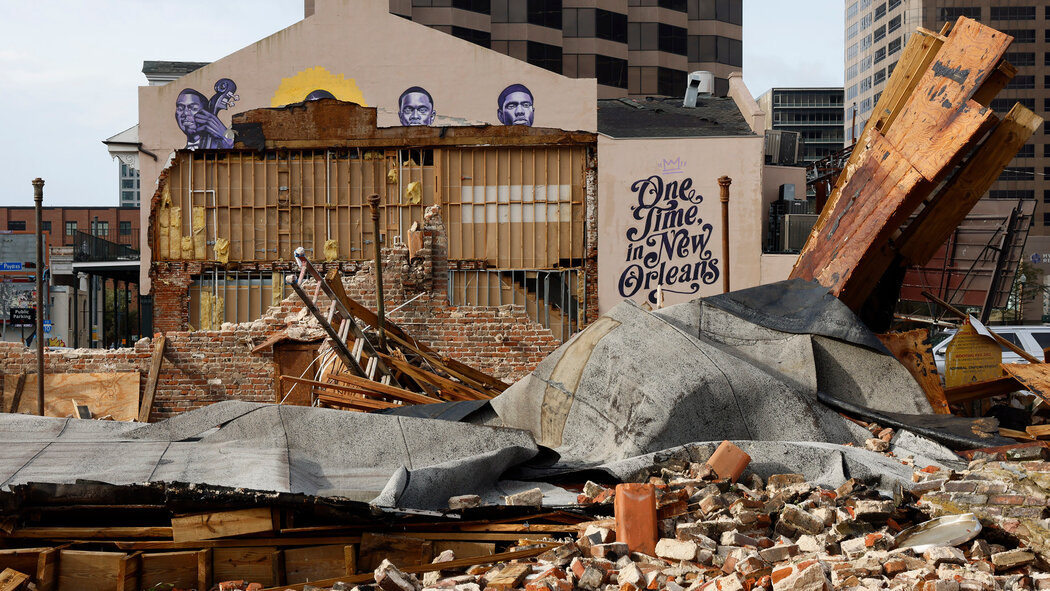
Louisiana’s largest electric utility, Entergy, on Friday released its first timeline for complete power restoration in the wake of Hurricane Ida, indicating that it expected to have electricity flowing throughout the New Orleans metropolitan area by Wednesday — 10 days after the storm struck.
Hundreds of thousands of customers in the state were still without power on Friday, although electricity had been restored to customers in areas including Baton Rouge and St. Bernard and St. Jefferson Parishes, officials said.
New Orleans’s central business district should have its power back by Saturday, Entergy said, while hard-hit Jefferson Parish may have to wait until the middle of next week. Some parts of southeastern Louisiana that suffered significant damage, like LaPlace and Grand Isle, were not included in the timeline.
President Biden was expected to visit Louisiana on Friday as patience wanes among residents who are still without electricity, fresh water and hot meals days after Hurricane Ida crashed into the state.
Mr. Biden has said that the flash floods that inundated New York City and the powerful winds that had knocked out power in Louisiana were a sign that “extreme storms and the climate crisis are here” and that the storms and fires creating life-or-death situations across the country constituted “one of the great challenges of our time.”
At least 16 people in the Southeast have died because of Ida and its aftermath, including three Louisiana nursing home residents who were evacuated to a facility ahead of the storm. Several others have died from carbon monoxide poisoning, the generators that are now essential to life turning deadly.
Officials in New Orleans announced on Thursday that they were organizing a voluntary evacuation option for residents hoping to get out of the city. Details of that plan are still in the works, but it would allow residents to be taken to a state-run shelter outside the city, said Collin Arnold, the New Orleans director of homeland security.
The city would give priority to older people and disabled residents and would then make the option available to the general public, he said.
Mayor LaToya Cantrell noted that in addition to electricity, access to fuel continued to be a challenge for city residents. “We just have not received adequate fueling sources to the general public,” she said.
In Broussard, horns honked louder and louder in a long line at a gas station where Pat Hille and Robin Corrabi filled up brand-new gas cans, their compact S.U.V. packed with supplies to take back to Ms. Hille’s family in LaPlace.
“If we get water back, it would make a difference,” Ms. Corrabi said.
Read more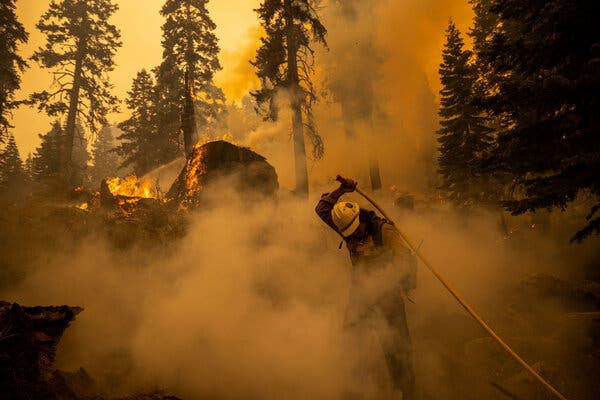
As the Caldor fire tore toward Lake Tahoe, California firefighters hacked down trees and bulldozed earth in paths up to 40 feet wide in the hopes that the fire would stop in its tracks when it reached their line of defense.
But after all that action, South Lake Tahoe and the neighborhoods to its south — all too familiar with the unruly nature of flames — are in a holding pattern on Friday. They must wait and see if the fire, which was between three to five miles away, will break through.
“The fire’s got to reach that containment line and hold,” said Kevin Brown, a spokesman for Cal Fire currently based in Placerville, about 65 miles from the lake.
The wind had eased by Friday morning, slowing the blaze enough for firefighters to attack it head on. But although cooler weather and lower winds are forecast for the coming days, “fire conditions could change in an hour or a day,” Mr. Brown said.
Fire authorities said they are also expecting the layer of smoke that helps to cool temperatures and hold flames at bay to lift around 10 a.m., worsening conditions somewhat on the eastern part of the fire.
As of Friday morning, the Caldor fire had burned close to 213,000 acres and was 29 percent contained. Crews continued dropping hundreds of thousands of gallons of water and fire retardant while firefighters crossed the water by boat — pumping water from Lake Tahoe to save remote cabins and vacation homes.
South of the lake, in Kirkwood, a small ski town, crews have been hosing down homes, checking for rogue embers and clearing space around homes and lodges in an attempt to protect them. In Christmas Valley, firefighters are felling trees and building containment lines.
Little remains known about the origins of the Caldor fire, which began almost three weeks ago near the Eldorado National Forest. Last month, it leveled much of the town of Grizzly Flats, and has so far destroyed more than 650 homes and 12 businesses, with tens of thousands more threatened. Four emergency workers and two civilians have been injured.
More than 50,000 people remain under evacuation orders, authorities said Friday.
For some, the first stop has been in Reno, Nev., which has become a refuge for people fleeing both the Dixie and Caldor fires. “It’s another day in the life of a California person: Everything’s on fire, here we go again,” said Martin Beirne, who stopped in the city after evacuating his home in South Lake Tahoe.
Mr. Beirne, who works as a landscaper in the threatened town of Meyers, said he had tried to remain as long as possible, working under a blanket of smoke that distorted his sense of time. “Once it started raining ash,” he added, “we all left.”
Jeffrey Spencer, 61, who also evacuated with his wife and mother-in-law from their home near the Eldorado National Forest, about 10 miles south of Lake Tahoe, said that though the fire continued to burn just miles from their house, he was feeling “cautiously hopeful.”
“Our lives and important papers and valuables, we got to get out,” Mr. Spencer said. “The rest can be replaced.”
Read moretranscript
Backtranscript
Ida Paralyzes the New York City Area
The remnants of Hurricane Ida caused flash flooding and a number of deaths and disrupted transit across parts of New York and New Jersey.
Look!
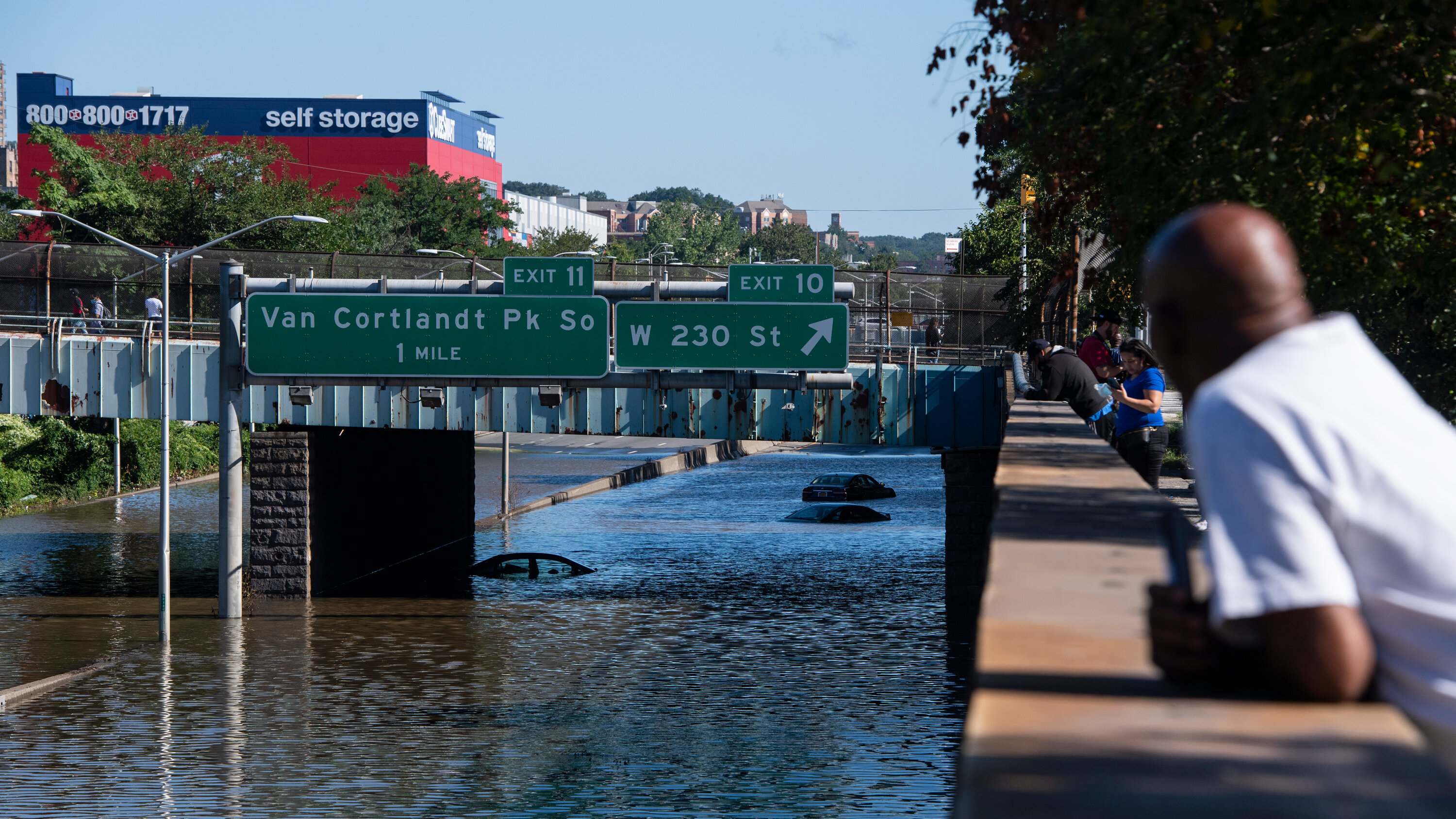
The death toll from the remnants of Hurricane Ida grew on Friday with the announcement of two more deaths in New Jersey, bringing the total number of lives lost to 45 across four states hit that were hit by the storm Wednesday evening.
Authorities fear the toll will increase further: Gov. Phillip D. Murphy of New Jersey said at least six people were still missing in the floods. “This was a deadly and dangerous storm, and we continue to face its aftereffects,” he said at a morning news conference. The dead include 25 people in New Jersey, 15 in New York, four in Pennsylvania and one in Connecticut.
New Jersey officials released a county-by-county breakdown of deaths. They were concentrated in a belt across the upper middle region of the state, with most occurring in Hunterdon County (6 deaths), Union County (5), Essex County (4) and Somerset County (4).
As the region undertakes the daunting task of assessing damage, digging out and cleaning up, Mr. Murphy, speaking in Millburn, a Newark suburb whose downtown was overwhelmingly flooded, said the state would quickly make $10 million in aid available to small businesses.
The aid will be distributed in grants of $1,000 to $5,000. “If you’ve been crushed and you can prove it, you’re eligible,” Mr. Murphy said.
Mr. Murphy and Gov. Kathy C. Hochul of New York both said that they were expecting large infusions of recovery aid from the federal government once a federal disaster has been declared, something that President Biden is expected to do after his declaration Thursday night of federal emergency status for New York and New Jersey.
Ms. Hochul said the state would easily surpass the $30 million threshold required for the federal government to eventually issue a so-called major disaster declaration, which would loosen a wider range of federal assistance for individuals and infrastructure projects.
There are no figures yet on the extent of property damage caused by the storm, which dumped half a foot of water in just a few hours across parts of the region, but many hundreds of homes, at least, were damaged.
The Red Cross housed 330 people in temporary shelters in New Jersey, 50 in Pennsylvania and 18 in New York Thursday night, a Red Cross spokeswoman said.
The status of mass transit in the region remains spotty. Most New York City subway lines are running regular service. But on commuter rails, all service of Metro-North Railroad is either suspended or limited, and three New Jersey Transit lines — the Gladstone, Pascack Valley and Raritan Valley — remain shut down. Long Island Rail Road service is back to normal.
Read more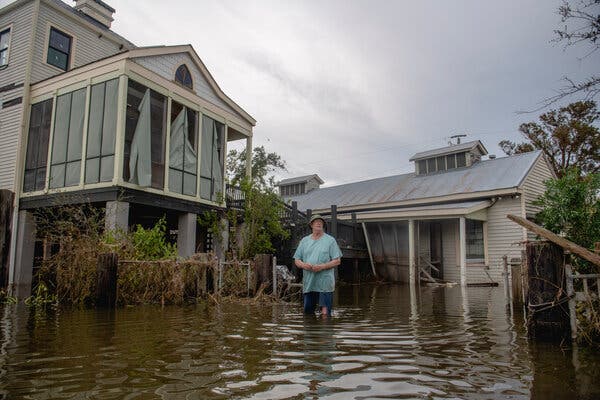
BROUSSARD, La. — Four Louisiana nursing home residents who were evacuated ahead of Hurricane Ida have died, state officials said on Thursday, and state inspectors say they were prevented this week from conducting a full assessment of conditions in the site where they were relocated.
Three of the deaths were classified as storm-related by the coroner, though definitive causes of death have not yet been confirmed, according to the Louisiana Department of Health. Officials identified the victims as a 59-year-old woman from Jefferson Parish and two men, a 52-year-old from Orleans Parish and a 77-year-old from Terrebonne Parish.
Details were sparse, but officials expressed worry about the facility the nursing home residents had been evacuated to and said hundreds of other nursing home residents who had initially been taken there had since been relocated. Fourteen of them required hospitalization.
“We have significant concerns about conditions in this facility,” state officials said of the location the nursing home residents were sent to as a refuge from the storm that battered Louisiana before pounding its way up the East Coast. Details of that location were not provided.
On Thursday evening, Gov. John Bel Edwards said that state and federal officials would investigate what had happened. “We will do everything we can to make sure our most vulnerable citizens are properly taken care of,” he said. “It appears that that most certainly was not the case here.”
The deaths of the nursing home residents in Tangipahoa Parish, north of New Orleans, raised the death toll of the storm and its aftermath in the Southeast to at least 16, from causes including carbon monoxide poisoning and electrocution.
“It’s very disheartening,” said Robby Miller, the Tangipahoa Parish president.
The mounting toll came as hundreds of thousands of residents of Louisiana and Mississippi spent a fourth day cleaning up the storm’s debris in darkness, amid soaring temperatures, and without easy access to the basic necessities: fresh water and meals.
By Thursday, electricity had been restored to customers in areas including Baton Rouge and St. Bernard and St. Jefferson Parishes, officials said. But in and around New Orleans, many people remained without power. Patience was waning.
Officials in New Orleans announced on Thursday that they were organizing a voluntary evacuation option for residents hoping to get out of the city. Details of that plan are still in the works, but it would allow residents to be taken to a state-run shelter outside the city, said Collin Arnold, the New Orleans director of homeland security.
The city would give priority to older people and disabled residents and would then make the option available to the general public, he said.
Across Louisiana, there were still hundreds of thousands of customers without power on Thursday, including nearly 600,000 served by Entergy. By early afternoon, 30,000 power customers in New Orleans had their electricity restored, said Ramsey Green, the city’s deputy chief administrative officer for infrastructure.
Mayor LaToya Cantrell, speaking at an afternoon briefing, noted that in addition to electricity, access to fuel continued to be a challenge for city residents. “We just have not received adequate fueling sources to the general public,” Ms. Cantrell said, adding that “when we get more, we shall share more.”
In Broussard, horns honked louder and louder in a long line at a gas station where Pat Hille and Robin Corrabi filled up brand-new gas cans, their compact S.U.V. packed with supplies to take back to Ms. Hille’s family in LaPlace.
“If we get water back, it would make a difference,” Ms. Corrabi said.
President Biden, who is expected to visit the state on Friday, said the flash floods that had inundated New York City and the powerful winds that had knocked out power in Louisiana were a sign that “extreme storms and the climate crisis are here” and that the storms and fires creating life-or-death situations across the country constituted “one of the great challenges of our time.”
Local officials offered upbeat assessments.
“I think the key in what we are trying to do is offer some progress, and that is the goal,” Mr. Arnold, the homeland security director in New Orleans, said. “Every day, we open a new site, some new service.”
He added that “there are lots of lessons from this, after all of this is done.”
Correction: Sept. 2, 2021An earlier version of this article misspelled the Louisiana parish that was home to a nursing home resident killed after Hurricane Ida. A 77-year-old man who died was from Terrebonne Parish, not Terrebone.
Read more
The Dixie fire, a California megablaze that has torn through close to 860,000 acres of mainly forest and cast a pall of noxious smoke across the country, has now been burning for nearly 50 days, wearying firefighters and evacuees who are hoping for the nightmare to end.
More than 1,200 buildings have been destroyed, including much of the Gold Rush era town of Greenville. Night after night, exhausted crews — sometimes hiking miles of steep terrain — build fire breaks with hand tools. Others bulldoze through the earth of the forest. Evacuees await news with bated breath.
“It becomes ‘Groundhog Day,’” said Edwin Zuniga, a spokesman for Cal Fire based in Susanville, 100 miles northwest of Reno, Nev. He has been based at the fire since mid-July, he added, wheezing — Mr. Zuniga is himself suffering the impacts of the smoke.
By Thursday afternoon, the Dixie fire was 55 percent contained. Winds had slightly picked up overnight, but firefighters were still able to create containment lines, keeping the fire at bay. Aircraft known as Super Scoopers have been collecting water from Lake Davis and dumping it on the blaze.
Southeast of Susanville, some residents and firefighters in Milford have been clearing vegetation around homes and properties — the town of about 200 people is among the most likely to be affected by the fire next, authorities said.
“The fire is not over the mountain yet but you never know,” said David Hammond, 23, whose parents run a convenience store near Milford that staff members said was among the only places in the region where residents could still buy food and gas.
Mr. Hammond’s family had been wetting down its house with timed sprinklers, and had passports, clothing and other important belongings packed into cars, he added, “in case we’ve got to go.”
In other parts of the Sierra Nevada, crews are stamping out the aftermath of the fire’s wrath in challenging terrain.
More than 4,000 firefighters continue to battle the fire, though last month, several were diverted to the Caldor fire, which is also burning in the Sierra Nevada and now threatening communities on Lake Tahoe.
Several towns in the path of the Dixie fire are still under evacuation warnings and orders, and close to 3,900 people remain evacuated from their homes, said Brian Scott, a spokesman with the incident management team on the fire.
“We would hope that we’re on the downhill slide,” Mr. Scott, who is currently based in Quincy, said of the fire. “But after seeing what Mother Nature can do with the winds, and the severe dryness of the fuels,” he added, “it’s just hard to venture a guess.”
Read more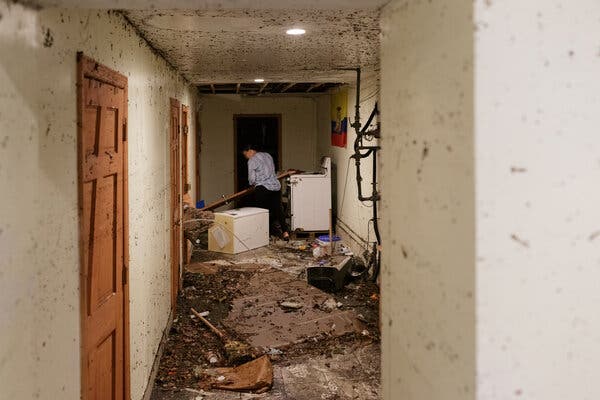
The torrents from Ida’s waters cascaded through New York City basement doors and windows, turning everyday spaces into death traps.
In Woodside, Queens, Deborah Torres said she heard the desperate pleas from the basement of three members of a family, including a toddler.
As the water rushed into the building around 10 p.m. on Wednesday, Ms. Torres said she heard the family frantically call out to another neighbor, Choi Sledge. Ms. Sledge pleaded with the family to flee.
Within moments, however, the cascade of water was too powerful, and it also kept anyone from trying to get downstairs to help.
“It was impossible,” said Ms. Torres, who lives on the first floor. “It was like a pool.”
The family did not survive.
Darlene Lee, 48, was in a basement apartment that belonged to the super of a condominium in Central Parkway, Queens. Flooding burst through a glass sliding door in the apartment, and quickly filled it with about six feet of murky water.
The water pinned Ms. Lee between the apartment’s steel front door and the door frame, leaving her wedged and unable to escape.
Patricia Fuentes, the property manager, had just gotten off work when she heard Ms. Lee screaming for help and found her stuck. Ms. Fuentes ran to the lobby to call for aid, and Jayson Jordan, the assistant super, and Andy Tapia, a handyman, jumped through the broken glass door to get to Ms. Lee.
But they could not save her. Ms. Lee was pinned and Mr. Tapia tried to help her keep her above the chin-deep water. Eventually, the men were able to pry her from the door, but it was too late, Mr. Jordan said. Ms. Lee was killed by the storm.
In Cypress Hills, Brooklyn, Ricardo Garcia was awakened by a surge of water that he said exploded through the door of his shared basement apartment at about 10:15 p.m. In moments, it was up to his knees, then his waist, then his chest.
Mr. Garcia, 50, banged on the door next to his, waking another roommate, Oliver De La Cruz, who was shaking on Thursday morning as he looked at the water stains that reached to the ceiling of his ruined room.
“I almost died inside here, I almost died, man,” said Mr. De La Cruz, 22.
Mr. De La Cruz broke down his bedroom door to escape in his boxer shorts. Mr. Garcia said that he and Mr. De La Cruz climbed to the first floor, struggling against the water pouring down the stairs.
Mr. De La Cruz found his upstairs neighbor, Roxanna Florentino, who has lived in the building for 18 years. She said she heard another man, 66-year-old Roberto Bravo, crying out for help from a back bedroom in the basement apartment.
Ms. Florentino said Mr. Bravo was pleading for help in Spanish, and neighbors were trying to reach him. But water was pouring through both the front door and a window. She realized Mr. Bravo’s screaming had stopped.
On Thursday, it was clear that the water had risen so forcefully where Mr. Bravo had been that it tore off the door and broke though the ceiling, leaving dank decay. The Ecuadorean flag hanging on his wall was soaked and muddied, the floor below strewn with debris, along with a water-stained photo of Mr. Bravo in a tuxedo at a formal event.
Ms. Florentino made her first of four 911 calls at 10:15 p.m. Firefighters arrived an hour later. They brought out Mr. Bravo’s body.
She tried to sleep but each time she drifted off, she heard Mr. Bravo’s voice, calling a last time.
“It’s so hard when someone asks for help and you can’t help them,” she said.
Read more
The torrential rains on Wednesday that soaked New York and New Jersey carried a stark warning about climate change: As the planet gets hotter, heavy rainstorms are dumping more water than ever before, threatening to devastate unprepared cities.
Across the continental United States, the heaviest downpours have become more frequent and severe in recent decades, according to the federal government’s National Climate Assessment. In the Northeast, the strongest 1 percent of storms now produce 55 percent more rainfall than they did in the middle of the 20th century.
Sept. 1, 2021
Between 8 p.m. and 9 p.m., Ida dropped a record 3.24 inches of rain in Newark — nearly an inch more rain than the previous hourly record in 2006.
July 21, 2006
Severe thunderstorms led to a one-hour precipitation total of 2.35 inches between 4 p.m. and 5 p.m.
Sept. 1, 2021
Ida also produced the seventh-highest hourly rainfall, dropping 1.82 inches between 9 p.m. and 10 p.m.
Sept. 1, 2021
Between 8 p.m. and 9 p.m., Ida dropped a record 3.24 inches of rain in Newark — nearly an inch more rain than the previous hourly record in 2006.
July 21, 2006
Severe thunderstorms led to a one-hour precipitation total of 2.35 inches between 4 p.m. and 5 p.m.
Sept. 1, 2021
Ida also produced the seventh-highest hourly rainfall, dropping 1.82 inches between 9 p.m. and 10 p.m.
Sept. 1, 2021
3.24 inches between 8 p.m. and 9 p.m.
July 21, 2006
2.35 inches between 4 p.m. and 5 p.m.
Sept. 1, 2021
1.82 inches between 9 p.m. and 10 p.m.
“There’s a lot of fluctuation year to year, but over a longer period of time, the trend is becoming increasingly evident,” said Aiguo Dai, a professor of atmospheric science at the University at Albany, SUNY. “This is exactly what both theory and climate models predicted.”
Other parts of the world are also struggling with increasingly vicious downpours. In July, unusually heavy rains in Germany and Belgium caused rivers to burst their banks, washing away buildings and killing more than 220 people. That same month, days of torrential rain in Zhengzhou, China, submerged the city’s subway system and caused at least 300 deaths in the region.
While scientists cannot always predict exactly when and where such rainstorms will occur, they understand how global warming is making them stronger. As temperatures rise, more water evaporates into the air from the oceans and land. And, for every 1 degree Celsius of global warming, the atmosphere can hold roughly 7 percent more water vapor.
That means when a rainstorm does eventually form, there is more water that can fall to the ground, sometimes within a very short period. Recent studies have detected an increase in hourly rainfall extremes in parts of the United States, Europe, Australia and Asia.
And if the planet keeps getting hotter, the threat of more intense rainfall will grow. Earth has already warmed roughly 1.1 degrees Celsius since preindustrial times, driven by greenhouse gas emissions from the burning of fossil fuels and deforestation. Without swift action to reduce those emissions, a recent report from the U.N.’s Intergovernmental Panel on Climate Change warned, the planet could warm twice that amount or more.
Cities like New York are often more vulnerable to sudden downpours because so much of their land area is paved over with impervious surfaces like asphalt, which means that runoff is channeled into streets and sewers rather than being absorbed into the landscape.
Read moreRelated reporting
More World News →
South Sudan’s Oil Looters: How Young Elite Gatekeepers Plunder Nation While Citizens Starve

General to Private: Kiir Crushes Economic Vice President in South Sudan's $1.7 Billion Corruption Purge

Paul Biya’s Re-Election: What Cameroon’s Political Longevity Reveals About Leadership and Governance in Africa