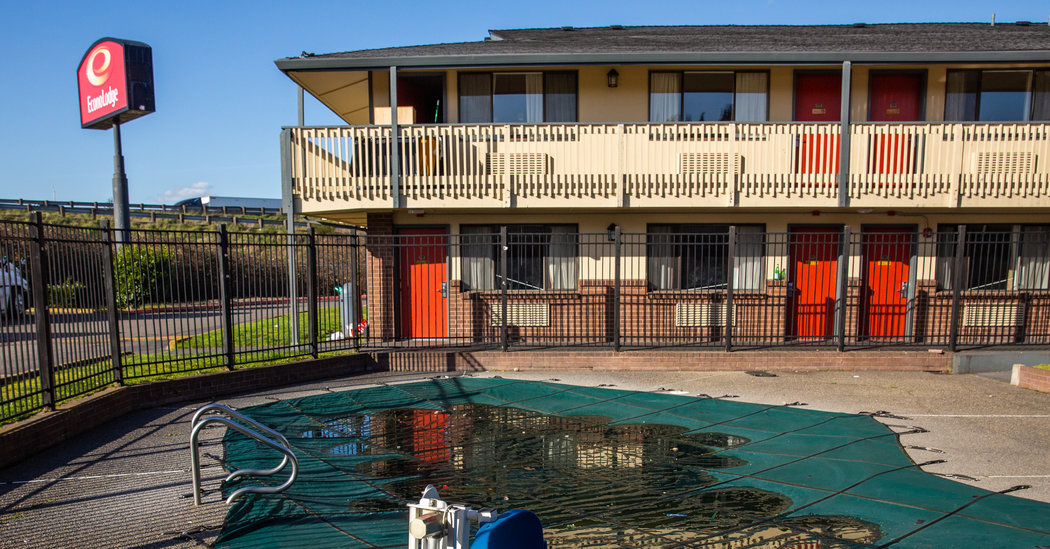
“We are of the belief that we have control of zoning and permitting and that an emergency doesn’t take that away from us,” Ms. Ralph said. “But our first frustration was that they didn’t consult with us, they didn’t talk to us.”
Many cities are now looking at where to place isolation housing, some of them proposing to use trailers or various forms of existing housing. Seattle’s experience shows that the conversations will be tough, taking in fears about the virus as well as questions about who might be staying in the facilities as they open.
King County has said it will probably need isolation housing for travelers, for example, who get stranded in the Seattle region after exposure and are unable to go home until the incubation period for the virus has passed. Others could include emergency workers, ordinary residents who cannot go home to their families and homeless people — King County has one of the highest rates of homelessness of any big city in the nation.
The homeless person at the site in Kent was only the second occupant at the location, county officials said.
One resident who lives near the White Center site, Rita Aronson, who works as a hair stylist, said her livelihood has already been hurt by the large number of people canceling appointments as a result of fears of the virus, and the community can ill afford other economic challenges.
Sonia Ramirez, 45, an immigrant from Mexico who has lived for 25 years in the White Center neighborhood, said she worried about the children, including her 6-year-old daughter, who catch the bus to school near the facility. (Washington’s public schools were ordered closed by Gov. Jay Inslee this week.)
“It’s a very residential area,” Ms. Ramirez said.
One county council member, Girmay Zahilay, who closely questioned Mr. Flor at the hearing about how the sites were chosen, stressed in an interview that he understands the strains on the system, and fully supports the county’s health mission and its workers.
Related reporting
More World News →
South Sudan’s Oil Looters: How Young Elite Gatekeepers Plunder Nation While Citizens Starve

General to Private: Kiir Crushes Economic Vice President in South Sudan's $1.7 Billion Corruption Purge

Paul Biya’s Re-Election: What Cameroon’s Political Longevity Reveals About Leadership and Governance in Africa