AUSTIN — The lines at polling places across Texas were horrific into the early hours of Wednesday: Five hours after the polls were supposed to close, some people who got in line before the cutoff were still waiting to vote.
As of 1 a.m. Eastern time, some polls were still open, but even the Texas secretary of state’s office could not say how many. Only county-level officials could provide that information, the office said. (There are 254 counties in Texas.)
Several factors were involved, including the sheer length of some of Texas’ ballots: As Michael Li, senior counsel at the Brennan Center for Justice’s Democracy Program, noted on Twitter, voters had to pick not just a presidential candidate, but also nominees for a slew of congressional, state and local races.
Read more Texas voters faced awful lines. Poll closings were probably partly to blame.But a major contributor is this simple fact: Texas officials have closed about 750 polling places since the Supreme Court overturned a key part of the Voting Rights Act in 2013. And most of those polling places — 542, to be specific — were in the 50 counties that gained the most black and Latino residents, according to an analysis by The Guardian.
“We need more machines, we need more locations, we need better voting hours, we need better voting access and we need an aggressive agenda that gets that done so that this doesn’t happen again in November,” said Manny Garcia, executive director of the Texas Democratic Party.
To the people who had to wait five hours to vote, Mr. Garcia said, “Texas’ government failed you, and we all failed you.”
Nick Corasaniti reported from Austin, and Maggie Astor from New York.
Bernie Sanders released three new TV ads on Wednesday, including one that directly contrasts him with Joseph R. Biden Jr. and another that seeks to tie him to former President Barack Obama.
The new ads will run in states that will vote on March 10 and 17, including Arizona, Florida, Illinois, Michigan, Ohio and Washington.
Read more In new ads, Sanders draws a contrast with Biden, and draws Obama close.In one of the ads, titled “Protect Social Security,” Mr. Biden is heard discussing his call for a freeze on federal spending.
“When I argued if we should freeze federal spending, I meant Social Security as well,” Mr. Biden says in a clip used in the ad. “I meant Medicare and Medicaid. I meant veterans’ benefits. I meant every single solitary thing in the government. And I not only tried it once. I tried it twice. I tried it a third time. And I tried it a fourth time.”
A clip of Mr. Sanders then comes on, in which he renews his pledge not to cut Social Security and to expand benefits.
In another new ad, Mr. Sanders — who has railed against the political establishment, which he says opposes his attempt to win the nomination — is seen sharing a laugh with Mr. Obama as a clip of the former president praising Mr. Sanders narrates in the background.
“Bernie is somebody who has the virtue of saying exactly what he believes — great authenticity, great passion, and is fearless,” Mr. Obama says in the ad.
“I think people are ready for a call to action,” he continues. “They want honest leadership who cares about them. They want somebody who’s going to fight for them. And they will find it in Bernie. That’s right: Feel the Bern!”
Mr. Obama has not endorsed a candidate in the race, preferring to stay on the sidelines until a nominee is selected and before trying to unify the party.
Joseph R. Biden Jr. had the Super Tuesday of his dreams, winning in places he hadn’t even set foot in recently.
For all the former vice president’s stumbles, Democratic voters decided he was the safest bet. Perhaps all they needed was to hear him give a victory speech: That happened on Saturday, in South Carolina, where Mr. Biden seemed to temporarily erase concerns about his bid that had been accumulating for nearly a year.
But plenty of questions still remain. He remains prone to verbal stumbles and carries significant political baggage. And that Mr. Biden’s fortunes have changed says more about the unusual context of this primary than the content of his campaign.
Elizabeth Warren, after a Super Tuesday shutout that included finishing third in her home state, is reassessing the future of her candidacy.
In an email to the staff on Wednesday morning, Roger Lau, Ms. Warren’s campaign manager, said the team was “obviously disappointed” and thanked staff members “for all the hard work.”
“We fell well short of viability goals and projections, and we are disappointed in the results,” he wrote.
Read more Warren to ‘assess the path forward’ after Super Tuesday losses.As for next steps, he said Ms. Warren was “going to take time right now to think through the right way to continue this fight.”
He added, “This decision is in her hands, and it’s important that she has the time and space to consider what comes next.”
Earlier on Wednesday, Michael R. Bloomberg dropped out of the race and endorsed Joseph R. Biden Jr.
Tuesday was a big day for Joseph R. Biden Jr.
The results, from Maine to California, clarified the reality of the race going forward: It is now a two-man contest between Mr. Biden and Bernie Sanders. They were on pace to win the lion’s share of the Super Tuesday delegates.
Here are five things we learned from Super Tuesday and a look at what it means going forward:
Read more Here’s what we learned from Super Tuesday.Black voters powered a resurgent Biden. If black voters in South Carolina first fueled Mr. Biden’s recovery over the weekend, they propelled much of his margins on Tuesday. In Alabama, where black voters made up just under half the electorate, he thumped Mr. Sanders among them by more than 60 percentage points, handing him a delegate landslide. He won black voters by more than 50 percentage points in Virginia, and by more than 40 points in Texas — a large enough margin to compensate for Mr. Sanders’s winning margins among white and Hispanic voters, according to the exit polls.
Sanders retains strong support. And the race could soon be a slog. Super Tuesday was a remarkable comeback for Mr. Biden and comedown from expectations for Mr. Sanders. But that does not mean the race is close to being decided. As of early Wednesday morning, he and Mr. Sanders were both projected to win a similar number of delegates, with the final results from California days or even weeks away.
Momentum, not political organization or money, is what mattered. Mr. Biden’s incredible 72 hours between his victory in South Carolina and the first poll closings on Super Tuesday exerted a kind of gravitational pull rarely seen in politics. Three opponents dropped out (Pete Buttigieg, Amy Klobuchar and Tom Steyer) and then three former rivals endorsed him in dramatic fashion on Monday in Dallas (Mr. Buttigieg, Ms. Klobuchar and Beto O’Rourke). Political operatives marveled at the thoroughness and speed of his consolidation of support.
Elizabeth Warren’s hopes dimmed, and Michael R. Bloomberg’s were extinguished. Ms. Warren was an early front-runner. Mr. Bloomberg was recently ascendant and spending his way into serious contention. But both badly underperformed, and Mr. Bloomberg suspended his campaign on Wednesday. The path forward is uncertain for Ms. Warren.
The results exposed the party’s generational divide. One of the biggest fissures in the coming battles between Mr. Biden and Mr. Sanders will be generational: Mr. Biden wins older voters by a lot; Mr. Sanders wins younger voters; they are going to fight fiercely for everyone in between. Going forward, the primary seems likeliest to be eventually determined by whoever can capture those between 40 and 65.
10:18 a.m. March 4, 2020By The New York Times
Michael R. Bloomberg dropped out of the presidential race on Wednesday. Here is the statement that he released:
Three months ago, I entered the race for president to defeat Donald Trump. Today, I am leaving the race for the same reason: to defeat Donald Trump — because it is clear to me that staying in would make achieving that goal more difficult.
I’m a believer in using data to inform decisions. After yesterday’s results, the delegate math has become virtually impossible — and a viable path to the nomination no longer exists. But I remain cleareyed about my overriding objective: victory in November. Not for me, but for our country. And so while I will not be the nominee, I will not walk away from the most important political fight of my life.
I’ve always believed that defeating Donald Trump starts with uniting behind the candidate with the best shot to do it. After yesterday’s vote, it is clear that candidate is my friend and a great American, Joe Biden.
I’ve known Joe for a very long time. I know his decency, his honesty, and his commitment to the issues that are so important to our country — including gun safety, health care, climate change, and good jobs.
I’ve had the chance to work with Joe on those issues over the years, and Joe has fought for working people his whole life. Today I am glad to endorse him — and I will work to make him the next president of the United States.
I am immensely proud of the campaign we ran, the issues we raised, and the sweeping and achievable plans we proposed — including our Greenwood Initiative to right historic wrongs, fight racial inequality, and make the promise of equal opportunity real for the Black communities that have endured centuries of exploitation and discrimination. That work is fundamental to the future of our country — and to the more perfect union that each generation is called to build.
I am deeply grateful to all the Americans who voted for me — and to our incredibly dedicated staff and volunteers all around the country, who knocked on more than two million doors and held 12 million voter conversations in an incredibly short amount of time. No one outworked our team, and I couldn’t be prouder of everyone who was part of it. And I will be forever grateful to all the mayors, local and state legislators, members of Congress, and many others who believed in me, endorsed my candidacy, and worked hard to unite voters around our vision. Your support and trust sustained me, and I look forward to working with you in the months and years ahead.
We made our campaign slogan a clear, simple promise: Mike will get it done. And I intend to keep working on the “it.” I will continue to work for sensible, common sense policy solutions that can get done. That includes passing gun safety laws that save lives. Fighting climate change. Improving health care. Making college more accessible and affordable. Creating economic opportunity for all. And helping mayors and local leaders across the country who are doing so much important work on all of these issues.
The past few months have been some of the most inspiring of my life, and I want to thank the tens of thousands of Americans, from Maine to California, whom I was privileged to meet — and who every day, with their voices and their ideas, made this campaign such a powerful experience. And I am intent on making it a lasting experience: I want my supporters to stay engaged, stay active and stay committed to our issues. I will be right there with you. And together, we will get it done.
WEST PALM BEACH, Fla. — Michael R. Bloomberg dropped out of the presidential race on Wednesday, just over three months after he began a campaign that was fueled by his vast fortune and quickly grew to a sprawling political operation but failed to win the groundswell of moderate support he had sought.
Mr. Bloomberg endorsed former Vice President Joseph R. Biden Jr., saying that he had the best shot to beat President Trump.
After staking his candidacy on doing well on Super Tuesday, he did not collect on his grand bet, winning only American Samoa.
Read more Bloomberg suspends his campaign and endorses Biden.He made the announcement after falling short in his quest to poach enough center-left voters from Mr. Biden, who carried North Carolina, Virginia and other states across the South on Super Tuesday and won a decisive victory over the weekend in South Carolina.
In his announcement, Mr. Bloomberg said that while he was ending his campaign, he was remaining involved.
“While I will not be the nominee, I will not walk away from the most important political fight of my life,” he said. “I’ve always believed that defeating Donald Trump starts with uniting behind the candidate with the best shot to do it. After yesterday’s vote, it is clear that candidate is my friend and a great American, Joe Biden.”
Representative James E. Clyburn of South Carolina, whose endorsement helped power Joseph R. Biden Jr. to a victory in the state over the weekend, said on Wednesday that he was surprised by how well Mr. Biden performed on Super Tuesday and suggested that other candidates consider exiting the race.
“I was a bit surprised: It did go better than many of us expected,” Mr. Clyburn said in an interview Wednesday morning on CNN. “To be one point ahead in Maine, no, I didn’t expect that. To be winning Massachusetts, I did not expect that at all.”
Mr. Clyburn added that on a recent visit to Texas, he found that “people were sentimentally with” Mr. Biden, so he was not surprised by the former vice president’s win there. The problem, he said, had been a lack of campaigning resources spent in the state — a problem that he said was fundamentally about money and was mostly solved in the wake of Mr. Biden’s dominating win in South Carolina.
Read more Clyburn says he was ‘surprised’ by extent of Biden’s Super Tuesday success.In the interview, Mr. Clyburn also praised Michael R. Bloomberg as a “class guy,” adding that he hoped the former mayor of New York would “coalesce around Joe Biden like the rest of us” to help bring “a tremendous victory in November.” He stressed that he did not know what Mr. Bloomberg would ultimately decide to do.
Noting Elizabeth Warren’s third-place finish in Massachusetts, her home state, he said, “I would reassess if I were her as well.”
And as for what had changed with Mr. Biden in recent days, Mr. Clyburn offered his analysis: “People will like to hear your platform. They will like to hear you discuss policy, but they want to feel you. They want to feel you.”
The congressman recalled telling Mr. Biden that “he was being a little bit too robotic.”
“I think all of the stuff about him being too touchy, making people uncomfortable, I think it caused him to pull back and not be himself,” Mr. Clyburn said, referring to allegations last year that Mr. Biden’s behavior at campaign events had made women uncomfortable. “He is a guy who is very affectionate, is very — let’s call it compassionate. And I think that that’s what had him a little bit robotic going into this campaign.”
President Trump on Wednesday appeared to relish the struggle that Jeff Sessions, his former attorney general, was having to regain his Senate seat in Alabama, even as the president’s aides urged him not to lash out at one of his favorite targets.
“This is what happens to someone who loyally gets appointed Attorney General of the United States & then doesn’t have the wisdom or courage to stare down & end the phony Russia Witch Hunt,” Mr. Trump wrote on Twitter. “Recuses himself on FIRST DAY in office, and the Mueller Scam begins!”
Mr. Trump has not formally endorsed Mr. Sessions’s opponent, Tommy Tuberville, but it was clear from his comment on Wednesday that he did not think the former attorney general had earned the chance to return to Congress. And with so much out of the president’s control in the primary elections and in global politics, the urge to lash out at Mr. Sessions proved difficult to avoid.
Mr. Tuberville, a former Auburn University football coach, has positioned himself as a political outsider and has tried to capitalize on the president’s dislike of Mr. Sessions.
“Only one candidate in this race will support Donald Trump down the line,” Mr. Tuberville told supporters, according to The Associated Press. “Doug won’t. Jeff didn’t. But Tommy will.”
Mr. Sessions and Mr. Tuberville will face off in a runoff election at the end of the month.
An Alabama senator for 20 years and the first senator to back Mr. Trump in 2016, Mr. Sessions was publicly humiliated by the president during his time as attorney general. Mr. Trump ultimately fired him in 2018 for being disloyal because he recused himself from the Justice Department’s investigation into Russia’s election interference.
The winner of the runoff will face the Democratic incumbent, Doug Jones, who is considered to be the most vulnerable Democrat in the Senate. Mr. Jones won the seat after Mr. Sessions become attorney general.
LOS ANGELES — California delivered a much-needed victory to Bernie Sanders on Tuesday night, according to The Associated Press, with Latinos and young people driving much of the support. With 415 pledged delegates, California was by far the biggest prize of Super Tuesday, and Mr. Sanders had been banking on a significant win there.
Along with Mr. Sanders, both Joseph R. Biden Jr. and Michael R. Bloomberg seemed likely to receive delegates in the state. Mr. Bloomberg poured $66 million into television advertising there, far more than any other candidate. Mr. Sanders won more white and Asian-American voters but, reflecting a national trend, Mr. Biden won among black voters, according to exit polls.
There was also a clear generational split, with Mr. Sanders winning decisively among voters under 49 but Mr. Biden winning handily with voters older than 50. Mr. Sanders appeared to win among voters at all education levels, according to exit polls.
9:03 a.m. March 4, 2020The New York Times
Joseph R. Biden Jr. had a strong showing, but Bernie Sanders picked up the biggest prize of the night: California. Alex Burns, a New York Times national political correspondent, explains what happened, and what it means for Democrats going forward.
Early on Wednesday, Joseph R. Biden Jr. was declared the winner of the Texas primary, delivering the former vice president the second-biggest prize of Super Tuesday — Texas has 228 delegates — as he aims to hold off Bernie Sanders.
Mr. Biden got a bounce on Monday night from an endorsement from Beto O’Rourke, who remains a local Democratic folk hero after his narrow 2018 Senate loss to Ted Cruz.
Along with Mr. O’Rourke, Mr. Biden heralded late endorsements from several of the state’s members of Congress, along with Pete Buttigieg and Amy Klobuchar, who joined him for celebratory events in Dallas on Monday.
Read more Biden pulled out an important victory in Texas.The Texas Democratic Party said early Wednesday that even with a race call, it might take some time to officially divvy up the delegates.
8:36 a.m. March 4, 2020By The New York Times
President Trump on Wednesday morning offered his take on the outcome of the Democratic primaries on Super Tuesday.
In comments on Twitter, Mr. Trump repeated his claim that Democratic Party leaders had united behind Joseph R. Biden Jr. to defeat Bernie Sanders, and urged Elizabeth Warren to get out of the race.
The president also thanked several states where he handily won Republican primaries.
Read more Trump says Warren is ‘selfish,’ and has hurt Sanders by staying in the race.Super Tuesday was a remarkable show of force for Mr. Biden, the former vice president. In a matter of days he resurrected a campaign that had been on the verge of collapse after he lost the first three nominating contests. Mr. Biden then won South Carolina on Saturday, and in the days before Super Tuesday, several rivals exited the race and then endorsed him. On Tuesday, he won at least nine states, and was competitive in California, with its large number of delegates.
On Twitter, Mr. Trump called Ms. Warren “selfish” for staying in the race, adding that “she has Zero chance of even coming close to winning, but hurts Bernie badly.”
Ms. Warren finished third in Massachusetts — her home state — behind Mr. Biden and Mr. Sanders. Her decision to remain in the race, Mr. Trump asserted, cost Mr. Sanders a victory, and “allowed Sleepy Joe to unthinkably win Massachusetts.”
“Will he ever speak to her again?” Mr. Trump asked, before concluding that “he shouldn’t.”
By Louis Keene
LOS ANGELES — The polling place at the Hammer Museum in the Westwood neighborhood had six check-in stations and a few dozen voting booths. Nevertheless, the line to vote stretched hundreds of people long, snaking around the second floor of the museum, as late as 10 p.m., two hours after polls closed.
A bottleneck at the check-in area caused several of the voting booths to go unused at any given time.
Downstairs, people followed the election returns on projector screens at a watch party hosted by the museum. Upstairs, volunteers were passing out pizza to famished would-be voters.
Read more ‘I’m inspired, but tired’: Voters in Los Angeles endure hourslong waits.Maya Buffett-Davis, 23, said she arrived at the museum at 6 p.m. after a full day of classes at the University of California, Los Angeles. She is from Berkeley, and had registered to vote as a Los Angeles resident several weeks ago.
But when she got to the front of the line after four hours of waiting, the check-in system did not turn up any combination of her name. Re-registering her took an extra five minutes.
Ms. Buffett-Davis, who is studying fine arts and gender studies, said she saw someone else in the voting area report four straight paper jams, which she said sounded almost unfathomable considering how simple the ballot machines looked.
She stayed to vote because “I believe in this,” she said. “I believe in peace, and peace is when all voices can be heard. That’s not what our voting system is, but that’s what it can look like.”
Word that The Associated Press had called the race for Mr. Sanders promptly at 8 p.m. spread quickly through the line.
Neither that announcement nor the already two-hour wait would deter Mark Hansen, 42, from staying as long as it took to tap the screen for Elizabeth Warren.
“It’s still complicated here because of the congressional delegates, and meeting the 15 percent threshold can make a difference,” he said. “Even if they call a winner, it still matters.”
Mr. Hansen, an instructor at U.C.L.A., said he would have brought a book if he had known how long the wait would be. “I have a lot of regrets,” he said.
“I know that they don’t call things until polls close, but even if polls close that doesn’t mean that people aren’t still in line still to vote,” he added. “I think that’s a problem.”
“I’m almost there, and it’s almost Wednesday,” said one voter close to the check-in station.
As the person in front of her left the line and headed home, Shetarrah Byfield said she had been waiting for two and a half hours. Ms. Byfield was buoyed by the sight of so many people staying late. “I’m inspired, but tired,” she said. “But more inspired than tired.”
A student at Santa Monica College, she was passing the time in line by checking in on the Democratic grass-roots nonprofit where she is a fellow and organizer.
“Every vote matters right now,” Ms. Byfield, 24, said. “Even if California was called early on, people still need to vote. Even though it’s such a hassle, and it’s tiring, it’s showing a shift in people’s beliefs in views. A shift in wanting change to happen.”
She said her friend ahead of her in line had planned on voting for Ms. Warren, but when she heard about Joseph R. Biden Jr.’s victories in other states on Tuesday, she changed her vote to support the former vice president.
The Democratic race emerged from Super Tuesday with two clear front-runners: Joseph R. Biden Jr. swept the South and even claimed Texas, largely through support from African-Americans and moderates, while Bernie Sanders harnessed the backing of liberals and young voters to capture the biggest prize of the campaign, California, and several other primaries.
The returns across the country on the biggest night of voting suggested that the primary was increasingly focused on two candidates who are standard-bearers for competing wings of the party, Mr. Biden in the political center and Mr. Sanders on the left. Their two other major rivals, Elizabeth Warren and Michael R. Bloomberg, were on track to finish well behind them and faced an uncertain path forward.
Mr. Biden’s victories came chiefly in the South and the Midwest, and in some of them he won by unexpectedly wide margins. In a surprising upset, Mr. Biden even captured Massachusetts, Ms. Warren’s home state, where he did not appear in person, and where Mr. Sanders had campaigned aggressively in recent days.
Related reporting
More World News →
South Sudan’s Oil Looters: How Young Elite Gatekeepers Plunder Nation While Citizens Starve
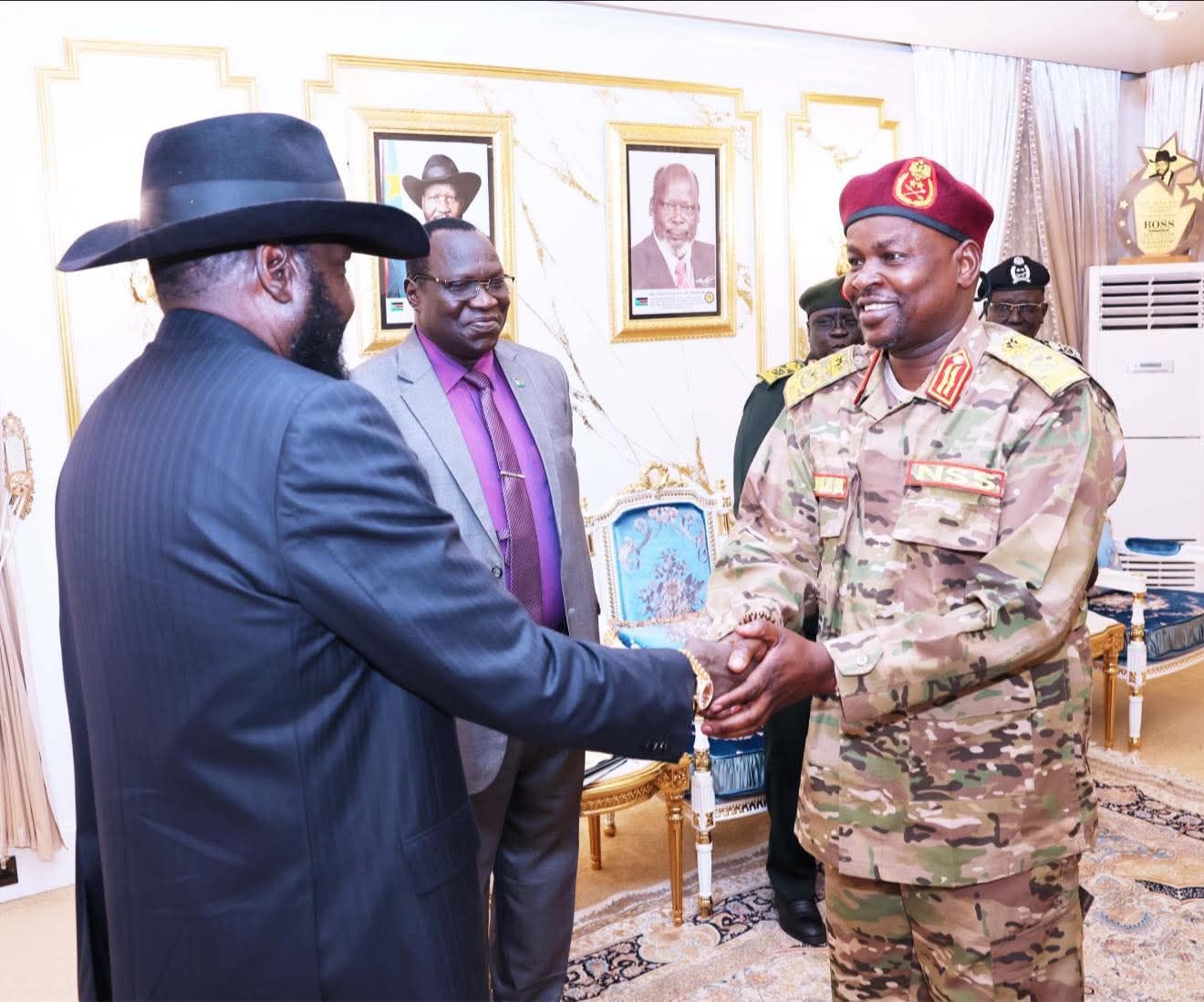
General to Private: Kiir Crushes Economic Vice President in South Sudan's $1.7 Billion Corruption Purge
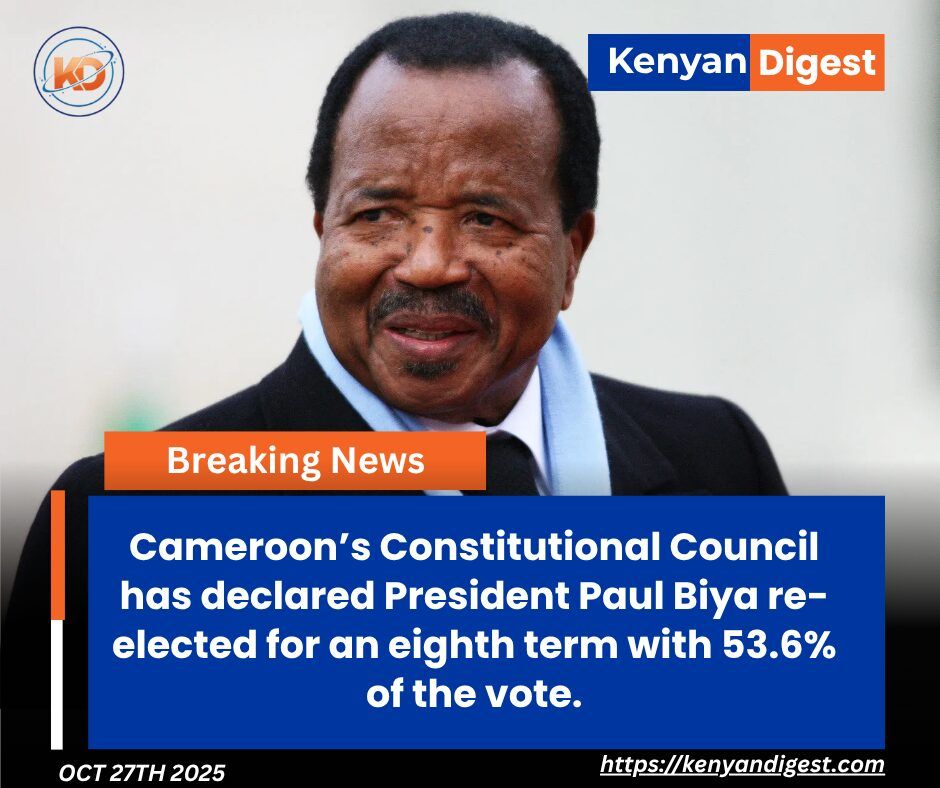
Paul Biya’s Re-Election: What Cameroon’s Political Longevity Reveals About Leadership and Governance in Africa