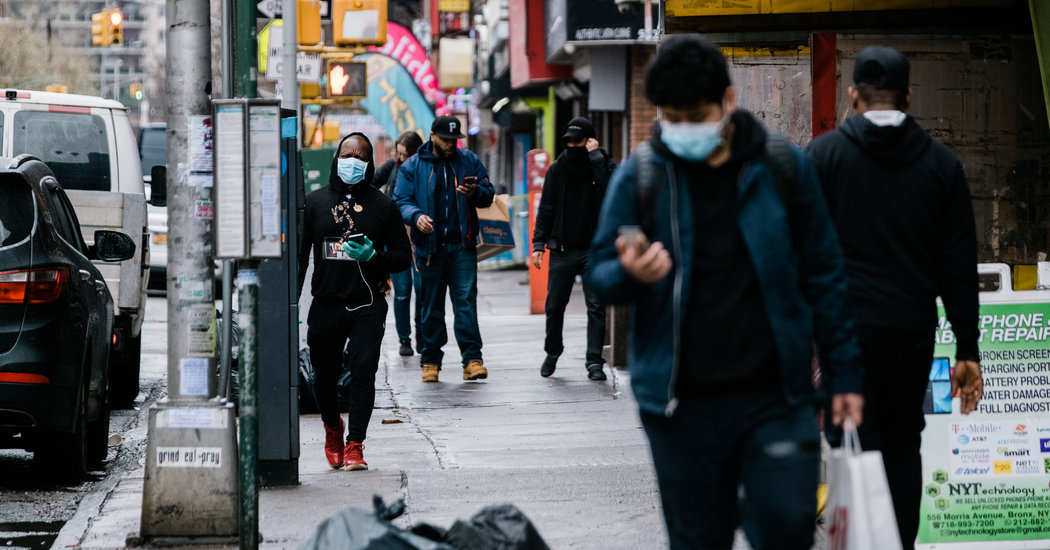
A family grapples with a wrenching question.
Joseph Trinity’s family members were there one day, and then they were not, for the same reason much of the world is trying to suppress the human desire to be with one another: the coronavirus.
Mr. Trinity had found himself in a New Jersey rehabilitation facility that, like most health care institutions across the country, had declared a no-visitor policy to stem contagion. But he is 92, and in fragile health; family sustains him.
Several times a day, he would call his daughter, Mary Trinity, to ask in a faint, slightly garbled voice where everyone was — and to beg her to please, please, get him out of there.
Mr. Trinity was caught in a moment. And he wasn’t alone.
The federal government and various health care associations have issued strongly restrictive guidelines to prohibit family members and other nonessential personnel from visiting nursing homes, rehab centers and other facilities with older, vulnerable residents.
Mr. Trinity’s children faced a heartbreaking dilemma. Should their father remain in the care of professionals who were much better equipped to handle his myriad needs? Or was he at greater risk of contracting the virus by remaining in an institution?
And given the prevailing threat and the open-endedness of restrictions, was it possible they would never see him again?
Dan Barry, Jonah Engel Bromwich, Annie Correal, Luis Ferré-Sadurní, Alan Feuer, Michael Gold, Christina Goldbaum, Matthew Haag, Patrick McGeehan, Jesse McKinley, Andy Newman, Azi Paybarah, Jan Ransom, Ed Shanahan, Liam Stack, Nikita Stewart, Tracey Tully and Ali Watkins contributed reporting.
Related reporting
More World News →
Saudi Prince Found Dead in Hotel Bathroom as Inquest Rules Death Was Misadventure

South Sudan at the Brink: How Corruption Tightens Its Grip on a Rare Working Institution

South Sudan’s Oil Looters: How Young Elite Gatekeepers Plunder Nation While Citizens Starve