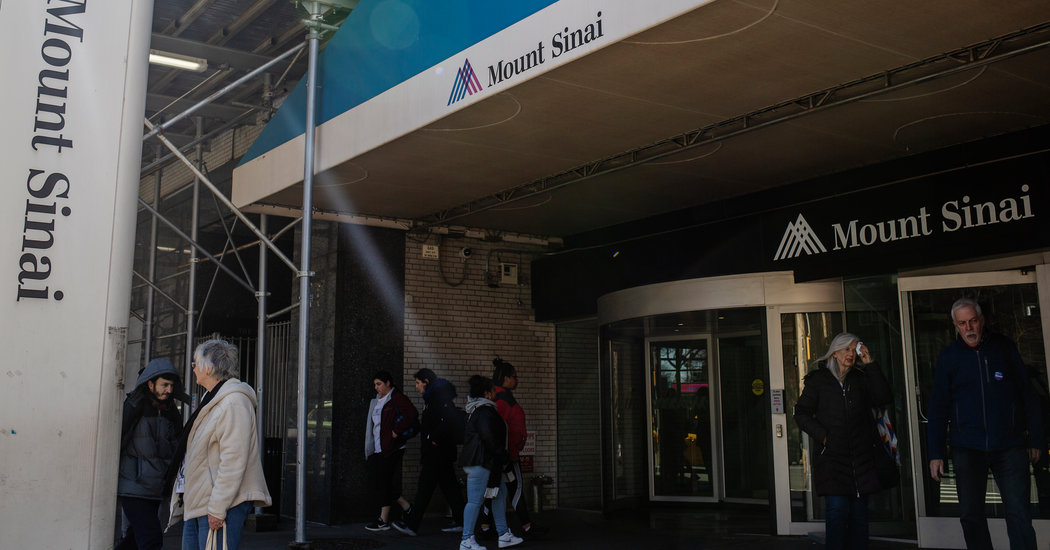
The issues facing New York’s hospitals echo the challenges facing health care providers across the country. The World Health Organization says there are fewer hospital beds per capita in the United States than in most other nations, including in Italy and in China, where the coronavirus originated with devastating consequences.
Gov. Andrew M. Cuomo and Mr. de Blasio have repeatedly praised New York’s health care, and the hospitals in the city include storied institutions such as Bellevue Hospital Center, the oldest public hospital in the nation, and a number of top-tier systems. But in recent days, both officials have acknowledged that the outbreak will strain the system in extraordinary ways.
“This is where Italy got into trouble,” Mr. Cuomo said on Friday. “They didn’t have enough I.C.U. beds to handle the number of patients who needed intensive care. That is going to be a problem in this state and in this country. That’s something that we have to watch very, very carefully.”
Stephen Morse, a professor of epidemiology at Columbia University, said that in New York, preparedness plans are based on the experience in 2009 with the H1N1 influenza, which was far less severe an illness.
“I don’t think anyone, anywhere is sufficiently prepared,” Mr. Morse said. “This is something that is really unprecedented in recent history.”
Officials emphasize that most coronavirus cases do not require hospitalization, and that they are trying to slow the spread of the virus through so-called social distancing measures, including closing public spaces, banning large gatherings and asking people to work from home.
Still, around the city and country, hospitals have begun adopting plans for a surge in patients. Some may unfurl large tents as triage centers outside emergency rooms — patients with severe respiratory symptoms would be directed one way, those with broken bones and non-coronavirus symptoms another.
Related reporting
More World News →
Saudi Prince Found Dead in Hotel Bathroom as Inquest Rules Death Was Misadventure

South Sudan at the Brink: How Corruption Tightens Its Grip on a Rare Working Institution

South Sudan’s Oil Looters: How Young Elite Gatekeepers Plunder Nation While Citizens Starve