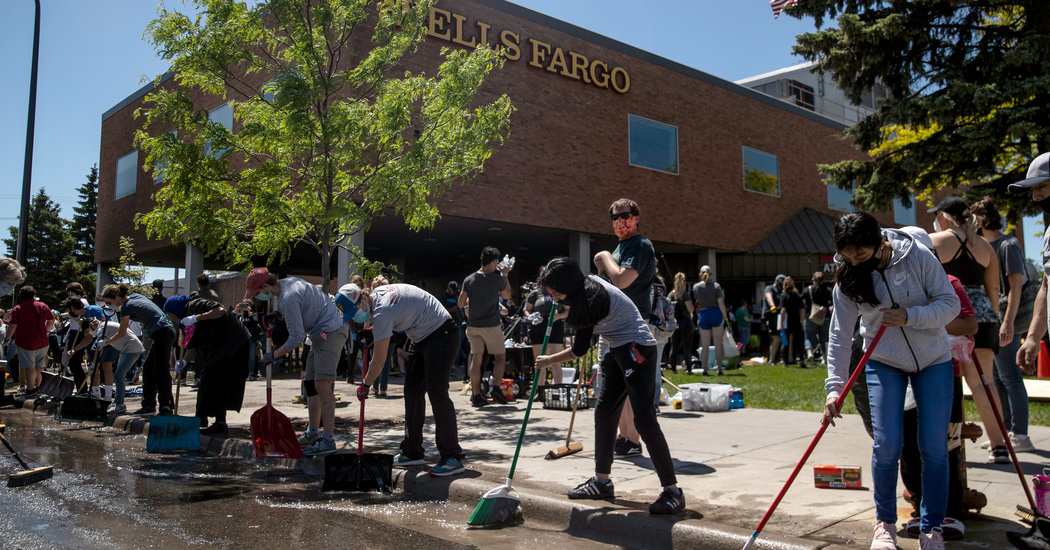
Yet a shift in influence and representation has been slow coming. In 2018, Minnesotans elected Representative Ilhan Omar, a Somali-American and Muslim, the first woman of color from the state to serve in Congress. And disparities in employment, poverty and education between people of color and white residents are among the worst in the nation.
“The Twin Cities pride themselves in being diverse,” said Maddie Hankard, a 24-year-old environmental engineer who is white, as she stood outside buildings damaged during Saturday’s protests. “But there’s been a whole generation not respecting communities of color.”
For Gus Cole, who is originally from Liberia but has been in Minneapolis for 13 years, the fact that he is married to a white woman is both a reminder for him of the promise and problems with his city.
He finds it to be a place where people embrace friendships across racial lines. His friends in other states usually stick with other black people, he said. But his friends in Minneapolis are black, white, Asian and Mexican, he said.
“People get along here,” he said.
At the same time, he said, when he is with his wife in the car and they get pulled over by the police, he views her with a degree of envy.
“I want to have that same feeling to how she feels,” he said. “She’s not scared. Her voice doesn’t shake. She speaks to the cop how she wants to speak to the cop. But me, I’m so afraid. I want to get pulled over and not think that I’m going to die.”
Bodunrin Banwo, a 38-year-old educator who is black, stood at the back of a crowded protest on Saturday afternoon, struggling to hear what speakers were saying through a weak megaphone.
Related reporting
More World News →
Saudi Prince Found Dead in Hotel Bathroom as Inquest Rules Death Was Misadventure
South Sudan at the Brink: How Corruption Tightens Its Grip on a Rare Working Institution
South Sudan’s Oil Looters: How Young Elite Gatekeepers Plunder Nation While Citizens Starve