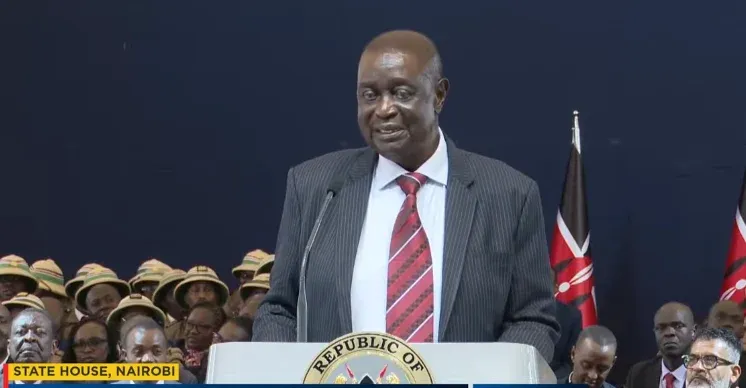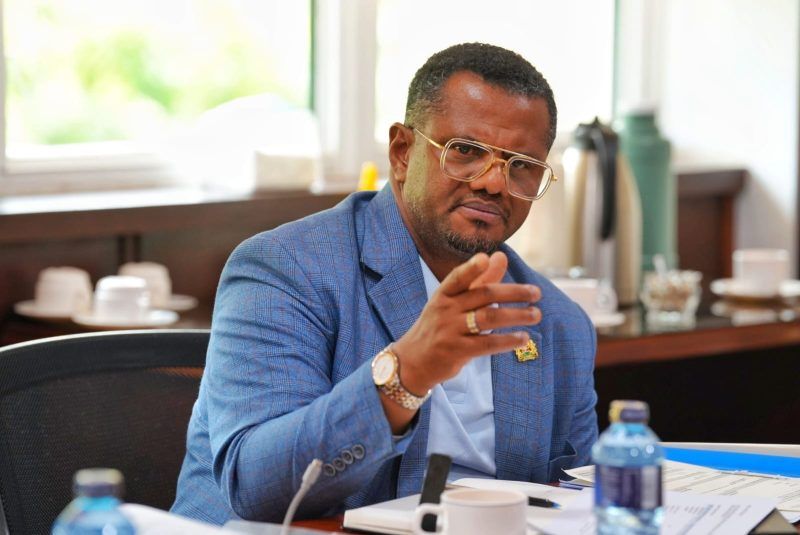
The Independent Electoral and Boundaries Commission (IEBC) has issued a summons to United Democratic Alliance (UDA) Secretary-General Hassan Omar to appear before its Electoral Code of Conduct Enforcement Committee following comments he made about deceased voters at a rally in Mombasa.
The commission said the former senator must attend the hearing on Wednesday, October 21, 2026, at Anniversary Towers in Nairobi, after the summons was released on Wednesday, October 14, 2026.
Omar’s statements were delivered on September 11, 2026, during a public gathering in Mombasa County, where he suggested that the fingerprints of people who have died could be taken before burial and used in the biometric voter registration (BVR) system to cast votes in the 2027 General Election.
At the rally he said, “On election day, we have to fight for every vote. Even if someone died, we should take their fingerprint before they are buried, use it in the BVR system and cast a vote even for someone who died that very day,” adding that “even some of those we are burying today, that is our vote because that vote is our bullet, our shield.”
IEBC Chairperson Erastus Ethekon explained that the issue is being examined under the Electoral Code of Conduct contained in the Second Schedule of the Elections Act, 2011, and that the summons provides Omar the right to be heard and to fair administrative action before any decision is taken.
The commission stressed it will act independently and impartially, will take appropriate action on credible complaints, and expects Omar to honour the summons and cooperate with the process.
IEBC also called on all political leaders, candidates, supporters and other participants to exercise restraint, responsibility and to help build an electoral environment based on peace, tolerance, respect for the rule of law and democratic participation.
Government Spokesperson Charles Owino described the remarks as careless and urged the IEBC to take stern action, while IEBC Commissioner Alutalala Mukhwana rejected the notion that deceased persons could be verified as voters, citing safeguards in the Kenya Integrated Elections Management System that uses fingerprint and iris recognition.
Former Defence Cabinet Secretary Eugene Wamalwa and former Attorney General Justin Muturi likewise demanded stronger safeguards for the upcoming election.
Opposition leaders Rigathi Gachagua of the Democracy for Citizens Party and Edwin Sifuna of the Equitable Party asked the commission to explain how it will clean the voter register and protect the integrity of the poll.
Omar later clarified that his comments were metaphorical, intended to describe large voter mobilisation, and accused critics of deliberately misreading his words; he also said the remarks were meant to oppose political zoning in Mombasa County, where he plans to contest the governorship in 2027.
The summons does not amount to a finding that Omar breached the electoral code; the committee will consider his response before reaching a determination.
Related reporting
More Politics →
Fred Matiang’i Says Opposition Coalition Talks Remain Unresolved Ahead of 2027 Election

Senator Edwin Sifuna Meets Kirinyaga Leaders as Opposition Unity Push Gains Momentum
Governor Anne Waiguru Announces 2032 Presidential Bid and Deputy Presidency Ambition for 2027