ATLANTA — Jalen Hurts completed eight passes. Joe Burrow threw seven touchdowns. Then the first half of their College Football Playoff semifinal finally ended.
It was the first part of a pummeling that catapulted No. 1 Louisiana State into the national championship game with a lopsided margin, 63-28, over No. 4 Oklahoma.
The Peach Bowl matchup — with the nation’s best offenses, the Heisman-worthy quarterbacks who could roll and run from a swarm of trouble, the tailbacks who could cut past defensive linemen, the receivers who treated the turf as more of a launchpad than a football field — had promised plenty of points. But the shellacking that L.S.U. unleashed on Oklahoma was without precedent in the six-year history of the playoff system.
By the end of the first quarter, L.S.U. had scored 21 points, more than Oklahoma allowed in six entire games this season. By halftime, the Tigers had added 28 more, its players had set records and Oklahoma fans had started evacuating Mercedes-Benz Stadium.
The game moved L.S.U. into a title showdown that might as well be a home game — played Jan. 13 in New Orleans, about 80 miles from its campus — against either Clemson or Ohio State, the contenders in Saturday night’s other semifinal, the Fiesta Bowl. L.S.U. has not won a national championship since the 2007 season, and it has not played for one since the end of its 2011 campaign.
But this season has been a startling ascension for L.S.U., a program long known for grinding defenses, prolifically quirky coaches and some of the best tailgate spreads in college football. Picked before the season to finish second in the West Division of the Southeastern Conference, L.S.U. beat one formidable team after another: Texas, Florida, Auburn and then, in early November, Alabama — the juggernaut that had stymied the Tigers for eight years. In the SEC title game, at the same Atlanta stadium where the semifinal played out on Saturday, L.S.U. dissembled Georgia, which was ranked No. 4 at the time.
L.S.U.’s success came with a spread offense, installed after a series of tortured seasons that, one year after the next, left the Tigers to face the perils of being a storied program with a stuck-in-the-past passing game.
Last season, the L.S.U. offense finished 38th in the country and averaged about 402 yards per game. When it entered Saturday’s Peach Bowl, the offense from Baton Rouge was the nation’s best, with 554 yards per game — 387 through the air. Its closest offensive rival ahead of Saturday’s game: Oklahoma, a hub for scoring and Heisman contenders (and two winners) in recent years.
Yet the Sooners struggled from their opening possession: K’Lavon Chaisson, a towering outside linebacker from Houston, sacked Hurts just after the game’s first snap. Two rushes toggled the ball a yard in each direction. Then Oklahoma shanked its punt.
Not even a minute later, L.S.U. scored for the first time, as Burrow faked a handoff and passed to Justin Jefferson. An Oklahoma defender wrapped his arms around Jefferson’s legs — only to find Jefferson plopping into the end zone anyway.
Oklahoma held the Tigers to three plays and a punt during the L.S.U. offense’s next visit to the field. A Sooner bounce-back still seemed plenty possible, especially behind Hurts, a quarterback with deep experience in college football’s postseason and a demeanor that has long awed his opponents.
Then came seven consecutive L.S.U. drives that ended with touchdowns. Only one of them took longer than three minutes. The offense’s quick strikes — guided by Steve Ensminger, the offensive coordinator whose daughter-in-law died in a plane crash in Louisiana on Saturday — represented a staggering blend of speed and arm strength.
The L.S.U. offense’s rushers, including Burrow, ran for more than 160 yards. Burrow completed 29 of his 39 passes to gain almost 500 yards. The double-digit gains continued even once Burrow exited the game, when, with Myles Brennan at quarterback, Chris Curry ran for 20 yards.
It was a workmanlike drubbing: methodical, mostly monotonous and essentially merciless.
Indeed, L.S.U. ripped Oklahoma’s defense apart as no team had since Nebraska’s bracingly powerful teams tormented the Sooners in the 1990s. The Tigers recorded 692 yards of offense on Saturday, averaging more than nine yards per play.
Related reporting
More World News →
South Sudan’s Oil Looters: How Young Elite Gatekeepers Plunder Nation While Citizens Starve
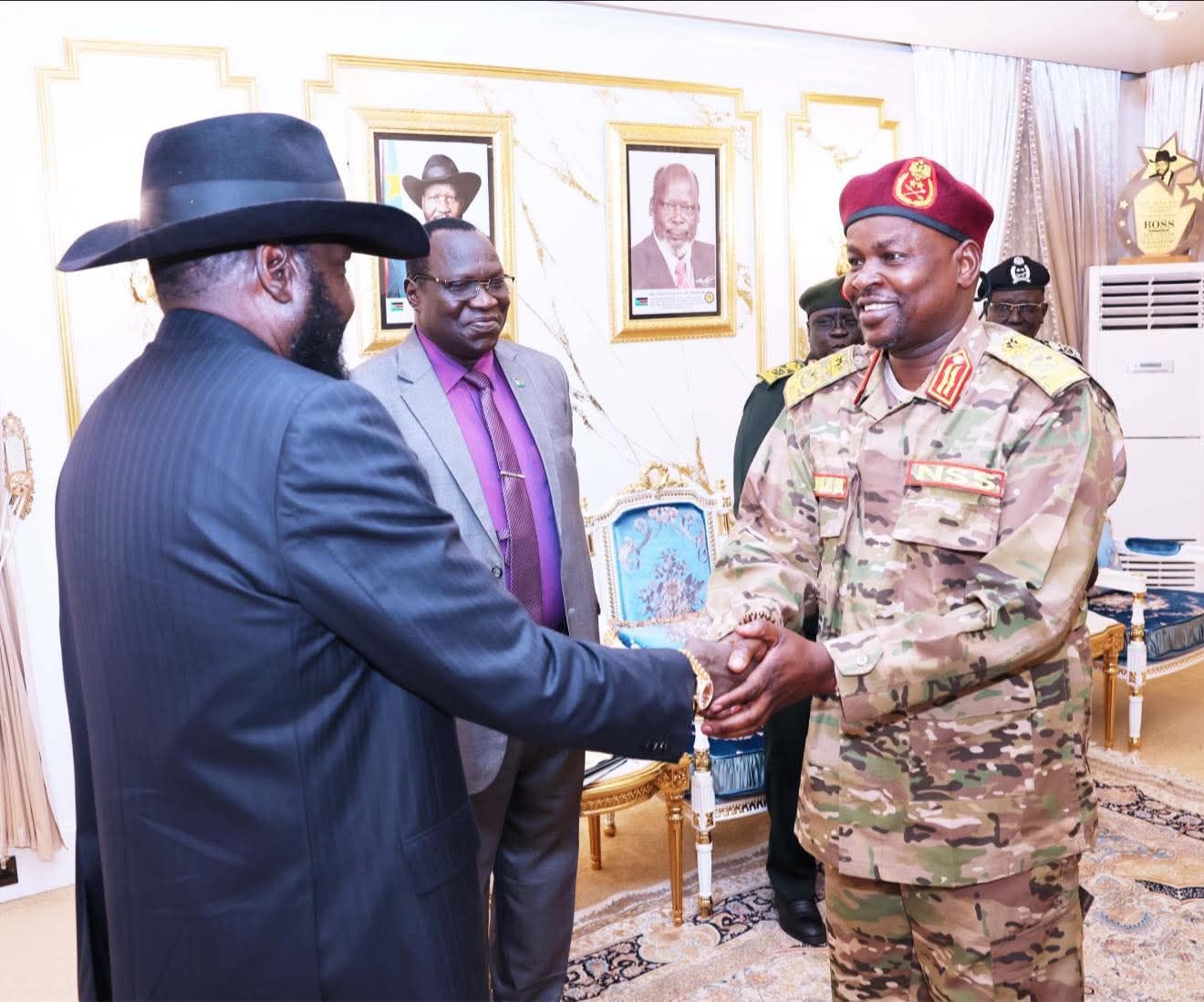
General to Private: Kiir Crushes Economic Vice President in South Sudan's $1.7 Billion Corruption Purge

Paul Biya’s Re-Election: What Cameroon’s Political Longevity Reveals About Leadership and Governance in Africa