WASHINGTON — Top American national security officials warned on Monday about foreign efforts to influence public sentiment ahead of voting on Super Tuesday, the busiest day of the primary season.
“Foreign actors continue to try to influence public sentiment and shape voter perceptions,” the officials, including Secretary of State Mike Pompeo, said in an unusual joint statement. “They spread false information and propaganda about political processes and candidates on social media in hopes to cause confusion and create doubt in our system.”
The officials sought to build confidence in the voting system amid reports about foreign influence operations. Super Tuesday was a potential target of such interference, officials have said in recent days. The F.B.I. briefed Senator Bernie Sanders of Vermont, the current front-runner for the Democratic nomination, in recent weeks about Russian efforts to try to boost his candidacy.
Read more U.S. officials warn of foreign influence efforts on Super Tuesday.Intelligence and other national security officials have expressed worries that public reports of Russian influence efforts have the perverse effect of undermining confidence in the election, one of the goals of Moscow’s meddling. But Monday’s statement made clear that the Trump administration had concluded that warnings about foreign influence were in the public interest.
Intelligence officials have repeatedly said that ballot boxes themselves are relatively safe from tampering.
In their statement, officials identified no foreign governments, but intelligence officials have said that in addition to Russia, other American adversaries including China, Iran and North Korea have all at times conducted influence operations aimed at American elections.
The statement was signed by a long list of senior officials including Mr. Pompeo; Attorney General William P. Barr; the acting director of national intelligence, Richard Grenell; the F.B.I. director, Christopher A. Wray; Gen. Paul M. Nakasone, the head of the National Security Agency and the United States Cyber Command; and Christopher C. Krebs, the top cybersecurity official at the Department of Homeland Security.
EMILY’s List, the powerful political action committee that supports pro-choice Democratic women, endorsed Elizabeth Warren on Monday.
The endorsement came a few hours after the news that Amy Klobuchar was ending her campaign, leaving Ms. Warren and Representative Tulsi Gabbard of Hawaii as the only women in the race.
“Elizabeth Warren is clearly the best candidate to unify the Democratic Party after a long primary, generate excitement across the country and take on Donald Trump,” the group’s president, Stephanie Schriock, said in a statement. “She is also a candidate not just ready to be president, but with the plans and vision to build an administration that looks out for all Americans.”
Read more EMILY’s List endorses Elizabeth Warren.EMILY’s List had declined to make an endorsement while there were multiple women running whose platforms they supported.
After a dominating win in South Carolina on Saturday, Joseph R. Biden Jr. has picked up several endorsements from high-profile lawmakers that could help boost his performance on Super Tuesday.
On Monday he got more good news: Amy Klobuchar was ending her campaign and planned to endorse Mr. Biden, according to a person close to the Minnesota senator. Pete Buttigieg also planned to endorse the former vice president, according to a person informed of his decision. And Harry Reid, the former Senate majority leader, announced his support for Mr. Biden’s candidacy.
Here are a few other key endorsements Mr. Biden has procured since Saturday night:
Read more Here are some key endorsements Biden has picked up since South Carolina.Representative Don Beyer of Virginia
Former Senator Barbara Boxer of California
Representative Gil Cisneros of California
Senator Tammy Duckworth of Illinois
Representative Veronica Escobar of Texas
Former Senator Blanche Lincoln of Arkansas
Gov. Terry McAuliffe of Virginia
Representative Bobby Scott of Virginia
Representative Greg Stanton of Arizona
Former Senator Mark Udall of Colorado
Representative Debbie Wasserman Schultz of Florida
Representative Jennifer Wexton of Virginia
Former Mayor Pete Buttigieg plans to endorse former Vice President Joseph R. Biden Jr. in the Democratic presidential race, according to a person informed of the decision, as the Democratic Party’s moderate wing quickly began coalescing around Mr. Biden in an effort to stop Senator Bernie Sanders from winning the Democratic nomination.
Mr. Buttigieg’s endorsement, which is set to come at a Biden campaign event Monday night in Dallas, follows the news that another moderate candidate, Senator Amy Klobuchar of Minnesota, was quitting the race and throwing her support to Mr. Biden. She also plans to back Mr. Biden at the Dallas event. Harry Reid, the former Senate majority leader, was also among those who endorsed Mr. Biden on Monday.
In corporate America, so-called nondisclosure and nondisparagement agreements are deployed for a range of reasons, including to protect intellectual property and to confidentially settle claims of discrimination or harassment. But at Bloomberg L.P., the heavy use of such agreements has gone from being a standard business practice to being a political vulnerability for the company’s owner and founder, Michael R. Bloomberg, on the presidential campaign trail.
In response to criticism, Mr. Bloomberg recently released three women from nondisclosure agreements who he said had complained about comments he made, and said his company would stop using nondisclosure agreements with employees who have sexual harassment or misconduct claims. However, that change affects only a small fraction of the nondisclosure agreements that are put in place on a regular basis at Bloomberg.
The Times spoke to 13 former Bloomberg employees — including some who now work for The Times — who said they wanted to be released from their exit agreements so that they could speak openly about the culture at the company now that its founder and owner was running for president.
Read more How Bloomberg buys the silence of unhappy employees.‘A culture of women not feeling safe or supported’
MANASSAS, Va. — Michael R. Bloomberg projected confidence on Monday and showed no sign of rethinking his presidential bid even as the field continued to shrink, declaring, “I’m in it to win it.”
“I’ve won three elections so far,” Mr. Bloomberg said at a canvass kickoff in Northern Virginia, where he addressed dozens of supporters outside a campaign office. “I don’t plan to start losing now.”
Mr. Bloomberg spoke shortly after the news broke that Amy Klobuchar was ending her presidential bid and endorsing Joseph R. Biden Jr.
Read more Bloomberg says Klobuchar and Buttigieg ‘behaved themselves,’ and he’s ‘in it to win it.’Mr. Bloomberg, the former mayor of New York, said he had spoken to Ms. Klobuchar as well as Pete Buttigieg, who dropped out of the race on Sunday.
Mr. Bloomberg said he wished them well.
“I thought both of them behaved themselves, is a nice way to phrase it, but they represented their country and their states very well,” he said. “And I felt sorry for them, but I’m in it to win it.”
J.J. Martinez, the western regional director for the Texas Young Democrats, voted last Thursday for Pete Buttigieg in the Texas Democratic primary, proudly announcing his decision on Twitter.
On Sunday, when Mr. Buttigieg withdrew from the race, Mr. Martinez’s first reaction was sadness. “Then you realize — oh, I voted early and Super Tuesday is two days from now,” Mr. Martinez said on Monday. “My mom told me I had wasted my vote. I don’t feel that way.”
Read more What can you do if you voted early, only for your candidate to drop out? Not much.The deadline for early voting in Texas was Friday, and one million people participated in the process. No results have been released yet as to how many of them cast their votes for Mr. Buttigieg, the former mayor of South Bend, Ind., or for another candidate who is on the ballot but has since withdrawn, like Amy Klobuchar or Tom Steyer.
But by and large, the 40 states with some type of early voting do not permit redos. In other words, once you vote, you don’t get a second chance. One exception is Michigan, which permits those who cast their votes via absentee ballot to “spoil their ballot” through a written request.
On Twitter on Monday, a number of early voters were expressing sadness at Mr. Buttigieg’s withdrawal and also wondering if they could get their votes back.
Nicolle Bugescu, a pediatric psychologist in Orange County, Calif., said in an interview that she had checked with the county registrar, who told her she could not take back her vote, adding that her second choice would have been Joseph R. Biden Jr.
Richard Evans, a Buttigieg supporter who voted early in Minneapolis, said he would never vote early again in a primary. “Maybe in a regular election when we’re down to actual candidates,” he said.
Jenny Monahan, a title examiner who lives in Sierra Vista, Ariz., said she had no regrets about her early vote for Mr. Buttigieg. “We’re tired of divisive politics and the way society is now,” she said.
While expressing no remorse over his vote, Mr. Martinez, a big promoter of early voting, nevertheless wondered whether the fact that he could not take it back suggested that another system should be explored — ranked-choice voting in primaries. “Since we don’t have a winner-take-all system, you rank your preferences, one, two, three,” he said. “If your candidate doesn’t reach viability, then your second choice comes into play.”
2:16 p.m. March 2, 2020By Zach Johnk
Harry Reid, the former Senate majority leader and an influential power broker in Democratic politics, has endorsed Joseph R. Biden Jr. as the party’s moderate wing increasingly coalesces around the former vice president.
“President Donald Trump has done unspeakable damage to our country, our institutions and the rule of law,” Mr. Reid said in a statement. “Democrats need a candidate who can assemble the largest, most diverse coalition possible to defeat Trump and lead our country following the trauma of Trump’s presidency. That candidate is Joe Biden.”
Mr. Reid, who as a senator from Nevada was a longtime colleague of Mr. Biden’s, added: “Joe Biden’s strength of character and deep experience stand in the starkest contrast to Trump’s amorality, corruption and utter incompetence. Biden will be a much-needed stabilizing force following Trump’s disastrous term, offering a positive and progressive alternative to Trump’s dark vision of racism, xenophobia and policies built on cruelty and exclusion.”
DALLAS — Amy Klobuchar, who entered the presidential race with an appeal to moderate Democrats and offered herself as a candidate who could win in Midwestern swing states, will quit the race and endorse Joseph R. Biden Jr., according to a person close to Ms. Klobuchar.
Ms. Klobuchar will appear with Mr. Biden at his rally in Dallas Monday night. The decision comes one day after Pete Buttigieg departed the race, and after weeks of Democratic Party hand-wringing about a crowded field of moderate candidates splitting a finite field of centrist votes.
Ms. Klobuchar, despite a strong third-place finish in New Hampshire, lagged behind her moderate rivals in every other state and was often seen as a candidate siphoning support. It is unclear how much of a boost any of her rivals will see in the wake of Ms. Klobuchar’s exit, or where she may direct her seven delegates.
Read more Klobuchar drops out and will endorse Biden.Two new polls show Bernie Sanders far ahead in California and with a slight lead over Elizabeth Warren in Massachusetts as both states prepare for important primary contests on Super Tuesday.
In California, a Suffolk University/USA TODAY poll of likely Democratic primary voters shows Mr. Sanders with 35 percent support in the delegate-rich state and Michael R. Bloomberg in second with 16 percent. No other candidate clears the 15 percent threshold to procure delegates, according to the survey, which put Joseph R. Biden in third with the backing of 14 percent of likely voters and Ms. Warren next with 12 percent support.
In Massachusetts, a Suffolk University/Boston Globe/WBZ-TV poll of Democratic primary voters shows Mr. Sanders out front with 24 percent support, followed closely by Ms. Warren with 22 percent. The gap between the two candidates was within the poll’s margin of error of four percentage points. No other candidate polled above 15 percent, according to the survey, though Pete Buttigieg, who dropped out of the race Sunday, pulled in 12 percent of the vote — support that could get redistributed to another candidate.
Read more New polls show Sanders far ahead in California and a tight race in Massachusetts.With 415 delegates on offer in California, who and how many candidates cross the 15 percent threshold there could have a major impact on the race. A blowout victory by Mr. Sanders could help him amass a delegate lead that would be difficult for other candidates to overcome.
Massachusetts, which has twice elected Ms. Warren to the Senate, may represent her best chance for a victory on Super Tuesday as she looks to climb back from a disappointing showing in the four early-voting states.
President Trump said on Monday that it remained “very safe” for him and his Democratic opponents to hold large campaign rallies like the one he had scheduled for North Carolina later in the day even as businesses and nonprofit groups are canceling large conventions out of concern over coronavirus.
Speaking with reporters in Washington before a planned flight to Charlotte for an evening rally there, Mr. Trump expressed no concern over holding campaign events that fill stadiums with thousands of people as the election season heats up.
“They’re all having rallies, that’s what they’re doing, they’re campaigning,” he said of his Democratic rivals, adding, “I think it’s very safe.”
Super Tuesday once looked certain to deliver at least one victory apiece to Amy Klobuchar and Elizabeth Warren: Minnesota and Massachusetts, the senators’ respective home states, would be voting.
But as Bernie Sanders stormed through the early states and shot to the top of many national polls, fueled by the largest war chest of any nonbillionaire candidate, Ms. Klobuchar, Ms. Warren and their allies have had to mount defenses on the home front, particularly on the airwaves.
Ms. Klobuchar, who remains immensely popular in Minnesota, has already spent $380,000 on ads across a state where she is nearly a household name, according to Advertising Analytics. (Her total ad spending in the state is $570,000, but the Rochester market in the southern part of the state is part of the Iowa ad-buying strategy.)
Read more Klobuchar and a Warren-aligned super PAC add to their home-state defenses.And Ms. Klobuchar added to it on Monday, dropping at least $60,000 more in the Minneapolis market, after adding $72,000 on Friday. She has a rotation of three different ads on air, including one highlighting her debate-stage pledge to restore empathy to the White House, and another touting her record of bills passed during her 14 years in the Senate.
Ms. Klobuchar had been set to campaign Sunday night in the Minneapolis suburbs, but canceled her event after Black Lives Matter protesters took over the stage.
Ms. Warren, who advertised in the Massachusetts markets only to reach voters in New Hampshire for the primary, is no longer on air in the state. But her allied super PAC, Persist PAC, made a significant $1 million ad buy in Massachusetts on Friday.
Democracy for America, the progressive group that started the “Run Warren Run” movement to persuade Elizabeth Warren to run in the 2016 presidential election, will spurn her candidacy to endorse her progressive rival: Bernie Sanders.
The group polled its members, and nearly 80 percent of the 38,000 votes came in for Mr. Sanders — well over the supermajority necessary for the group to endorse. It comes after many progressive groups rallied around Mr. Sanders in recent months, and he has had a strong showing in early-voting states, while Ms. Warren has languished in the second tier of candidates.
“Bernie Sanders has built a powerful multiracial, multi-generational movement and we’re excited to join the campaign at this critical moment in the Democratic race,” Charles Chamberlain, Democracy for America’s chair, said in a statement. “From Super Tuesday to the Democratic convention in Milwaukee, we’ll be working every day to make sure Bernie wins the most votes, the most delegates and the most states nationwide to become the Democratic nominee.”
Read more Democracy for America endorses Bernie Sanders.When Ms. Warren declined to run in 2016, Democracy for America eventually backed Mr. Sanders’s candidacy, raising more than $2 million for him and organizing about 120,000 volunteer shifts, according to the group’s estimates. With the name recognition and grass-roots base Mr. Sanders’s 2016 run has afforded him, Ms. Warren has struggled to cut into his base of progressive support.
Mr. Sanders released a statement thanking Democracy for America for its endorsement, saying “real change never comes from the top on down but from the bottom on up.”
“I’m proud to have the support of Democracy for America,” he said. “Together, we will build a movement that sweeps Donald Trump out of the White House and transforms this country so that it works for the working class.”
Elizabeth Warren released a plan on Monday outlining how she would combat the spread of coronavirus as president, an attempt to project preparedness amid a primary in which her political stock has fallen.
Ms. Warren, who rose to the top of the Democratic field last year by releasing a slew of policies, detailed several steps her prospective administration would take at the moment, including an emergency paid-leave program for anyone who shows symptoms, a $400 billion stimulus package to curb potential economic impacts, and efforts to ensure every American — including the uninsured — had access to care and any forthcoming vaccine.
Ms. Warren first previewed these steps in a speech in Houston over the weekend, and she released a plan to contain and treat infectious disease outbreaks about a month ago.
Read more Warren releases plan outlining how she’d fight coronavirus.In Houston, Ms. Warren sought to contrast her detail-oriented approach with that of the president, who, she said “has already shown he’s not up to the task.”
The speech came the same day as the results in the South Carolina primary, in which Ms. Warren finished in fifth place. In it, she bluntly hit her rivals — Michael R. Bloomberg, Joseph R. Biden Jr. and Bernie Sanders.
“This crisis demands more than a billionaire mayor,” she said, referring to Mr. Bloomberg, “whose track record as mayor shows he’ll govern to protect himself and his rich friends over everyone else.”
Of Mr. Biden, she said: “This crisis demands more than a former vice president so eager to cut deals with Mitch McConnell and the Republicans that he’ll trade good ideas for bad ones.”
She also dismissed Mr. Sanders: “This crisis demands more than a senator who has good ideas, but whose 30-year track record shows he consistently calls for things he fails to get done, and consistently opposes things he nevertheless fails to stop.”
WASHINGTON — Michael R. Bloomberg touted his strong ties to the Jewish community on Monday, using a morning address at a pro-Israel group to decry a growing wave of anti-Semitism and express his unqualified support for the Jewish state.
In remarks before the American Israel Public Affairs Committee’s policy conference in Washington, the former New York mayor stressed his personal relationship with the Jewish community, saying that he grew up in a kosher home and named wings of Israeli hospitals for his parents, and that his sister, Marjorie, attended the Tree of Life synagogue in Pittsburgh years before an anti-Semitic gunman killed 11 people in a mass shooting there.
He also drew a sharp contrast with Bernie Sanders — the other Jewish candidate in the race — questioning the Vermont senator’s commitment to Israel. Unlike Mr. Sanders, who boycotted the event, Mr. Bloomberg lent his support to a wish list of the group’s priorities: fighting the Boycott, Divestment and Sanctions movement, keeping the U.S. Embassy in Jerusalem and opposing conditions on military aid to Israel.
Read more Bloomberg touts Jewish ties at AIPAC conference.Never before has a presidential race featured two Jewish candidates and the differences between the two men on Israel and foreign policy issues are striking. Their divide reflects the uncomfortable debate roiling Jewish Democrats who feel split between traditional liberal American Jewish values and the political realities of an Israeli government that has embraced hard-line policies and a deep alliance with President Trump.
“We can disagree with specific policy positions of presidents from both sides of the aisle without resorting to personal attacks or trying to claim Israel as the exclusive domain of one political party,” he said. “Israel should never be a football that American politicians kick around in an effort to score points.”
In a speech at a prominent synagogue near Miami last month, Mr. Bloomberg spoke directly to Jewish Americans who may worry that progressive Democratic front-runners have too sharply criticized Israel, or who may dislike some of Mr. Trump’s agenda but support his Israel policy.
In Washington, he cast anti-Semitism as part of a “rising tide of hatred” against immigrants, Muslims, black Americans, women and the L.G.B.T.Q. community.
“The fact is, attacks on Jews have been taking place with horrifying regularity,” he said. “When hatred against Jews rises, so too does hatred against the world’s only Jewish state, and Israel always ends up paying the price.”
Like Mr. Sanders, Mr. Bloomberg is a secular Jew who has not been particularly religiously observant. But he has turned to his Jewish roots in past campaigns, as in his 2005 mayoral re-election campaign, when he addressed Hasidic Jews in Borough Park, Brooklyn, on a stage dotted with blue balloons that read “Mike the Mensch.”
President Trump’s campaign and the Republican National Committee said on Monday that they had collectively raised more than $86 million in February.
They have $225 million in cash on hand, officials said.
The numbers were announced as the campaign has been eyeing the enormous sums of money spent by Michael R. Bloomberg, the billionaire former mayor of New York City, who is running in the Democratic primary.
Read more Trump and R.N.C. release fund-raising numbers.Mr. Trump’s donors and advisers have discussed whether they need to accelerate their fund-raising efforts in light of Mr. Bloomberg’s spending, which his aides have indicated will continue on behalf of whoever is the Democratic nominee.
Mr. Trump’s donors were pleased by the numbers posted for February.
“Trump has an avalanche of cash pouring in,” said Dan Eberhart, a Republican donor, as he pointed to the durable tumult on the Democratic side. “The Democrats are still trying to push a rock uphill.”
Michael R. Bloomberg attacked Bernie Sanders by name on Monday in a speech to a powerful pro-Israel lobbying group, highlighting criticism Mr. Sanders has leveled at the group and accusing him of having weakened the relationship between the United States and Israel.
In remarks Monday morning at the American Israel Public Affairs Committee’s policy conference in Washington, Mr. Bloomberg noted that some of his Democratic rivals had not attended one of the group’s conferences before. He singled out Mr. Sanders, who has expressed concern about “the platform AIPAC provides for leaders who express bigotry and oppose basic Palestinian rights.”
Mr. Sanders, Mr. Bloomberg said, had “spent 30 years boycotting this event,” adding, “as you’ve heard by now, he called AIPAC a racist platform.”
Read more Bloomberg goes after Sanders in front of pro-Israel group Sanders has criticized.“Well, let me tell you, he’s dead wrong,” Mr. Bloomberg said. “This is a gathering of 20,000 Israel supporters of every religious denomination, ethnicity, faith, color, sexual identity and political party. Calling it a racist platform is an attempt to discredit those voices, intimidate people from coming here, and weaken the U.S.-Israel relationship.”
“The reality is: AIPAC doesn’t fuel hatred. AIPAC works to combat it — and the violence that it can produce,” he continued. “And if more elected officials spoke to the people here, they’d understand that.”
How much does California matter on Super Tuesday? A lot. Some 415 pledged delegates will be awarded based on the results in California — the biggest haul of any state in the country and more than all four early states combined.
With so much still unclear in the race, what happens in the country’s most populous, and arguably most liberal, state will play a key role in who becomes the nominee and ultimately shape the fate of the Democratic Party. We’ve put together a guide to the race in California, laying out what the polls show, who’s gotten big endorsements, the demographics of the state’s voters and expected turnout.
Pete Buttigieg is weighing whether to endorse Joseph R. Biden Jr. in the presidential primary race, according to a Democratic official familiar with his thinking.
Mr. Buttigieg spoke with Mr. Biden and former President Barack Obama on Sunday night, according to the official. Mr. Biden asked for Mr. Buttigieg’s support and the former mayor indicated he would consider the request.
Mr. Buttigieg wanted to sleep on the decision, he told aides, some of whom believe he should move quickly to endorse Mr. Biden.
Read more Buttigieg is weighing a Biden endorsement.Mr. Obama did not specifically encourage Mr. Buttigieg to endorse Mr. Biden, said the official, who insisted on anonymity to discuss private conversations. But Mr. Obama did note that Mr. Buttigieg had considerable leverage at the moment and should think about how best to use it.
Should Mr. Buttigieg endorse Mr. Biden on Monday and many of his supporters shift to Mr. Biden on Super Tuesday, it could reshape the Democratic primary, creating a more formidable centrist challenge to Bernie Sanders’s progressive bid.
Joseph R. Biden Jr.’s victory in South Carolina has given him a new chance to retake control of the Democratic presidential primary, opening a space for him to assert the fundamental strengths of his candidacy: his experience; his reassuring and empathetic image; and, most of all, his close bond with African-American voters, who are a cornerstone of the Democratic coalition. These are the attributes that made him a front-runner 10 months ago, and they made him a landslide winner in South Carolina on Saturday.
But Mr. Biden’s new opening in the race has also come about through a series of fortunate events largely beyond his control — contingencies that hobbled his most formidable competitors for the affections of the political middle, or that eased opposition to Mr. Biden himself in the weeks before South Carolina.
Unlike many candidates who mount political comebacks, Mr. Biden had no breakthrough performance or stirring moment of political synthesis that prompted voters to reassess his candidacy, like Hillary Clinton’s tearful moment in the 2008 New Hampshire primary or Mitt Romney’s masterly filleting of his primary opponents ahead of Florida’s primary in 2012.
Read more How Joe Biden reached his Super Tuesday opening.Instead, there was a sequence of external circumstances that thwarted Mr. Biden’s rivals and revived his campaign. There was the vote-counting fiasco in Iowa that denied Pete Buttigieg a moment of exultant triumph in prime time, leaving the former mayor without the sudden influx of cash and media attention that might have propelled him to victory in New Hampshire and allowed him to displace Mr. Biden as a centrist standard-bearer.
There was the debate in New Hampshire at which Amy Klobuchar set Mr. Buttigieg back on his heels, frustrating his efforts to gain traction without quite achieving an upset win of her own. Had either of them defeated Mr. Sanders in New Hampshire, we could be looking at a transformed race right now; instead, they finished second and third.
There was Michael R. Bloomberg’s national onslaught of television ads that paralyzed most of the Democratic field in the biggest Super Tuesday primaries, pulling votes away from Mr. Biden but hoarding them for Mr. Bloomberg rather than one of his competitors in the early states.
And then there was Mr. Bloomberg’s calamitous debate performance in Las Vegas, where in the space of two hours Elizabeth Warren broke his dearly bought national momentum — loosening the former New York City mayor’s grip on voters who were favorably disposed toward Mr. Biden all along.
All the while, Mr. Biden slogged his way toward South Carolina, where for a combination of African-Americans and moderate white voters he was ultimately the only desirable option. And for many, he was a very desirable option, indeed: If his numbers plunged after his humiliating losses in Iowa and New Hampshire, the former vice president never fell below the midteens in national polls, and no other moderate candidate ever really overtook him. Mr. Biden hunkered down and waited for the map to turn in his favor, and it did.
That last-man-standing approach has given Mr. Biden his best shot in months to take control of the race and organize moderates into a wall of opposition against Mr. Sanders. Mr. Buttigieg’s withdrawal from the race on Sunday — another happy surprise for Mr. Biden — served as powerful confirmation that the basic dynamics of the campaign have changed.
But the strategy of patient endurance that worked for Mr. Biden in South Carolina may not allow him to best Mr. Sanders in a long campaign. And Mr. Biden can no longer count on a dynamic that has been one of his greatest assets in recent weeks — his rivals’ lack of interest in challenging him directly.
It’s the day before the most consequential day of the Democratic presidential primary, when voters in 14 states will go to the polls, and the race looks very different from how it did at the start of the weekend.
With his landslide win in South Carolina, Joseph R. Biden Jr. has asserted himself as the leading alternative to Bernie Sanders, and has a few dozen new endorsements to prove it. Tom Steyer, who poured tens of millions of dollars from his fortune into the early states, has dropped out, raising serious questions about the effectiveness of saturation advertising. And Pete Buttigieg, sensing that discretion is the better part of valor, also dropped out rather than face a series of embarrassing losses on Super Tuesday.
Each of these three developments carries implications for Tuesday’s contests.
Read more The race has been reset for Super Tuesday.A rallying around Mr. Biden by moderate Democrats could cement him as the candidate best positioned to defeat Mr. Sanders, and chase other contenders out of the race.
If television ads aren’t delivering votes, as they didn’t for Mr. Steyer, then Michael R. Bloomberg may not have much to show for his $500 million spending onslaught in Super Tuesday states.
And where Mr. Buttigieg’s supporters line up on Tuesday could help determine whether Elizabeth Warren and Amy Klobuchar win enough delegates to carry on.
Will any of those candidates score big upsets on Tuesday? Or will Mr. Sanders have built an insurmountable advantage by this time Wednesday morning? There’s one day left before we start to find out.
Related reporting
More World News →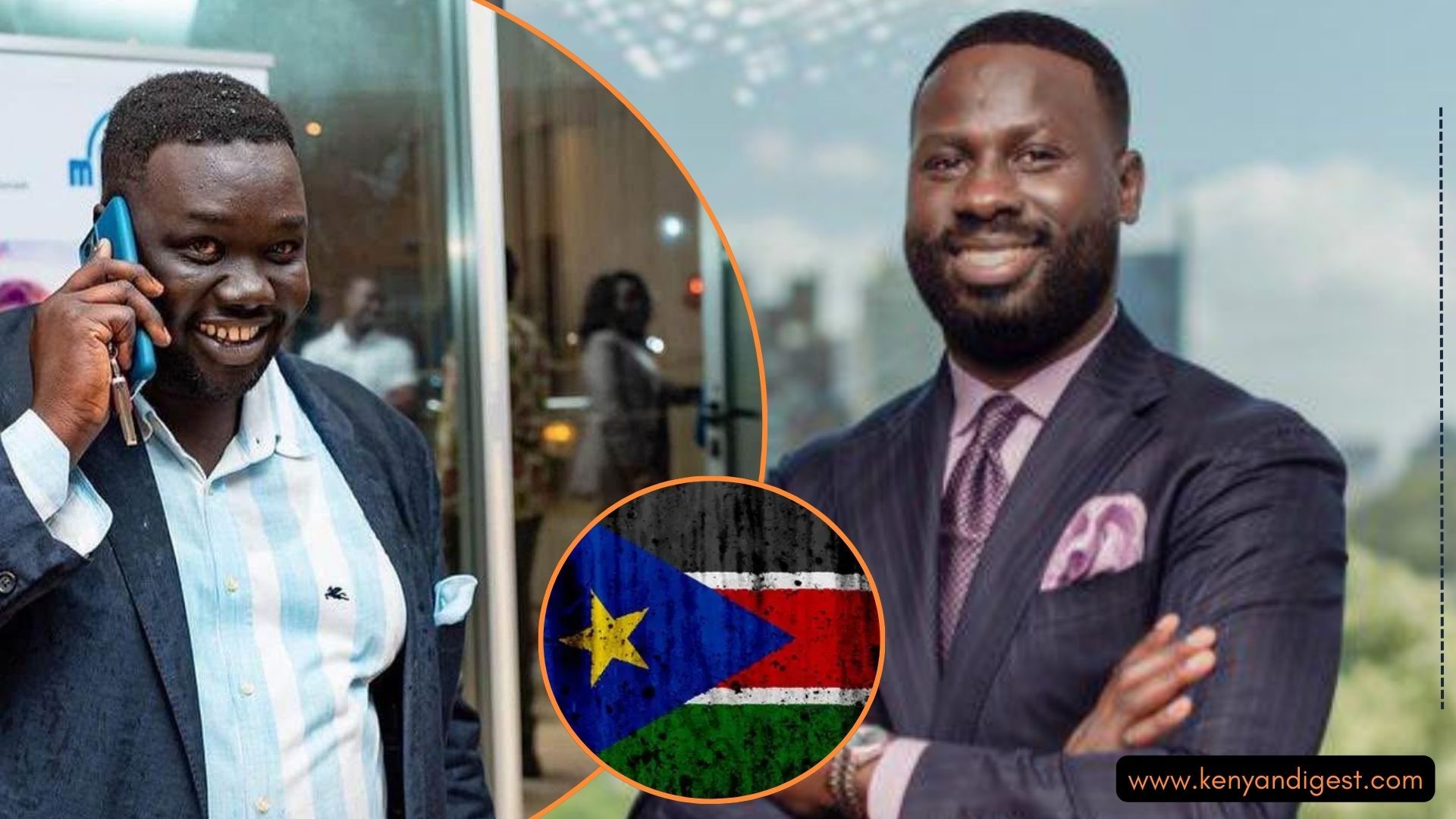
South Sudan’s Oil Looters: How Young Elite Gatekeepers Plunder Nation While Citizens Starve
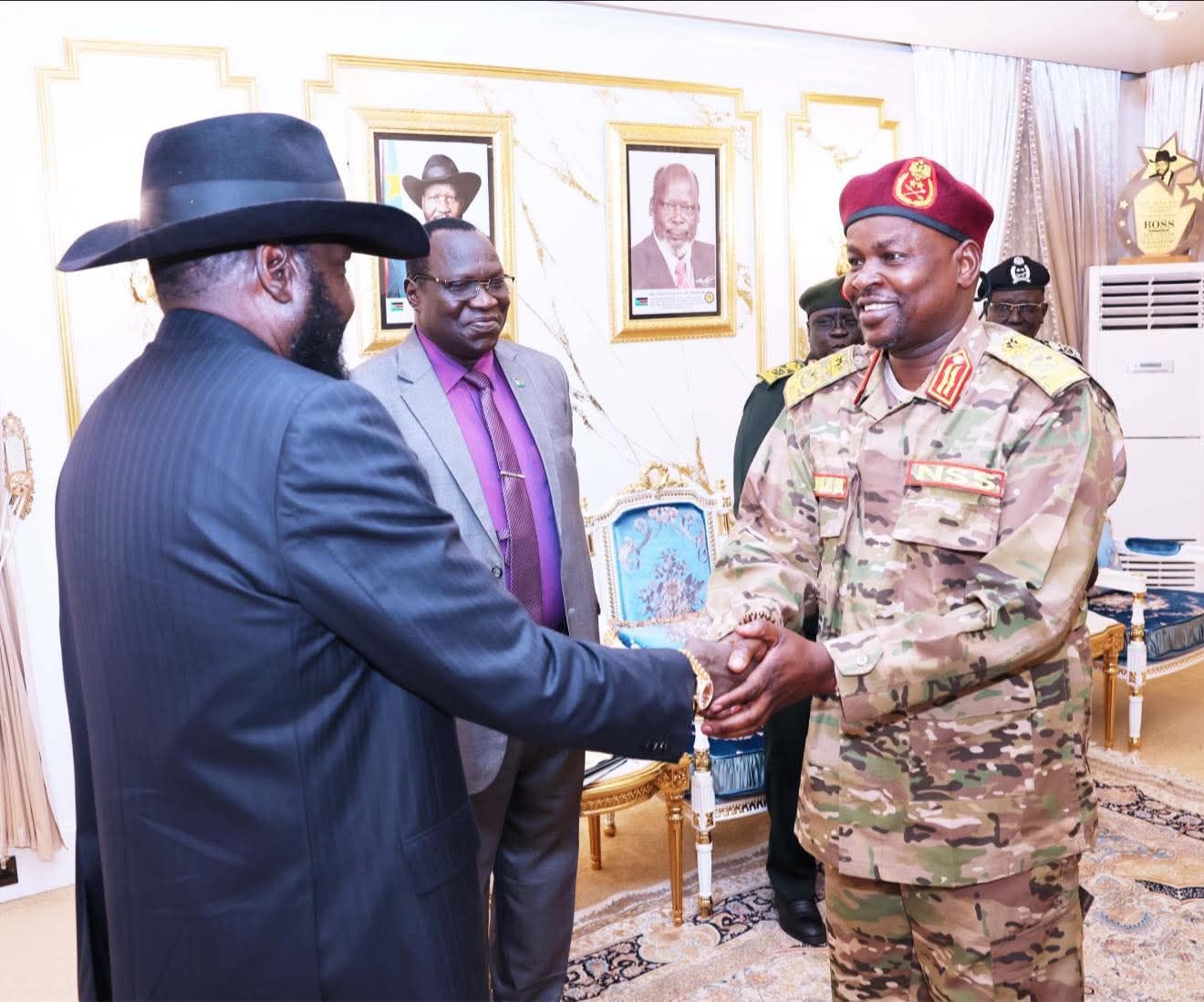
General to Private: Kiir Crushes Economic Vice President in South Sudan's $1.7 Billion Corruption Purge
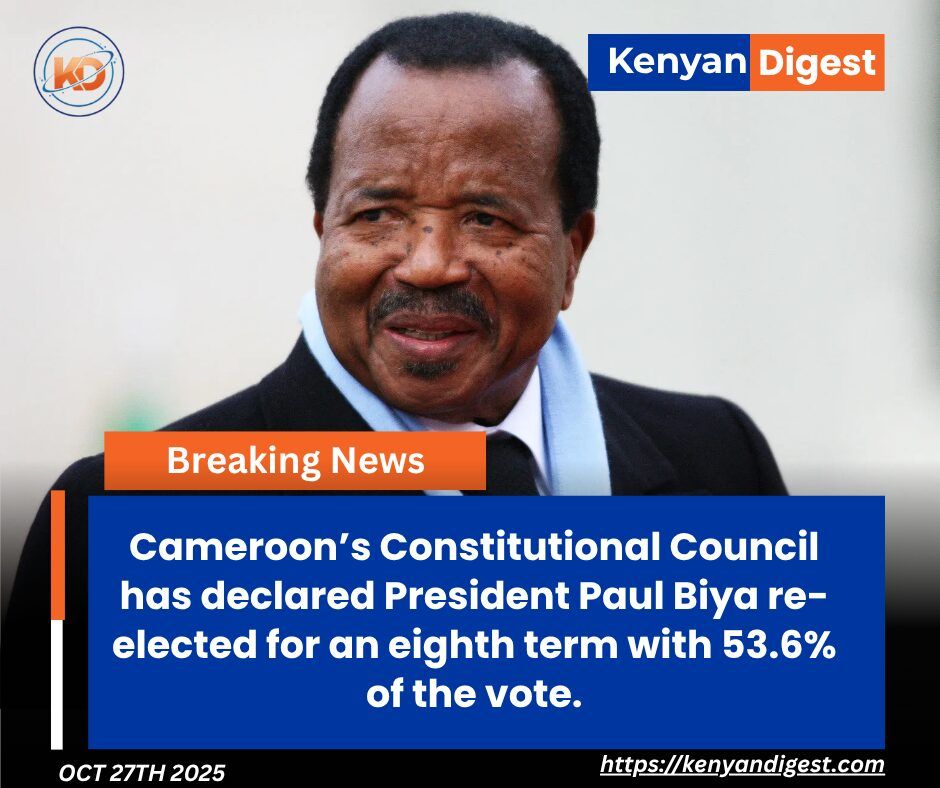
Paul Biya’s Re-Election: What Cameroon’s Political Longevity Reveals About Leadership and Governance in Africa