Likewise, internationally: While some foreign officials have praised China’s aid efforts, others have found it lacking. “Does China expect Kenya to fulfill its debt obligations in the wake of unparalleled disruption to our economy?” an editorial in The Standard, a popular Kenyan newspaper, asked last week.
Official attempts to appropriate people’s views also seem to have invited scrutiny. One post — which was later censored — criticized the government’s decision to declare April 4 a national day of mourning for the victims of Covid-19. The author argued that the timing was inappropriate because the epidemic was still underway and many questions about accountability remained unanswered.
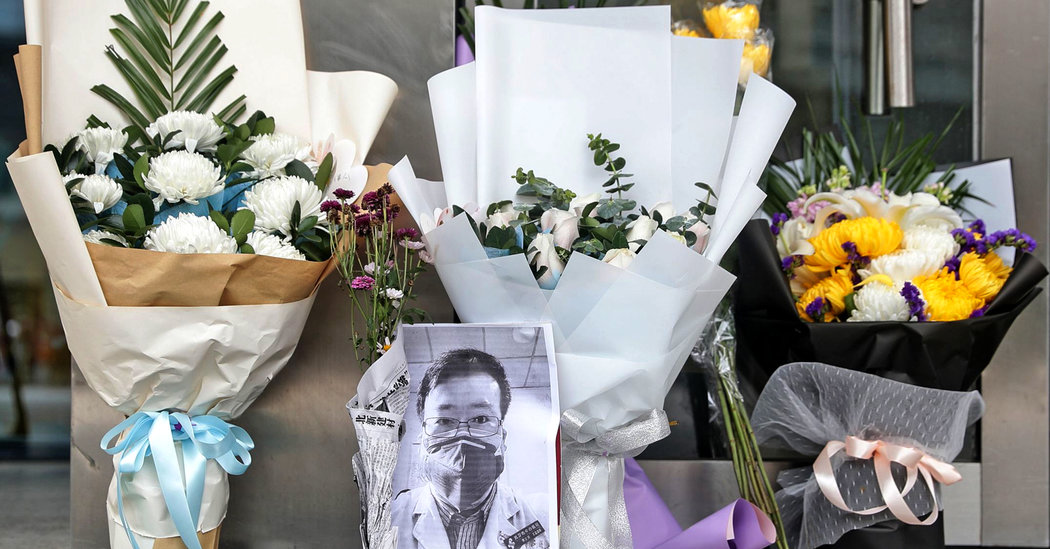
Other people seem to push back against the state’s official narrative of strength and heroism by sharing intimate accounts of their searing losses and run-ins with administrative hurdles that scuttled their attempt to grieve with dignity. Consider this post by a resident of Wuhan who lost his father to Covid-19: “Wuchang morgue just called to verify information with me and relayed the message that I have to wait for a notice from Wuhan’s epidemic prevention command post before I can pick you up, Dad. When I think of you alone in the morgue, unable to be buried in peace, I cry uncontrollably.” Since early April, residents of Wuhan have been required to pick up the ashes of their deceased relatives and loved ones accompanied by local officials.
The co-optation of foreign voices in the service of China’s persuasion campaign hasn’t gone unchallenged either. The World Health Organization has been accused of kowtowing to China in various ways, and the hashtag #TedrosResign, referring to the institution’s director-general, Tedros Adhanom Ghebreyesus, is gaining traction on Twitter.
Some of this, of course, is the result of self-serving counter-propaganda by the Trump administration. (On Tuesday, President Trump announced that the United States would stop funding the W.H.O.) But other states are pushing back as well. China’s so-called mask diplomacy has sparked suspicion that it is seeking to extend its political influence abroad. Taiwan and Vietnam have tried to offset that possibility by exporting face masks as well. And so even as some analysts argue that the coronavirus crisis is helping China emerge as a global leader and serious contender against the United States, others claim that the payoff will be limited.
While conducting research on public perceptions of China in Ethiopia and Russia over the past two years, I have found many people in both countries who held conflicting thoughts and feelings toward China. One can respect China’s might and achievements, while being vigilant about its intentions, especially when it comes to material assistance. Just last week, a Lithuanian journalist asked me about the political risks of accepting Chinese medical aid.
China’s propaganda has matured — but so have its targets. Instead of delivering diktat and defensiveness, the government now engages in selective dialogue with its audiences and their criticisms, featuring those views in its own storytelling, or its retelling of them. So far, this seems to have played to the Communist Party’s advantage, partly by forcing it to keep adapting its messaging. But the public, in China and abroad, in turn is reinterpreting the propaganda, and further testing the party’s agility.
Maria Repnikova (@MariaRepnikova) is an assistant professor of global communication at Georgia State University and the author of “Media Politics in China: Improvising Power Under Authoritarianism.”
Related reporting
More World News →
Saudi Prince Found Dead in Hotel Bathroom as Inquest Rules Death Was Misadventure
South Sudan at the Brink: How Corruption Tightens Its Grip on a Rare Working Institution
South Sudan’s Oil Looters: How Young Elite Gatekeepers Plunder Nation While Citizens Starve