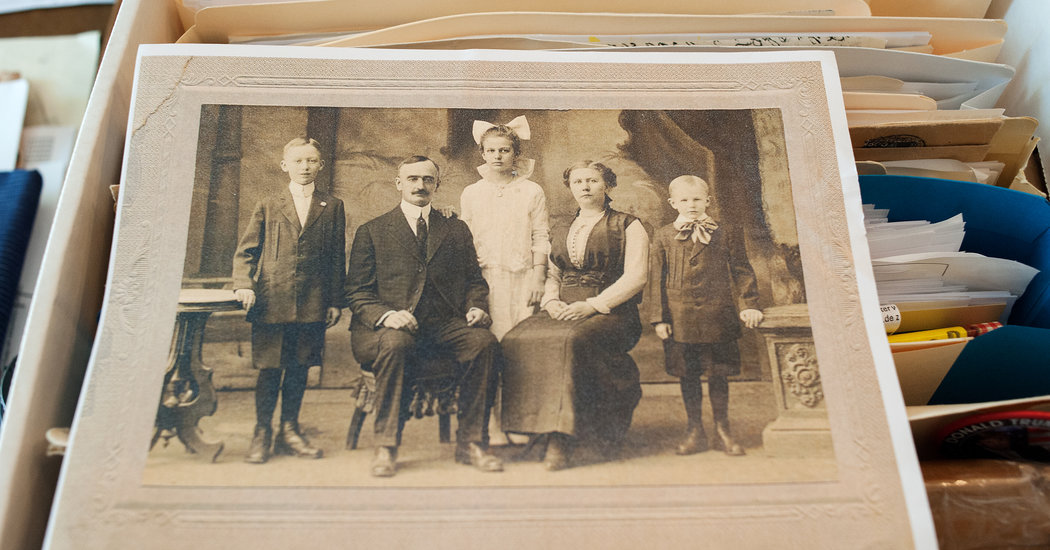
Frederick Trump’s life and death is critical to understanding the family’s American narrative. Ms. Blair and others have reported that because Frederick Trump failed to do mandatory military service in his native Bavaria before sailing for America, his immigration to the United States may have been legally murky. It’s a complex tale, but immigration records show his employment as “none” and that he became a U.S. citizen in 1892. But Bavarian authorities eventually revoked his citizenship.
In America, Trump earned his fortune operating restaurants and hotels in Seattle’s red light district during the Klondike gold rush, peddling booze and “private rooms” for women (common shorthand for prostitution at the time). He also purchased real estate in the John D. Rockefeller-backed mining town of Monte Cristo, Wash., and later in Queens, where he settled with his German wife, Elizabeth, and their three children. Like his son and grandson, he also engaged in questionable schemes to build his businesses, including staking a bogus mineral claim on property in Washington and building a hotel on property to which he had no legal right.
Frederick Trump was the only member of the family before his grandson to have been elected to public office, Ms. Blair notes: He was elected justice of the peace in Monte Cristo, 32 votes to five for his opponent. When anti-German sentiment swelled during World War II, the Trump family history switched from one rooted in Germany to one rooted in Sweden, a false claim that Donald Trump has repeated, including in his book “The Art of the Deal.”
By the time of his death, Frederick Trump’s various exploits had made him a relatively wealthy man, yet his loss, like the loss of many others in the pandemic, was devastating for his family. Still, they were relatively well-off; the money and real estate holdings that he left behind started the E. Trump & Son company, which would later fold into the Trump Organization.
The winter following Frederick Trump’s death, deaths from the flu pandemic exploded. Public health resources were already strained by World War I, so not much was done to combat it. “Little was done those first two thirds of the pandemic,” said James Harris, a lecturer at Ohio State University who studies medical history and pandemics. “There was the wartime context, pushback to social distancing, people moving around the globe on a massive scale.”
Since then, the world has benefited from better understanding the need for social distancing and quarantining, the rise of antibiotics and vaccinations, and improved hygiene. “An important lesson we can learn is to be proactive,” Professor Harris said.
In her numerous interviews with Donald Trump, Ms. Blair said, he “showed zero interest in history.” That included the story of his grandfather’s life and death, and the impact it had on his father and relatives at the time. “There was no rear view mirror,” she said.
Related reporting
More World News →
Saudi Prince Found Dead in Hotel Bathroom as Inquest Rules Death Was Misadventure
South Sudan at the Brink: How Corruption Tightens Its Grip on a Rare Working Institution
South Sudan’s Oil Looters: How Young Elite Gatekeepers Plunder Nation While Citizens Starve