Daily Business Briefing
Aug. 17, 2021UpdatedAug. 17, 2021, 2:16 p.m. ET
Aug. 17, 2021, 2:16 p.m. ET
Retail sales dropped in July, the Commerce Department reported Tuesday, a sign that consumer spending was hampered amid an uneven economic recovery from pandemic-induced restrictions.
The 1.1 percent decline in sales last month, which followed an increase in spending in June, was bigger than economists had expected and came as spending on homes and cars fell.
The increase in coronavirus cases caused by a surge in the Delta variant has not affected spending yet, but shoppers could pull back if lockdowns are reinstated. Sales at restaurants and bars increased as consumers continued to dine outdoors, but as fall approaches and the weather gets cooler, diners might be more reluctant to eat outside.
A decline in sales could signal a slowdown in the broader economic recovery. Consumer sentiment tumbled more than 13 percent in early August from July, according to preliminary results from the University of Michigan’s consumer sentiment index.
“Even though Covid-19 is playing its role in making consumers less reluctant to spend, a big factor is prices,” said Beth Ann Bovino, the U.S. chief economist at S&P Global.
Some retailers shrugged off the sales report. Walmart, which on Tuesday said that revenue rose in the three months ending in July, offered optimistic guidance, saying it expected U.S. sales to increase 5 to 6 percent for the year.
Cars and auto parts
Sales of cars and auto parts were down 2 percent in July, as prices of used and new cars continued to climb amid higher demand and lower supply of vehicles.
A global shortage of computer chips has slowed car and truck production in recent months, hurting automakers like Ford, Daimler and BMW. Excluding cars and car parts, retail sales fell 0.4 in July.
The shortage continues to weigh down the automotive industry despite the rise in prices, which increased by 5.4 percent last month compared with a year earlier, the Labor Department’s Consumer Price Index showed last week.
“Consumers hit their limit in terms of the prices of cars,” Ms. Bovino said.
Automakers have revised their production schedules lower, suggesting that some price pressures in the car industry could last into the fall, according to a research note from Goldman Sachs.
Home furnishings
Sales of furniture, sporting goods and building materials declined. The fall coae as home prices continued to rise. The median price hit a record $363,300 in June, 23.4 percent higher than in the same month last year.
Home Depot reported on Tuesday that transactions fell to $481.7 million in the three months ending Aug. 1, a 6 percent decrease from the same period last year.
“Since we’ve seen a slowdown in home sales, because of high prices, people are not buying homes or the furniture to furnish it,” Ms. Bovino said.
Also potentially weighing on spending, economists have said, is the end of pandemic-related unemployment benefits by about two dozen states.
E-commerce
July’s spending numbers also likely reflected dampened e-commerce sales, because Amazon’s Prime Day promotions, which can drive online spending in the summer, took place in June this year instead of July. Credit card spending data declined 1.3 percent in July from June, a drop that analysts at Bank of America attributed last week to a fall in online spending.
Sales at non-store retailers, which include e-commerce businesses, fell 3 percent in July, the Commerce Department said. Sales are shifting month to month as the economy’s unsteady reopening continues.
“It is possible that if the Covid surge continues and consumers remain cautious, we will see a rotation back from people spending outside to spending online,” said Joseph Song, a senior U.S. economist at Bank of America.
Restaurants and bars
The retail sales report came amid concerns that consumers are rethinking their return to in-person shopping and dining as cities and states are forced to slow reopening plans. Still, sales of clothing and clothing accessories, as well as spending at restaurants and bars, were up about 3 percent.
“People are still going out and spending at bars and restaurants because it’s summer and you can sit outside. You feel safer outside,” Ms. Bovino said. “The big question is what is going to happen in September, when we have to go back indoors.”
Read more
Walmart’s revenue and profit rose in the second quarter, as the giant retailer continued to expand its grocery and e-commerce business.
Walmart said on Tuesday that its total revenue rose 2.4 percent to $141 billion, while operating income was up 21 percent to $7.4 billion from a year earlier, both numbers higher than some analysts had expected. Walmart earned $1.52 on a per share basis in the quarter that ended July 31.
The company “had another strong quarter in every part of our business,” Walmart’s chief executive, Doug McMillon, said in a statement. In particular, he said, the retailer expanded its market share in grocery in the United States and increased its global advertising business.
Walmart is among the retailers that have emerged from the pandemic even stronger as it honed its ability to sell to customers both online and in its thousands of stores.
Walmart said its total sales in the United States grew 5.3 percent, while U.S. e-commerce sales grew 6 percent in the quarter. That online sales growth is modest compared to some of the double digit increases Walmart had reported in recent quarters, but analysts noted that Walmart’s e-commerce sales have more than doubled over the past two years.
Walmart said it was on track to generate a total of $75 billion in e-commerce sales this year.
Often seen as a bellwether for the broader economy, Walmart reported optimistic guidance for the remainder of the year despite signs of inflation and the resurgence of the coronavirus.
The company said it expected its U.S. sales to increase by 5 to 6 percent this year, which is similar to what the company estimated in May when the pandemic seemed to be abating.
Walmart also raised its profit expectations from its earlier estimate in May saying, it expects operating income to increase by 9 percent to 11.5 percent.
Read moreThe S&P 500 fell 1.2 percent on Tuesday, on track for its sharpest daily drop in about a month. The decline came after the index had climbed for five consecutive sessions, hitting a record on Monday.
The drop came after a flurry of economic data: The Commerce Department reported a sharper than expected decline in retail sales that reflected weaker demand for cars and car parts as prices of new and used cars climbed amid a shortage of cars. Also on Tuesday, the Federal Reserve said manufacturing output jumped in July as carmakers raced to catch up with demand.
Shares of Walmart drifted between gains and losses, even after the company said its total revenue rose 2.4 percent to $141 billion, while operating income was up 21 percent to $7.4 billion from a year earlier, both numbers higher than some analysts had expected.
Home Depot shares fell 4.6 percent after its results for the quarter were weaker than expected. Lowe’s, which reports its earnings later in the week, fell 5.5 percent.
Coronavirus vaccine makers Moderna and Pfizer were both higher following reports that the Biden administration is likely to recommend booster shots for most Americans. Pfizer rose more than 1 percent, while Moderna gained more than 5 percent. Johnson & Johnson was slightly higher.
The yield on 10-year Treasury notes dipped to 1.25 percent.

For months, Hollywood has been awash in speculation about the future of A24, the buzzy independent studio behind movies like “Moonlight,” “Lady Bird,” “Midsommar” and the recent stripper story “Zola.” Was the nine-year-old studio about to sell itself to Apple, Amazon or another streaming insurgent? Variety magazine reported on July 13 that A24 was being valued at up to $3 billion.
All the while, A24 held its cards close, refusing to comment publicly.
On Tuesday, the secretive company made a big hire, signaling that, at least for now, it planned to pursue growth on its own, perhaps through acquisitions. J.B. Lockhart, who has been the N.B.A.’s chief financial officer since 2017, will join A24 as the studio’s first C.F.O. The National Basketball Association announced Mr. Lockhart’s departure in an internal memo. A spokesman for A24 confirmed his hire but declined to comment further.
Mr. Lockhart joined the N.B.A. in 2013, helping the league to accelerate its digital media and international expansion efforts. His résumé also includes a stint at The Walt Disney Company, where he focused on identifying acquisitions.
Since its founding in 2012, A24 has delivered one cultural thunderclap after another, including “Spring Breakers,” about young women who get mixed up with a messianic drug and arms dealer; the creepy-cool “Ex Machina,” which introduced the future Oscar winner Alicia Vikander to most viewers; and “The Lobster,” a dystopian cult favorite. A24 has 17 films in various stages of financing, development and production, along with 14 television series.
Read more
The filmmaker and left-wing provocateur Michael Moore has a new venue for his work: the digital newsletter platform Substack.
The first edition of his newsletter came out on Tuesday. Newsletters seem to be the latest rage in publishing and journalism, but the genre is nothing new for Mr. Moore, who said he put out his first one when he was in the fourth grade.
His newsletter will be offered for free. Readers will have the option to pay a subscription fee to access video chats and previews of his upcoming projects. He will also host an audio series, “Rumble With Michael Moore,” on Substack’s podcasting service.
“We have three pandemics going on — coronavirus, climate and the people that want to bring down our democracy,” Mr. Moore said in an interview, explaining why he had decided to make his newsletter free. “We are not going to succeed if we don’t get more people involved in their democracy. Obviously, the best way to do that is to make it as widely available as possible.”
Mr. Moore has published an email newsletter since the early 1990s, using it to rally support for causes like stricter gun control laws and to get the word out on his films, which include the Oscar-winning 2002 documentary “Bowling for Columbine.” He said he would be bringing his mailing list of nearly 600,000 readers to Substack.
Substack, which has more than 500,000 paying subscribers, has attracted a number of top writers, some of whom have defected from mainstream media organizations for six-figure deals or the promise of a lucrative stream of revenue from reader subscriptions. The author Roxane Gay, the tech journalist Casey Newton and the writer Andrew Sullivan are among the writers who have popular newsletters on the platform. Earlier this month, a group of prominent comic book writers and artists joined the service. Mr. Moore said he was a fan of Substack newsletters by Patti Smith, Anand Giridharadas and Garrison Keillor.
The demand for newsletters has led to an increasingly fierce competition across the media industry. Facebook recently started Bulletin, a newsletter service with writers like Malcolm Gladwell and the sports reporter Erin Andrews. Twitter purchased the newsletter platform Revue earlier this year. The New York Times last week introduced seven new newsletters and made a slate of its offerings available only to paying subscribers.
Read more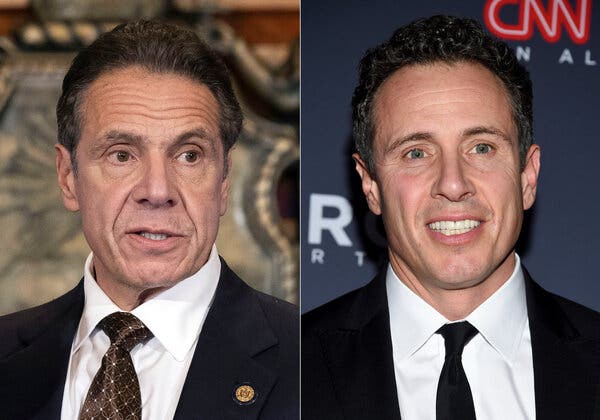
As Gov. Andrew M. Cuomo’s political career teetered, his brother, the TV host Chris Cuomo, kept silent, declining to address the matter on his CNN show and then leaving for what he described as a planned vacation.
On Monday, Chris Cuomo returned to prime time and spoke publicly for the first time about his brother’s stunning resignation — and the ethical headaches it created for him and his network.
“It was a unique situation, being a brother to a politician in a scandal and being part of the media,” Mr. Cuomo said in brief remarks toward the end of his 9 p.m. show. “I tried to do the right thing, and I just want you all to know that.”
He also said he had advised his brother to step down as New York’s governor. “While it was something I never imagined ever having to do,” he told viewers, “I did urge my brother to resign, when the time came.”
For CNN, the conundrum of the Cuomo brothers was painful on several levels.
Chris Cuomo apologized in May after it emerged that he had offered advice to Andrew Cuomo’s aides as the governor faced sexual harassment accusations. The host pledged not to discuss his brother’s travails, but CNN kept him on the air, roiling some colleagues who considered his role a glaring conflict of interest.
It did not help that CNN had openly encouraged the brothers’ on-air rapport at the start of the pandemic, when viewers tuned in to see Chris Cuomo interview Andrew Cuomo about his response to the pandemic.
On his Monday show, Chris Cuomo said the situation involving the governor’s scandal was “unlike anything I could have imagined.”
“I’m not an adviser; I’m a brother,” he told viewers. “I wasn’t in control of anything. I was there to listen and to offer my take. And my advice to my brother was simple and consistent: own what you did, tell people what you’ll do to be better, be contrite, and, finally, accept that it doesn’t matter what you intended. What matters is how your actions and words were perceived.”
Chris Cuomo has also faced scrutiny over his involvement in the efforts by Andrew Cuomo’s aides to stave off the growing scandal. On Monday, the CNN host said: “I never attacked nor encouraged anyone to attack any woman who came forward. I never made calls to the press about my brother’s situation. I never influenced or attempted to control CNN’s coverage of my family.”
He said he had no plans to comment further. “This will be my final word on it,” the host said, before cutting to a commercial. “Let’s take a break. We’ll be right back.”
Read more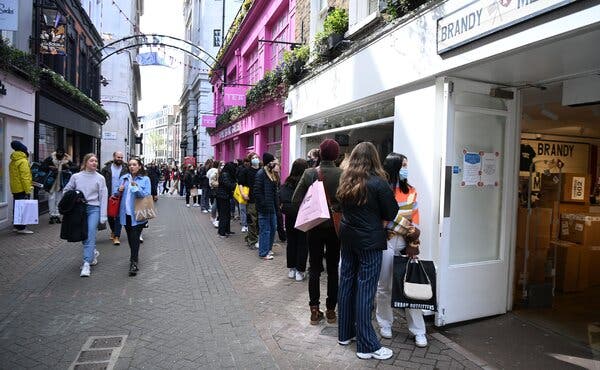
Job vacancies in Britain climbed to a record high at the start of the summer as businesses competed with one another to fill positions after the government lifted pandemic restrictions.
From May to July, businesses sought to fill 953,000 vacancies, up 44 percent from three months earlier and well above prepandemic levels, according to data from the Office for National Statistics published on Tuesday.
Vacancies were highest for health care workers, followed by positions in the wholesale and retail industry and the accommodation and food services industry, such as hotels and restaurants, the statistics office said. In recent months, many businesses in these industries have reported staff shortages, and in the case of hospitality, some are restricting their opening hours to ease the burden on existing staff members even as consumer demand is high. Some businesses are raising pay to lure new employees as the pool of people out of work shrinks.
Pay excluding bonuses jumped 7.4 percent in the second quarter from the year before. But even once certain quirks from the pandemic are stripped away — such as the effect of fewer low-paid employees in the work force a year ago, when much of the economy was in lockdown — the increase in pay was 3.5 percent to 4.9 percent, the statistics office estimated. It’s much higher than the average annual increase of the previous decade, which was about 2 percent.
“Rising wage pressures fit with the broader story of rising inflation across the economy,” Kallum Pickering, an economist at Berenberg, wrote in a note. This strengthens the case for the Bank of England to raise interest rates next year, he added.
Overall, the British labor market is recovering strongly from the pandemic. The number of people on payrolls rose by 182,000 in July, up 0.6 percent from June. Compared with February 2020, the number of payrolled employees was down by 201,000. At its worst, in November, there were nearly 969,000 fewer employees than before the pandemic.
In the second quarter, the unemployment rate slipped to 4.7 percent from 4.9 percent in the previous quarter. There was a record flow of about 300,000 people from unemployment into employment. There was also a decrease in the economic inactivity rate, as more people were classified as unemployed because they had resumed hunting for a job.
By the end of the second quarter, about two million people were still on furlough in Britain, but that program will end next month. Even as vacancies remain high, policymakers and economists are watching closely to see if there will be a notable rise in the unemployment rate after the furlough program ends or if those workers are able to find jobs.
The Bank of England is not forecasting another increase in the unemployment rate this year but expects it to be about 4.25 percent in 2023. It was 3.8 percent before the pandemic.
“The challenge of avoiding a steep rise in unemployment has been replaced by that of ensuring a flow of labor into jobs,” Andrew Bailey, the governor of the central bank, said this month. “This is a crucial challenge.”
Read more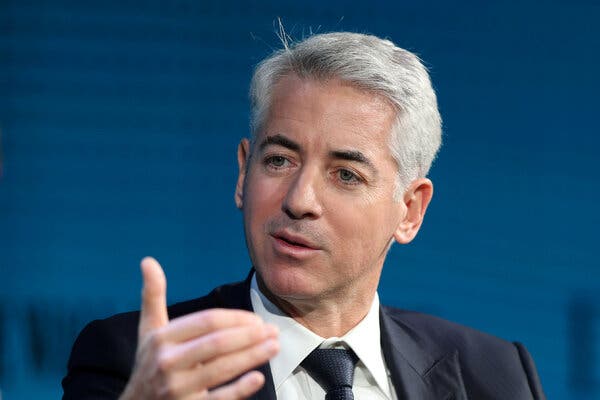
Pershing Square Tontine Holdings, the special purpose acquisition company run by the billionaire hedge-fund investor William A. Ackman, was sued Tuesday in federal court. The novel case could have far-reaching implications for the SPAC industry, the DealBook newsletter reports.
The suit was filed in the U.S. District Court for the Southern District of New York on behalf of a SPAC shareholder by Robert Jackson, a former commissioner of the Securities and Exchange Commission, and John Morley, a law professor at Yale. It contends that Mr. Ackman’s SPAC isn’t an operating company, but is actually an investment company like Mr. Ackman’s funds, which should be regulated by the Investment Company Act of 1940. If certain SPACs were regulated as investment companies, much of the industry could be affected because it would make it harder for anyone in the investment business to participate in a SPAC.
A SPAC is a public shell company formed to acquire and operate a private company. This lets a private company go public with less scrutiny than a traditional initial public offering. Many SPACs are started by professional investors with investment businesses that contribute services to the SPAC, like Mr. Ackman and his hedge fund, Pershing Square Capital Management.
SPACs are already under fire from regulators who have pledged to tighten protections for investors, and they face a rising number of class-action lawsuits by aggrieved shareholders. Around 600 SPACs have gone public over the past year and SPAC-linked merger deals worth more than $700 billion have been announced over that time. Securities law experts have raised questions about whether SPACs are used as a means to avoid the more onerous rules that apply to investment funds. The lawsuit highlights this increasingly common complaint.
“Investing in securities is all the company has ever done since its I.P.O.,” the complaint says of Pershing Square’s SPAC. Simply buying some stock is not what a SPAC is meant to do, the lawsuit argues. Yet Mr. Ackman negotiated a stock deal between his SPAC and Universal Music Group. (He originally pursued a merger.) The arrangement was complicated, with the Pershing Square SPAC spending $4 billion to buy a 10 percent stake in the company, which was already being taken public by its parent, Vivendi. The S.E.C. questioned the terms, which raised concerns that Mr. Ackman’s SPAC was not a SPAC at all.
Mr. Ackman abandoned the Universal Music deal last month, admitting in a letter to investors that he had underestimated regulatory and shareholder resistance to the complex transaction. But the new lawsuit asks the court to declare that Pershing Square’s SPAC is an investment company, and to find that it was deliberately mischaracterized to avoid legal requirements to the detriment of investors. The suit is also seeking to rescind contracts worth hundreds of millions of dollars to members of the company’s board.
If successful, the lawsuit could make professional investors who have found SPACs attractive wary of potential legal challenges, chilling the market. Proving damages will be difficult because the Universal Music deal was scrapped. But more important, perhaps, the case tries to address underlying issues about the motivations of some SPAC sponsors. And its analysis of the meaning of investing in securities — part of any merger or acquisition — raises existential questions about the purpose and treatment of SPACs in general.
The irony is that Pershing Square’s SPAC was more investor-friendly than most. The SPAC was structured so that its sponsors would only be paid if its deal proved successful over time. Most other SPACs give sponsors shares and warrants that pay out regardless of the performance of the company after a merger.
A spokesman for Pershing Square’s SPAC said in a statement that the “litigation is totally without merit” and that the SPAC has never held securities that would require it to register as an investment company, nor does it have any plans to do so in the future.
Read more
Maven Clinic, which provides online health services to women and families, announced on Tuesday that it had raised a round of $110 million in funding, bringing its valuation to more than $1 billion, a first for a U.S. company in the women and family health space.
“I’m very excited for the vote of confidence not just in us but the category itself,” said Kate Ryder, the founder and chief executive of Maven Clinic.
“There’s a lot of research on the first 1,000 days of life, and if you just invest in that period — up to age 2 — you can have a huge return on investment across the rest of the system because those children have better tools to go through life,” she said.
Maven Clinic’s telehealth platform includes access to a network of providers, including fertility specialists, adoption coaches, doulas, lactation consultants, pediatricians and child care providers. Individuals can participate on a per-use basis, but the bulk of its business comes from companies, including Snap, Bumble, L’Oreal and Microsoft, that offer it as an employee benefit.
Within a week of Microsoft’s offering Maven Clinic as a benefit in March, 1,300 employees had signed up, said Sonja Kellen, a senior director of global health and wellness at Microsoft. Now, a few months in, 2,300 employees use the platform.
“You don’t really know how many people are on this journey — starting a family or building a family — until you launch something like this,” she said.
The company, which was founded in 2014, did not reveal current membership numbers. But it said its membership had soared 400 percent since the onset of the pandemic.
“Covid accelerated all digital health companies forward,” Ms. Ryder said, but people are also now “starting to prioritize health equity, women’s health and family health.”
The pandemic helped reveal the weaknesses in the patchwork of child care systems and the gender and racial inequities of the health system, and it made corporate executives focus on supporting and retaining employees with families, she said.
“All the trends kind of converged for us,” she added.
About 15 percent of the in-person referrals made through the platform are for child care support, and since March 2020, about a quarter of the appointments scheduled have been with mental health providers — an indication of the stresses and struggles of working parents.
Ms. Ryder next wants to lower the barrier to quality health care for lower-income families.
“A Medicaid mom who is Black and who is at heightened risk for maternal mortality — she needs a personalized Maven experience just as much as the member who is working at a company in Dallas or New York,” she said.
The financing was led by Dragoneer Investment Group and Lux Capital and included an investment from Oprah Winfrey.
Read more
The billionaire founder of Evergrande, China’s most indebted property developer, has stepped down from his position as chairman of the company’s main real estate arm, Hengda Real Estate Group, according to a notice filed to a government website on Tuesday.
The news that Xu Jiayin, the chairman, would be replaced by Zhao Changlong, a previous company director who will take over as general manager of the real estate arm, sent the developer’s shares falling more than 4 percent.
Details of the management change at Hengda Real Estate Group were published on the National Enterprise Credit Information System, a government corporate information site. A spokesperson for Evergrande said Mr. Xu would remain chairman of Evergrande.
Evergrande is the latest Chinese corporate giant to fall under the microscope of regulators looking to rein in unruly corporate debt. One of the country’s most debt-saddled companies, it has as much as $300 billion in unpaid bills, loan and bond payments.
Evergrande cranes dot China’s urban landscape. During the country’s boom years, it helped create the kind of economic activity that officials came to depend on to fuel the nation’s miraculous growth. It sold apartments before they were built, using a model that allowed it to grow quickly as the country urbanized. Then it borrowed money to dabble in new business ventures, like an unprofitable soccer club and an electric vehicle company.
Fearing a housing bubble could lead to a crisis that would reverberate through China’s financial system, regulators last year began to crack down on the borrowing habits of the property sector. The central bank created new rules, called the “three red lines,” that have forced property companies to begin paying off their bills. Evergrande was the primary target.
Evergrande has been selling off parts of its empire to comply. This month it sold stakes in its internet business. Mr. Xu has told investors that the company is working hard to pay off some of its loans and has reduced the debt that incurs interest to $88 billion from $130 billion last year.
The management changes on Tuesday could foreshadow more turmoil.
Evergrande last week confirmed reports that it was in talks with prospective buyers to sell its electric vehicle business and its property management unit, without offering any further details.
Read more
“It did not have to end this way,” Ajmal Ahmady, the acting governor of Afghanistan’s cental bank, said on Twitter this week, describing the chaos in Kabul as he fled the country.
In a series of posts on Monday, Mr. Ahmady detailed how the central bank tried to respond to turbulence in Afghanistan’s currency market late last week amid the swift takeover of the country by the Taliban, and his disappointment that the country’s leadership was fleeing without any sort of transition plan.
Top figures in President Ashraf Ghani’s government were inexperienced, he wrote, and it was Mr. Ghani’s “failure that he never recognized such weaknesses.”
Mr. Ahmady said the collapse of the government was “so swift and complete” that it was “disorienting and difficult to comprehend.”
The Afghan currency, the afghani, slumped more than 6 percent on Tuesday to a record low of 86 to the U.S. dollar, according to Bloomberg data.
Mr. Ahmady was appointed the central bank’s acting governor in June 2020. Before that, he served as a senior adviser to the president for banking and financial affairs, as well as other ministerial positions. Mr. Ahmady was educated in the United States, at the University of California, Los Angeles, and Harvard Business School.
Afghan lawmakers rejected making Mr. Ahmady the permanent central bank chief in December, citing reasons including insufficient fluency in the country’s national languages, Bloomberg reported.
As a temporary caretaker of the economy, Mr. Ahmady focused on price stability, strengthening the financial sector and digitizing payments. The International Monetary Fund forecast the Afghan economy — which relies heavily on international aid — to rebound 4 percent this year after shrinking in 2020, but in June warned that it was facing “formidable challenges” because of the pandemic and “precarious security situation.”
Last week, “currency volatility and other indicators had worsened” before the Afghan government fell, he said, but the central bank had been able to stabilize the economy “relatively well.”
“Then came last Thursday.”
Mr. Ahmady described how he had attended his normal meetings that morning, but by the time he returned home, major cities including Ghazni and Herat were under Taliban control. On Friday, he said, he received a call saying that the central bank would get no further shipments of U.S. dollars, and on Saturday, the bank supplied less currency to the markets, a move that “further increased panic,” he said.
“I held meetings on Saturday to reassure banks and money exchangers to calm them down,” Mr. Ahmady wrote. “I can’t believe that was one day before Kabul fell.”
On Saturday night, he said, he bought tickets to leave the country on Monday “as a precaution.” But on Sunday, he left the central bank and went to the airport, where he saw Afghan politicians.
“I secured a Kam Air flight Sunday 7pm,” he said, referring to an international airline based in Kabul. “Then the floor fell: the President had already left.”
Civil servants and the military immediately left their positions as word of Mr. Ghani’s departure spread, and hundreds of people raced to board an outbound plane. “The plane had no fuel or pilot. We all hoped it would depart,” he wrote.
He then disembarked from the aircraft, and amid of rush of people he ended up on a military plane. Mr. Ahmady did not say who owned the plane he was on or where it was going.
“It did not have to end this way,” he wrote. “I am disgusted by the lack of any planning by Afghan leadership. Saw at airport them leave without informing others. I asked the palace if there was an evacuation plan/charter flights. After 7 years of service, I was met with silence.”
Read more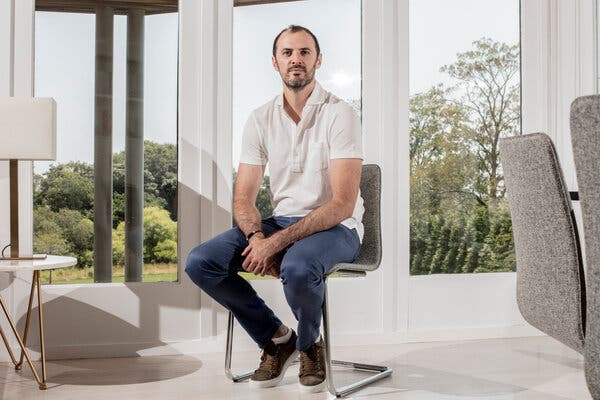
Hindenburg Research is having a moment. The five-person firm, founded in 2017, is making its name with searing reports about potential wrongdoing at public companies.
Some of those reports have prompted government investigations. Hindenburg’s founder, Nate Anderson, told The New York Times’s Matthew Goldstein and Kate Kelly that he’s not in the business just to move share prices, but the short-selling firm profits when the stocks it targets fall after it issues its research.
The firm, which has the backing of about 10 investors (which Mr. Anderson declined to identify), is named after the German airship that exploded in 1937. Mr. Anderson said his passion is to “find scams,” something he did as a hobby alongside previous jobs in due diligence for hedge funds and family offices. The Hindenburg team, comprising analysts and former journalists, can take six months or more to produce its reports.
In early August, the S.E.C. subpoenaed the sports betting firm DraftKings after Hindenburg reported in June that it had potentially enabled black-market betting.
Federal authorities began investigating the electric truck maker Lordstown Motors after Hindenburg reported in March that the company was hyping commercial interest. The company’s stock has fallen nearly 70 percent since the research was published.
Last month, the founder of Nikola, an electric vehicle manufacturer, was charged with defrauding investors. A Hindenburg report on the firm, published last September, accused the company of making exaggerated statements about its business. (Mr. Anderson said his bet against Nikola was his biggest win to date and remained the firm’s largest short position.)
“He’s become a real giant killer,” said Frank Partnoy, a former derivatives trader who is now a professor of securities law at the University of California, Berkeley, School of Law. He “seems fearless, even when going after some of the biggest corporate targets.”
“Nate’s killing it right now,” said Carson Block, who popularized activist short-selling as the head of the firm Muddy Waters.
Blank-check companies, like the ones that took the three firms mentioned above public through a merger, have given Hindenburg a lot of fodder. Critics say the incentives between sponsors of these takeover vehicles and later investors are misaligned. The S.E.C. is looking more closely at these deals with so-called special purpose acquisition companies, which take other companies public with less scrutiny than traditional initial public offerings.
“There are just so many outrageous companies,” Mr. Anderson said. “Some of these companies we have looked at, they don’t have any revenues at all.”
Read more
Today in the On Tech newsletter, Shira Ovide writes that not unlike America’s retail rulers of prior eras, Sears and Walmart, Amazon rose to power because it nailed convenience, the force of habit and a system to move merchandise from place to place.
“Amazon isn’t always the best place to shop, but it is winning by mastering everything but the shopping,” she writes.
Related reporting
More World News →
South Sudan’s Oil Looters: How Young Elite Gatekeepers Plunder Nation While Citizens Starve

General to Private: Kiir Crushes Economic Vice President in South Sudan's $1.7 Billion Corruption Purge

Paul Biya’s Re-Election: What Cameroon’s Political Longevity Reveals About Leadership and Governance in Africa