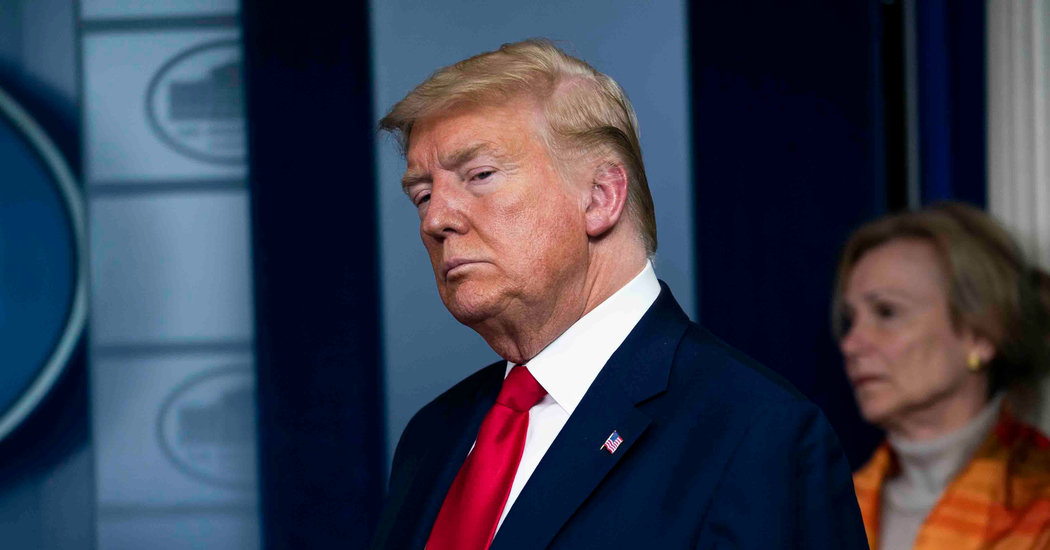
That is a theme Republicans have picked up, arguing that the focus on ousting Mr. Trump over what they called bogus charges distracted the country. “It diverted the attention of the government, because everything every day was all about impeachment,” Senator Mitch McConnell of Kentucky, the Republican leader, told the radio host Hugh Hewitt.
Mr. Trump, however, denied that it distracted him. “Did it divert my attention?” he replied to a reporter. “I think I’m getting A-pluses for the way I handled myself during a phony impeachment. OK? It was a hoax.”
“I don’t think I would have done any better had I not been impeached. OK?” he added. “And I think that’s a great tribute to something; maybe it’s a tribute to me. But I don’t think I would have acted any differently or I don’t think I would have acted any faster.” Mr. McConnell later told The Washington Post that he meant Congress was distracted, not the government.
The Senate trial ended Feb. 5, just days after Mr. Trump ordered the country closed to most travelers from China, where the virus outbreak began. During the trial and long after it was over, Mr. Trump was playing down the seriousness of the coronavirus, likening it to the ordinary flu and predicting that “like a miracle it will disappear.” It was not until March 11, five weeks after the trial, that he first addressed the nation from the Oval Office, and not until March 13 that he declared a national emergency.
After the Senate trial ended, Mr. Trump began removing officials seen as enemies. The target list was long and varied, including Lt. Col. Alexander S. Vindman, a national security aide who testified before the House under subpoena, and his twin brother, Lt. Col. Yevgeny Vindman, who had nothing to do with impeachment other than being family. Ambassador Gordon D. Sondland, another witness, was removed.
Ambassador William B. Taylor Jr., the acting chief diplomat in Ukraine who also testified, was brought home early. John C. Rood, the under secretary of defense, was ousted. Joseph Maguire, the acting director of national intelligence, was pushed out early. Elaine McCusker, a Defense Department official who questioned the aid freeze had her nomination to be Pentagon comptroller withdrawn. Jessie K. Liu, who prosecuted Mr. Trump’s friend, Roger J. Stone Jr., had her nomination to be under secretary of the Treasury withdrawn.
Mick Mulvaney, the acting White House chief of staff, who admitted at a news briefing that the security aid was held up in part to leverage Ukraine to investigate Democrats (and then tried to take his statement back), was fired on March 6 even as the pandemic was beginning to spread more widely.
Related reporting
More World News →
South Sudan’s Oil Looters: How Young Elite Gatekeepers Plunder Nation While Citizens Starve
General to Private: Kiir Crushes Economic Vice President in South Sudan's $1.7 Billion Corruption Purge
Paul Biya’s Re-Election: What Cameroon’s Political Longevity Reveals About Leadership and Governance in Africa