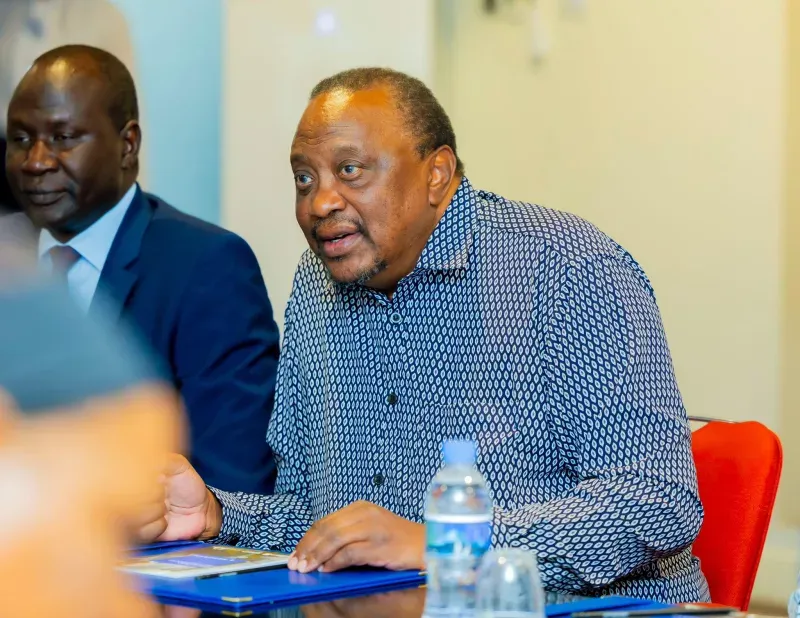
Retired President Uhuru Kenyatta announced he will relinquish leadership of Jubilee and the Azimio coalition, signalling a major shift in Kenya’s political landscape ahead of the 2027 elections.
The decision follows the death of ODM leader Raila Odinga a year earlier, whose family has been a central political dynasty since pre-independence.
For decades Kenya’s national politics has been dominated by families such as the Kenyattas, Odingas and Mois, and by regional figures like PCS Musalia Mudavadi and National Assembly member Moses Wetang’ula in Western Kenya.
As the 2027 polls approach, those dynasties are being challenged by emerging movements, smaller parties and leaders seeking independent political identities.
In his resignation statement Uhuru said, “Leadership is not the clinging to the front of the current; it is the courage to step aside and allow the next generation to navigate the waters.”
The exit creates space for other leaders, including Wiper leader Kalonzo Musyoka, former deputy president and DCP leader Rigathi Gachagua, and Jubilee figure Fred Matiang’i, whose transition is described as a test of the party’s ability to develop an identity beyond the Kenyatta family.
The shift has spurred the proliferation of new parties and intensified competition for political space.
In Western Kenya Governor George Natembeya of Trans Nzoia has built the Tawe movement, while Nairobi Senator Edwin Sifuna’s profile is rising, both challenging the long-standing influence of Mudavadi and Wetang’ula.
Tawe, meaning “No” in Luhya, has grown from a protest slogan into a broader mobilisation effort that cites frustrations over development, regional bargaining and perceived failure of established leaders to deliver benefits.
DAP-K Western region coordinator Caleb Burudi described Natembeya’s message as one of regional empowerment, economic transformation and political self-determination, resonating with young and grassroots supporters.
The Linda Mwananchi movement, linked to Sifuna, adds another dimension, though internal competition between Babu Owino and Sifuna and their separate party announcements indicate fragmentation.
In Mt Kenya, Gachagua’s DCP is presented as a central vehicle, yet figures such as Ndindi Nyoro have launched their own parties.
Political analyst Prof Peter Kagwanja said, “I think the generational change — itwika as it is known in Kikuyu — has already happened mostly in Central Kenya.”
Political historian and university don Macharia Munene described younger leadership as drivers of periodic generational change, using “itwika” to refer to shifts that have historically taken place roughly every three decades.
Related reporting
More Politics →
MP Junet Mohamed Says New Parties Will Take 40 Years to Match ODM
ODM Chair Gladys Wanga Rules Out Alliance With Rigathi Gachagua Over Ethnic Politics
President William Ruto Accuses Governor George Natembeya of Blocking Trans Nzoia Projects