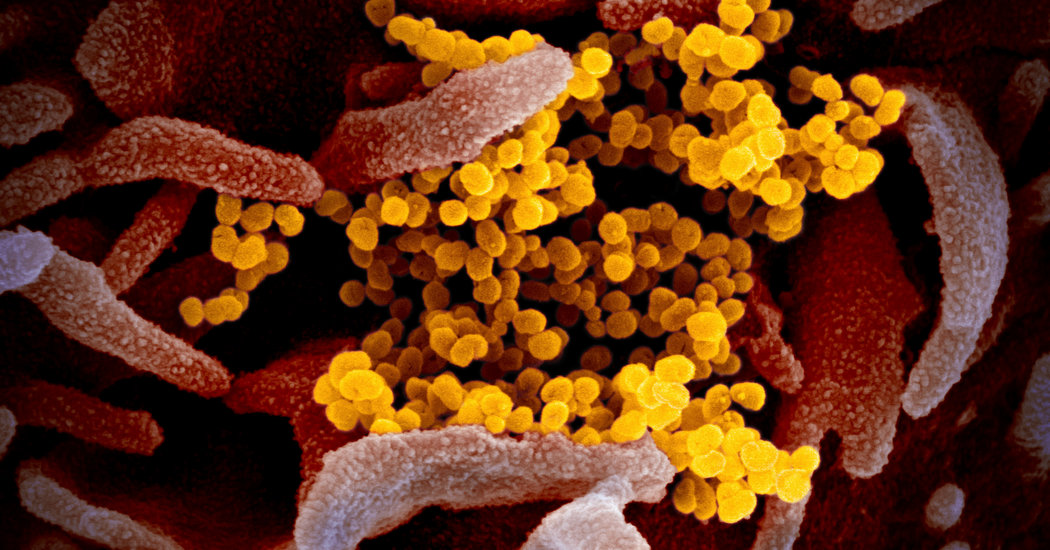
Governor Cuomo orders state hospitals to increase capacity by 50 percent.
To address the imminent influx of patients, Governor Andrew M. Cuomo of New York said Monday morning that he would issue an emergency order requiring hospitals to increase their capacities by at least 50 percent.
The order was a mandatory directive from the state, Mr. Cuomo said, adding, “I don’t think it’s unreasonable to say try to reach a 100 percent increase, but you must reach a 50 percent increase.”
Mr. Cuomo gave a set of additional updates in the Monday briefing:
More than 30,000 retired doctors and health care professionals have responded to the state’s call to volunteer their services, he said.
New York has increased its testing capacity exponentially, from testing 1,000 people a day ten days ago to 16,000 a day as of Monday.
Mr. Cuomo said he was still awaiting New York City’s plan to further reduce density, especially among young people, by imposing more restrictions on public spaces and potentially opening some streets to pedestrians.
The city desperately needs ventilators, the mayor said.
Mayor Bill de Blasio gave a dire warning about New York City’s need for medical equipment on Monday morning, saying that if hospitals did not get more ventilators this week, the number of deaths would spike.
“If we don’t get the equipment, we’re literally going to lose lives,” Mr. de Blasio said on CNN.
Mr. de Blasio said that city officials could only guarantee that “we can get through this week with the equipment and supplies we have. That’s the blunt reality.”
If more of the necessary equipment and supplies did not arrive in the city’s 11 public hospitals after that, he said, “We will get to a point where people can’t be saved who could have been saved.”
Mr. de Blasio repeated his call to the federal government to mobilize resources and send supplies to the places hardest hit by the virus, including New York City.
The mayor said he spoke with President Trump and Vice President Mike Pence on Sunday night about getting additional supplies, more medical personnel and financial support.
Mr. de Blasio said that he appreciated the conversation but was still waiting to see the “material support” necessary for city officials to contain the virus.
He specifically asked for millions of masks and for medical personnel to be deployed both from the military and from other parts of the United States.
“What I need right now is action, not words,” Mr. de Blasio said.
New York has more than 16,000 confirmed cases of coronavirus.
Gov. Andrew M. Cuomo disclosed new statistics on Sunday that indicated that New York State now has roughly 5 percent of the coronavirus cases worldwide.
The jump in the number of cases in New York stemmed from both the rapid growth of the outbreak and significantly increased testing in the state. Health officials emphasized that testing was revealing how quickly the coronavirus has spread.
There were 16,887 cases of the coronavirus in the state as of Sunday night, up 4,627 since Saturday, and at least 150 deaths, according to the latest figures from the city and state. As of Sunday morning, about 13 percent of people in New York State who tested positive for the virus had been hospitalized, Mr. Cuomo said.
He said that 18- to 49-year-olds made up more than half of all cases in the state, and that nearly 11,000 of the total cases were in New York City.
The governor also said he wanted state hospitals to double their capacity. The Federal Emergency Management Agency would build four temporary hospitals with 1,000 total beds at the sprawling Jacob K. Javits Convention Center in Midtown Manhattan, he said. The Army Corps of Engineers will also provide up to 1,000 beds at Javits.
Mr. Cuomo urged the federal government to move quickly to test people for antibodies indicating that they have recovered from the virus, in part to help combat health care worker shortages. He added that New York had secured trial drugs from the federal government that it would begin testing on Tuesday.
“The president is optimistic about these drugs,” Mr. Cuomo said, noting that they included hydroxychloroquine, zithromax and chloroquine. “I’ve spoken with a number of health officials, and there is a good basis to believe that they could work.”
Mr. Cuomo also echoed a call from Mayor Bill de Blasio for the federal government to require the private sector to produce medical equipment. “If I had the power, I would do it in New York,” he said.
New Jersey has nearly 2,000 confirmed cases.
New Jersey officials announced 590 new coronavirus cases on Sunday, bringing its statewide total to 1,914, including 20 deaths. For the first time, all 21 counties in New Jersey have reported cases of the virus.
Two additional drive-through testing facilities will open in the state on Monday morning — one at the PNC Bank Arts Center in Holmdel and the second at Kean University in Union.
Gov. Philip D. Murphy issued an executive order on Saturday closing nonessential businesses and asking all residents to stay home. “There’s too many people still not paying attention to this,” Mr. Murphy said. “We’ve about had it.”
The state’s health commissioner, Judith Persichilli, said there was a shortage of blood, and she urged donors to make an appointment. “It’s one concrete way we can all roll up our sleeves and help,” she said.
New York City public schools begin remote learning.
The vast majority of students in the New York City public school system attended class remotely for the first time on Monday, as the nation’s largest school district undertook the massive task of digitally educating its 1.1 million pupils.
Remote learning has been seen as a major challenge for a district where many children do not have internet access at home or do not have the devices required to participate in online education.
“This has never been attempted on this scale, anything close to this scale, by a school system in America,” Mr. de Blasio said in a radio interview on Monday. “This is a huge endeavor.”
He also said that he thought it was unlikely that students would return to the classroom this school year.
Teachers were given last week to prepare digital lessons. School administrators vowed to provide laptops and tablets to students who needed them, and Mr. de Blasio said they would take stock of their efforts at the end of the day.
About 750,000 of New York City’s public school students are poor, including around 114,000 who are homeless.
The city has opened 400 sites to provide meals to New York City’s students. Several dozen school buildings throughout the city have also remained open and have been used as “learning centers” to support the children of essential city workers like health care employees.
New Jersey prepares to release inmates.
New Jersey’s county jails are expected to begin releasing as many as 1,000 inmates on Tuesday morning in response to the risks posed by the coronavirus.
The state’s chief justice, Stuart Rabner, signed an order late Sunday authorizing the release of offenders serving certain types of lower-level sentences in New Jersey’s county jails. The order applies to inmates who are jailed for probation violations and those with convictions in municipal courts, such as disorderly conduct.
The order could impact more than 1,000 inmates, according to Alexander Shalom, a lawyer with the American Civil Liberties Union of New Jersey. Prosecutors concerned that specific inmates might pose a risk to the community can file case-by-case objections by Monday night.
No other state is thought to have taken such broad action to reduce its jail population in response to the coronavirus, but other cities, including New York and Tulsa, Okla., have moved to release sick or vulnerable detainees.
New Jersey’s order, signed by the state’s attorney general, Gurbir Grewal, grows out of several emergency weekend hearings in response to a motion by the state’s public defender, Joseph E. Krakora.
Mr. Grewal, a former county prosecutor, called the coronavirus “the most significant public health emergency in our state’s history.”
“It’s forcing us to take actions we would never consider during normal times,” he said Monday in a statement.
The number of police officers infected with the virus has increased.
Despite the rising number of confirmed cases of the coronavirus, the New York police commissioner, Dermot F. Shea, said the department had not been hindered in carrying out its duties.
On Sunday, Mr. Shea said that 98 people in the New York Police Department, including 70 uniformed officers, had tested positive for the virus. Three people had been hospitalized, and one was discharged on Sunday, he said at a news conference on Sunday.
“We are not at the point where we’re close to going to 12-hour tours,” he said, but noted that the “planning is literally ongoing hour by hour.”
Police officials do not believe the members of the department are contracting the virus through police work; they think that officers and civilian workers are contracting it from sick family members, he said.
But two police officials said that the confirmed cases were just a fraction of the problem. Overall, more than 2,000 police officers and civilian aides have called out sick with flulike symptoms, according to the officials, who requested anonymity to discuss confidential police medical records.
Mr. Shea would not give specific numbers but said the rate at which officers were calling out sick since Tuesday is approaching double the normal rate.
Businesses are closed but public transportation is running.
New Yorkers awoke on Monday to yet another changed reality, with all nonessential businesses closed and people ordered to stay home as much as possible.
The new restrictions, implemented by Mr. Cuomo in the most intense effort yet to contain the coronavirus outbreak, took effect on Sunday night.
Under Mr. Cuomo’s orders, essential businesses, including grocery stores, laundromats and pharmacies, will remain open. Restaurants are permitted to operate for takeout and delivery only.
Public transportation was running on Monday morning with normal weekday service. New York City’s subways, buses and commuter trains “will operate during the entire pandemic” while the Metropolitan Transportation Authority seeks $4 billion in federal aid, said Patrick J. Foye, the chairman of the agency.
Mr. Foye said the M.T.A. reached an agreement with unions over the weekend to switch to having passengers board local buses through the rear doors to minimize contact between them and drivers.
“We have not changed our fare policy but we don’t expect to collect much revenue on local buses,” he said.
The authority also closed all ticket offices at Metro-North Railroad stations as a precaution, telling riders to use vending machines or its mobile app instead.
The agency now has 30 confirmed cases of COVID-19 among its employees, Mr. Foye said. He said the agency’s buses, subways and commuter trains are safe to ride but are operating to carry health care workers, police officers, firefighters and transit workers to and from their jobs.
Mr. Foye said the agency borrowed $1 billion from “a leading international bank” on Friday by drawing down a line of credit. He said the agency had enough cash to operate but was in “a $4 billion hole” and needed aid from Congress soon.
“We planned for ridership declines but never anything like this,” Mr. Foye said.
There are new directions for park use in New York City.
Mayor Bill de Blasio on Sunday laid out new guidelines for New Yorkers wanting to visit the city’s parks. The biggest message: While exercising outside is fine, people should not gather in groups.
“You can go to the park but only for a limited amount of time,” the mayor said. “Families can stay together but don’t mix with other families.”
The mayor said that the police would “break up” anything that looks like the beginning of a gathering.
Mr. de Blasio also warned that while playgrounds would remain open, they were not being cleaned. So, parents must take “full responsibility” for keeping their child healthy and away from other children, he said.
If the rules were not followed, the mayor would consider closing the playgrounds, he said.
Reporting was contributed by Jonah Engel Bromwich, Ashley Southall, Annie Correal, Luis Ferré-Sadurní, Michael Gold, Joseph Goldstein, J. David Goodman, Jesse McKinley, Andy Newman, Azi Paybarah, Brian Rosenthal, Michael Rothfeld, Edgar Sandoval and Tracey Tully.
Related reporting
More World News →
South Sudan’s Oil Looters: How Young Elite Gatekeepers Plunder Nation While Citizens Starve
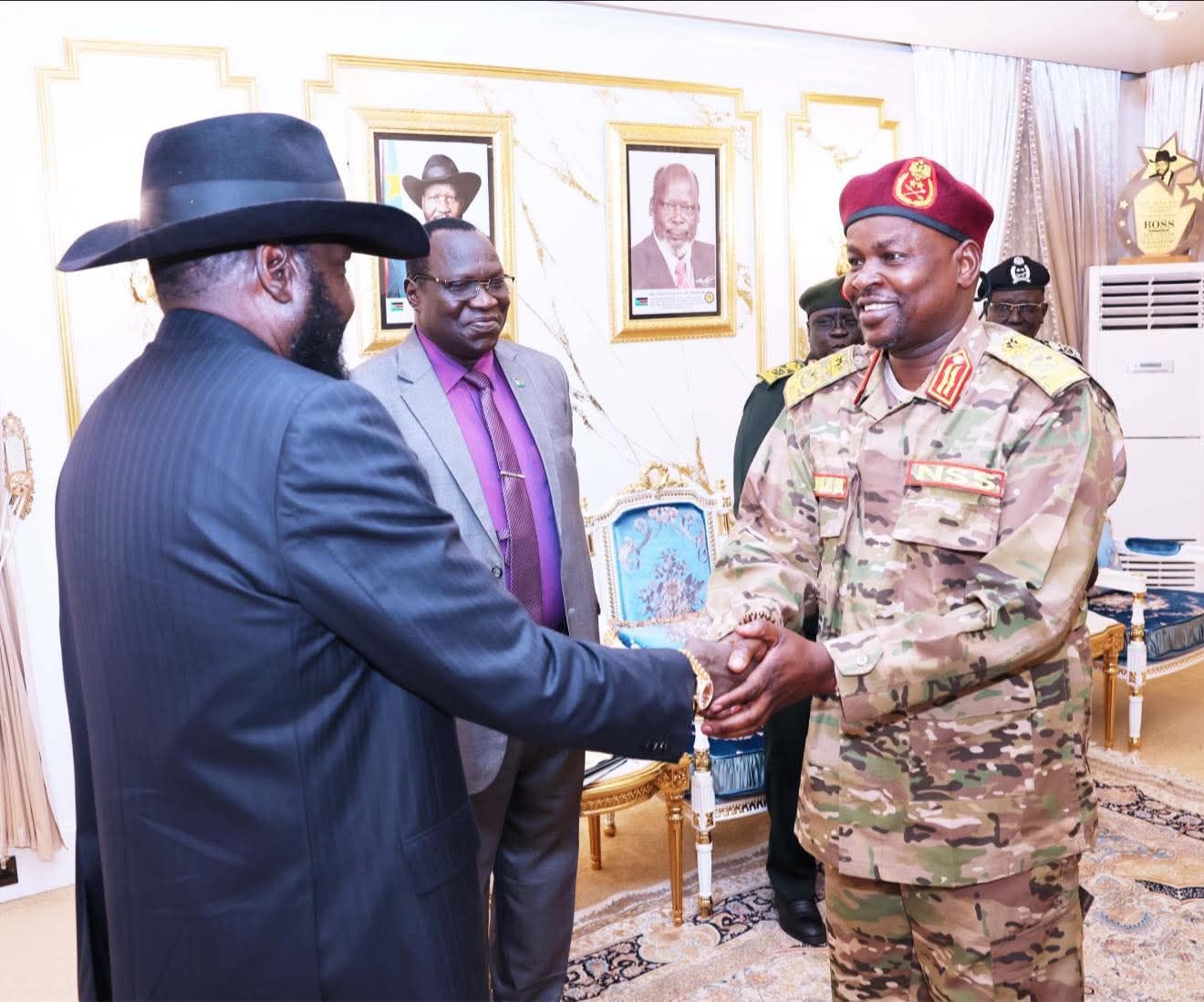
General to Private: Kiir Crushes Economic Vice President in South Sudan's $1.7 Billion Corruption Purge
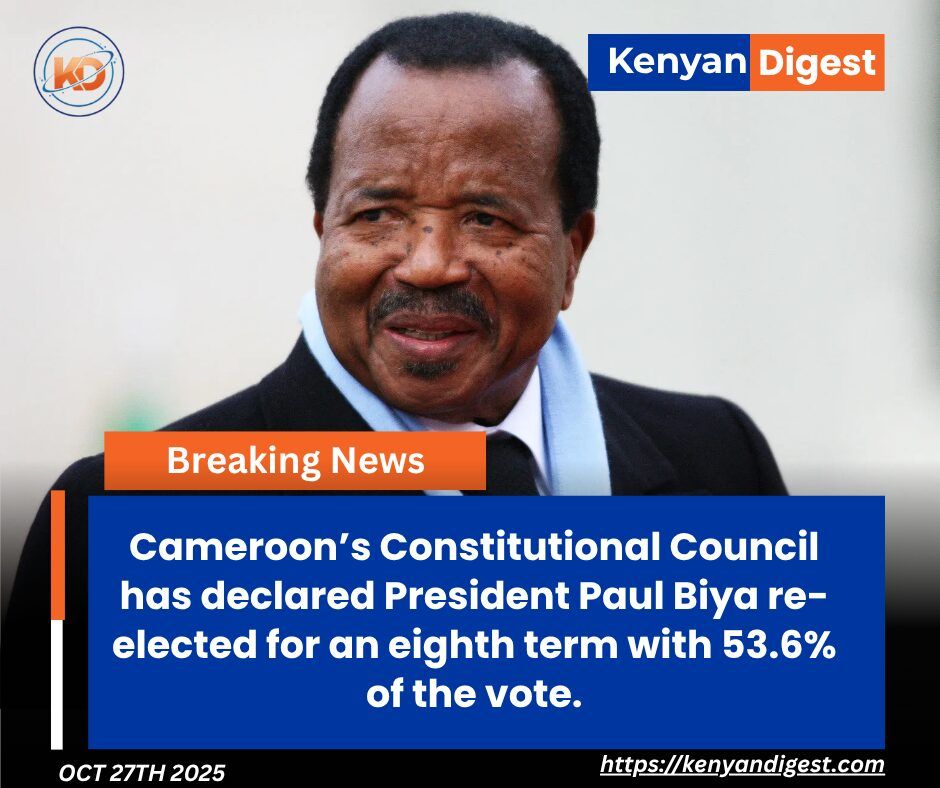
Paul Biya’s Re-Election: What Cameroon’s Political Longevity Reveals About Leadership and Governance in Africa