Cuomo said that 367 people died in New York, the lowest single-day toll since March.
Governor Andrew M. Cuomo said Sunday that 367 more people had died in New York, the lowest daily toll since March 31, when 332 people were reported to have been killed by the coronavirus.
He said that 1,087 more people had been hospitalized for the virus the previous day.
“That would normally be terrible news,” he said of the hospitalizations. “It’s only not terrible news compared to where we were.”
But the number of deaths, Mr. Cuomo said was “horrific,” regardless of the overall drop.
“There is no relative context to death,” he said. “Death is death."
How to reopen New York City? De Blasio announces a number of groups to guide the effort.
Mayor Bill de Blasio on Sunday announced that a number of different groups — advisory councils, task forces and a commission — will form to help imagine New York City’s future after the coronavirus outbreak.
Advisory councils, divided by industry and sector, will begin to meet in early May, he said. The councils will focus on small business; public health and health care; labor; arts, culture and tourism; and several other areas, Mr. de Blasio said, and will help shape rules to guide the economy as it attempts a slow reopening.
“All sorts of basic questions have to be answered to determine, what’s our ideal but also practically, what can we get done at any given moment,” Mr. de Blasio said.
In addition, a city task force focused on racial inclusion and equity would be formed, he said, to address the racial disparities exacerbated by the virus. It would be set up by the mayor’s wife, Chirlane McCray and Deputy Mayor Phil Thompson, the mayor said.
Mr. de Blasio said that the program’s history had not been a concern in appointing his wife to the task force, and that Thrive had been focused on addressing profound inequalities in health care.
“I think what Chirlane has done over these last six years is take this issue, put it in the light, open up access for millions of people and then continue to build out a structure that could focus on effective delivery and equity,” Mr. de Blasio said. “I think that’s exactly the kind of mind set needed for this task force.”
Mr. de Blasio also announced the formation of a fair recovery task force, which will work to make the reopening as equitable as possible. He said that the group will be asked to deliver a preliminary road map for recovery by June 1.
“I want to see people back to work whether they work on Wall Street or they work in a bodega,” he said.
The mayor said he would seek to form a charter revision commission, which will hold public hearings to reimagine New York City’s charter. Such commissions are formed on a temporary basis, and changes they suggest are proposed as amendments to voters.
The outbreak has devastated the city’s economy. $2 billion in municipal services were slashed from the budget and Mr. de Blasio has repeatedly asked the federal government to make up a $7.4 billion budget shortfall that has been projected.
All pharmacies in New York will be able to test for Covid-19, Governor Cuomo says.
New Yorkers anxious to learn if they have the coronavirus will soon be able to get tested at any local pharmacy, Gov. Andrew M. Cuomo announced Saturday.
Mr. Cuomo said he was signing an executive order authorizing all of the state’s roughly 5,000 pharmacies to conduct coronavirus tests as a part of an effort to reach a larger number of people.
“If your local drugstore can now become a collection site, people can go to their local drugstore,” Mr. Cuomo said. “Since we now have more collection sites, more testing capacity, we can open up the eligibility for those tests.”
He also said the state would expand testing criteria to include all emergency medical workers, health care workers and essential employees, allowing those individuals to be tested even if they do not have symptoms.
Getting access to a coronavirus test has been a source of anxiety for thousands of New Yorkers since the highly contagious virus upended life in New York, where more than 16,000 people have died of Covid-19, the disease caused by the virus. Some larger pharmacy chains were already offering tests, Mr. Cuomo said, but his order would permit many smaller ones to administer tests, as well.
Though Philip Murphy’s subdued tone differs from some of his fellow governors, he, too, is responding to challenges with a constant presence.
It has been seven weeks since news of New Jersey’s first confirmed coronavirus case was delivered to Gov. Philip D. Murphy while he was on an operating table, about to have a cancerous piece of his kidney removed.
Beyond the governor’s personal health concerns, New Jersey has been ravaged by the outbreak, and is second only to New York in both number of cases and deaths, despite ranking 11th in population among the 50 states.
And as the public health crisis appears to be ebbing, some elected officials and top Republicans say Mr. Murphy, who issued his stay-at-home order on March 21, needs to be clearer about how and when he is going to reopen the state.
Still, even his political foes have largely rallied around Mr. Murphy who, as a first-term governor seeking to steady a state that has become an epicenter of the outbreak, has emerged as a different type of Democratic voice.
His briefings — never commanding the limelight that Gov. Andrew M. Cuomo of New York, has attracted — are emblematic of his governing style: deferential yet stoic, present but not overbearing, not likely to draw or seek the spotlight.
University Hospital of Brooklyn, in the heart of the city hit hardest by a world-altering pandemic, can seem like it is falling apart.
The roof leaks. The corroded pipes burst with alarming frequency. On one of the intensive care units, plastic tarps and duct tape serve as flimsy barriers separating patients. Nurses record vital signs with pen and paper, rather than computer systems.
A patient in Room 2 is losing blood pressure and needs an ultrasound. A therapist is working to calm a woman in Room 4 who is intubated and semiconscious and who tried to rip out her breathing tube when her arm restraints were unfastened.
University Hospital, which is publicly funded and part of SUNY Downstate Health Sciences University, has tried to raise money for protective gear through a GoFundMe page started by a resident physician.
Most of the hospital’s patients are poor and people of color, and it gets more than 80 percent of its revenue from government programs like Medicare and Medicaid.
Dr. Robert Foronjy, the hospital’s chief of pulmonary and critical care medicine, oversees the unit with the plastic tarps and duct tape. He said the “aged and crumbling” facilities had made the job of caring for patients much harder.
Reporting was contributed by Jonah Engel Bromwich, Edgar Sandoval, Nick Corasaniti, Melina Delkic, Azi Paybarah, Michael Schwirtz and Katie Van Syckle.
Related reporting
More World News →
South Sudan’s Oil Looters: How Young Elite Gatekeepers Plunder Nation While Citizens Starve
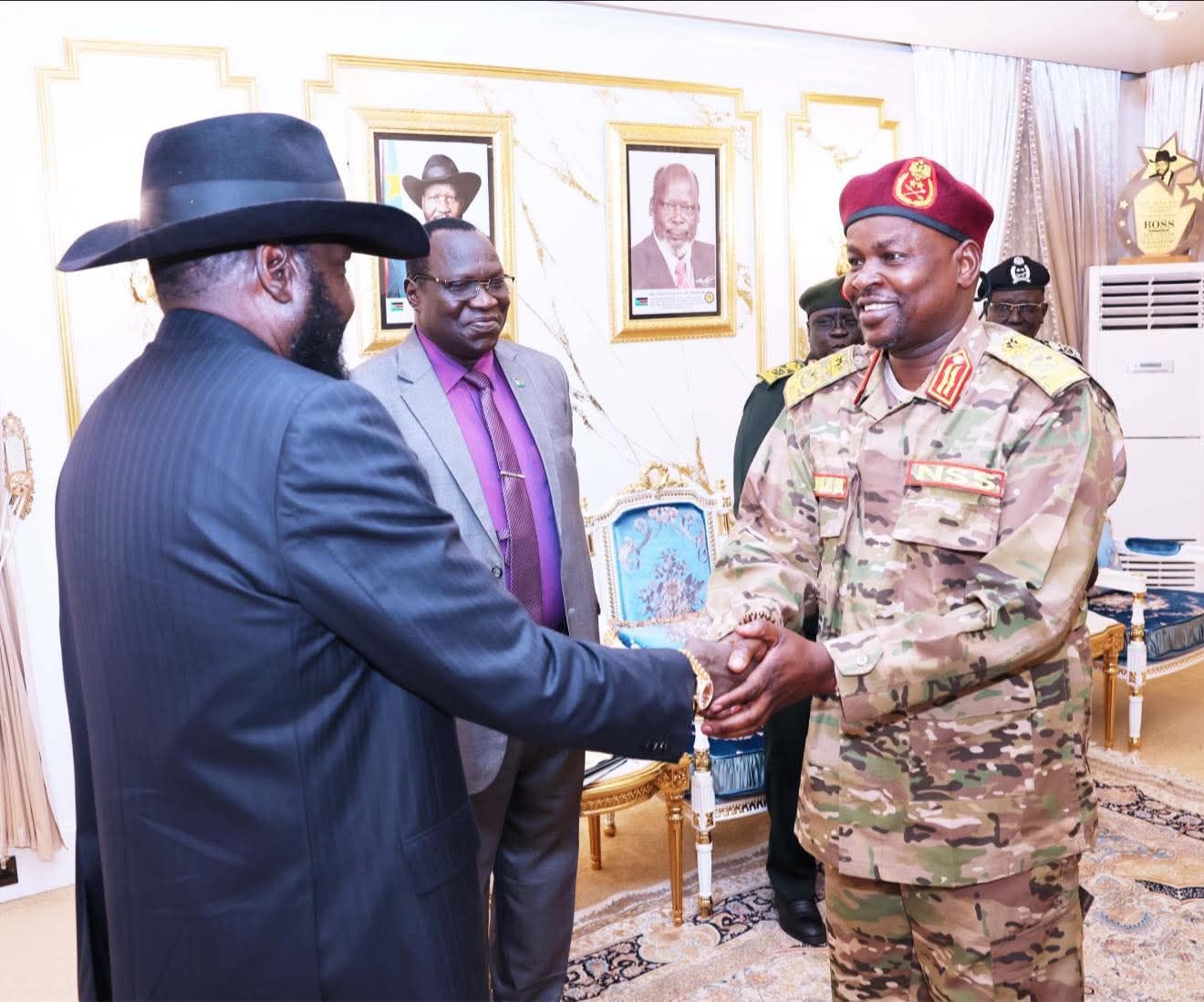
General to Private: Kiir Crushes Economic Vice President in South Sudan's $1.7 Billion Corruption Purge
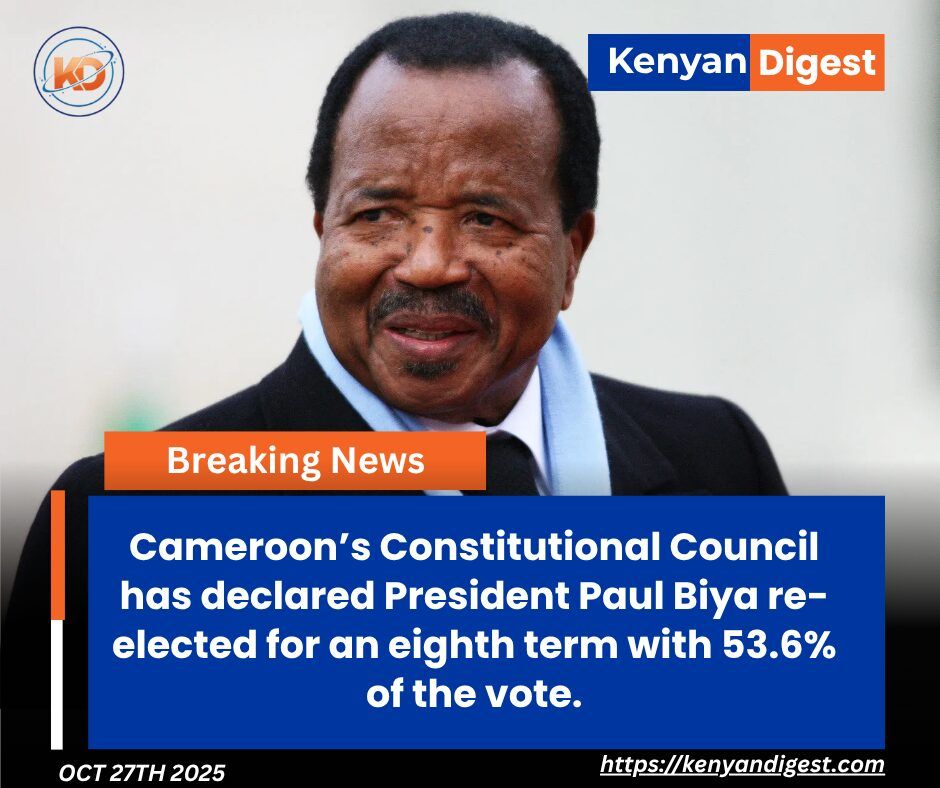
Paul Biya’s Re-Election: What Cameroon’s Political Longevity Reveals About Leadership and Governance in Africa