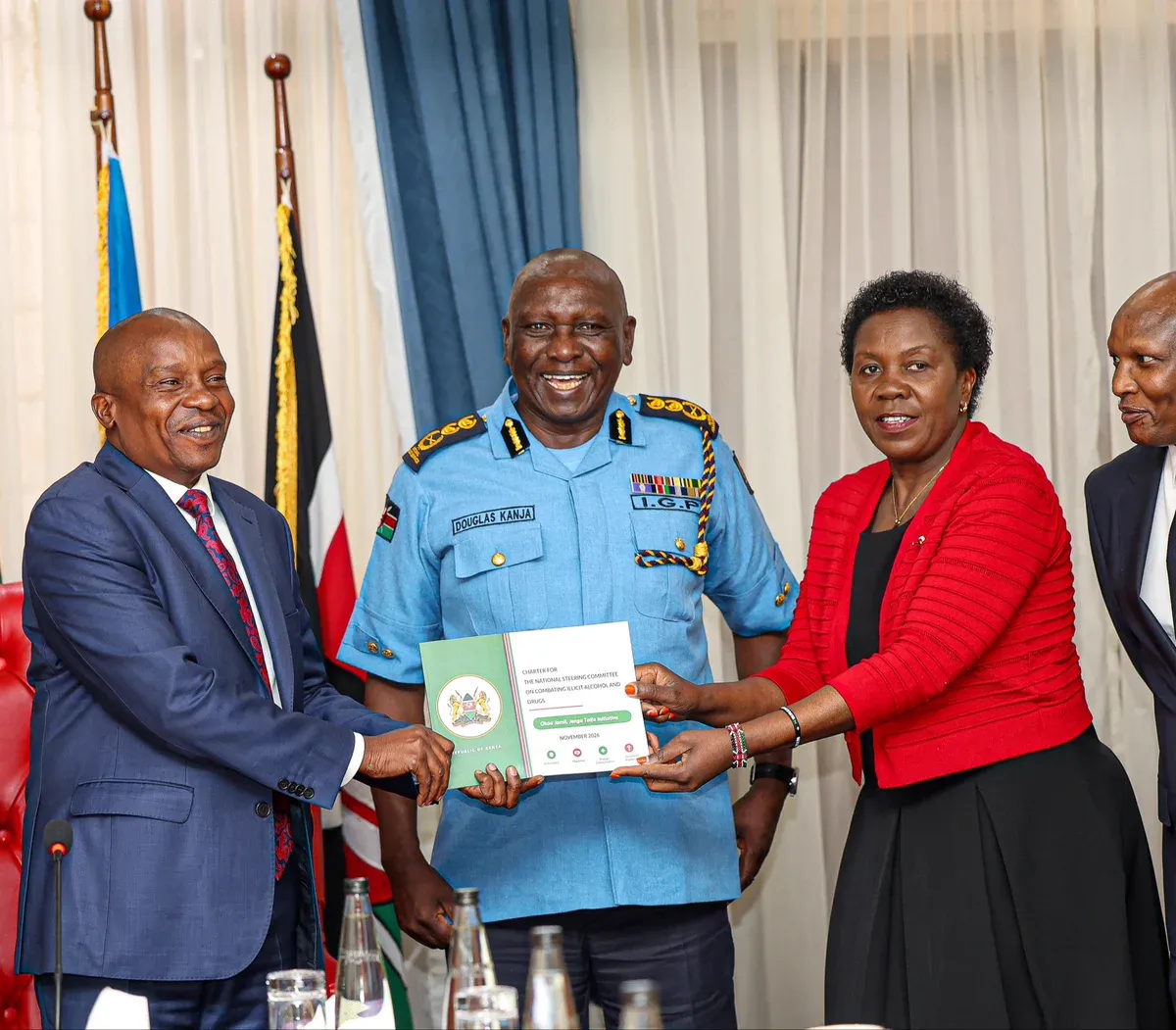
Deputy President Kithure Kindiki gave the go-ahead to a nationwide anti-illicit-substance drive on November 18, 2026, after a meeting of the National Steering Committee on Combating Illicit Alcohol and Drugs in Karen, Nairobi.
He said in a post on X that he had been briefed on intelligence-led actions targeting the production, distribution and sale of illegal alcohol and narcotics, and that he received the National Charter that will steer the campaign’s operations, community engagement and public messaging.
The campaign will run under the theme Okoa Jamii, Jenga Taifa and will involve community-led initiatives across the country, as he directed the committee to begin such activities. “Directed the committee to commence activities for Community led initiatives across the country for an all out war on illicit alcohol and drugs,” Kindiki said.
The meeting was attended by Attorney General Dorcas Oduor, Inspector General of Police Douglas Kanja, Director of Public Prosecutions Renson Igonga, as well as relevant principal secretaries and heads of government agencies.
The approval follows earlier steps by the government, including a October 21, 2026 announcement of finalised legislative proposals aimed at manufacturers, distributors, financiers and others involved in the illegal trade, and the publication of the Alcoholic Drinks and Drugs Control Laws (Amendment) Bill 2026.
The proposed changes would increase punishments, expand powers to seize, forfeit and confiscate assets linked to illicit alcohol and drug networks, and strengthen provisions for rehabilitation programmes funded by recovered proceeds.
In a separate statement at the Official Residence in Karen, Kindiki said the government is reviewing the Alcoholic Drinks Control Act of 2010 to make penalties “extremely punitive” and to ensure forfeited assets fund rehabilitation. “We are reviewing comprehensively the Alcoholic Drinks Control Act of 2010 to make it extremely punitive for people who are perpetuating this criminal activity, to ensure forfeiture of their assets, and to ensure that proceeds of such forfeiture are used for rehabilitation of the victims of their crime directly,” he said.
He also announced plans to raise fines to several times the market value of ethanol diverted for illegal use and to tighten taxation in the alcoholic drinks sector because only a few licensed manufacturers were meeting tax obligations. “We are going to strengthen taxation in this industry to ensure that all people in this sector adhere to their tax obligations because we have discovered only a few licensed manufacturers are honouring their tax obligations,” he said.
The Charter outlines the roles of national and county governments, private-sector actors, civil society and communities, and sets out mechanisms for intelligence-led operations, legislative and administrative interventions, and accountability for the ongoing crackdown.
Kindiki urged enforcement teams to maintain professionalism and to build on the arrests and seizures already recorded. “I call upon those teams to continue exercising professionalism in the exercise and continue to take this matter with the seriousness it deserves,” he said, adding that he commended law-enforcement agencies for supporting the National Authority for the Campaign Against Alcohol and Drug Abuse (NACADA) and other institutions. “I also commend law enforcement agencies for supporting NACADA and the other respective institutions in realizing the successes we have achieved in terms of arrests and seizures of illicit substances,” he said.
Earlier remarks by the Deputy President in October and September 2026 warned of harmful alcoholic drinks containing chemicals, called for inspections of manufacturing premises and ordered re-inspections of facilities to verify compliance with standards and licensing requirements.
Related reporting
More Politics →
Former Deputy President Gachagua Demands Full-Day IEBC Stakeholder Meeting

Mwelekeo Insights Poll Shows James Munene Thuku Leads Roysambu MP Race With 15.2%
Rigathi Gachagua Gains Three MPs as Defections Boost DCP to 25 Seats