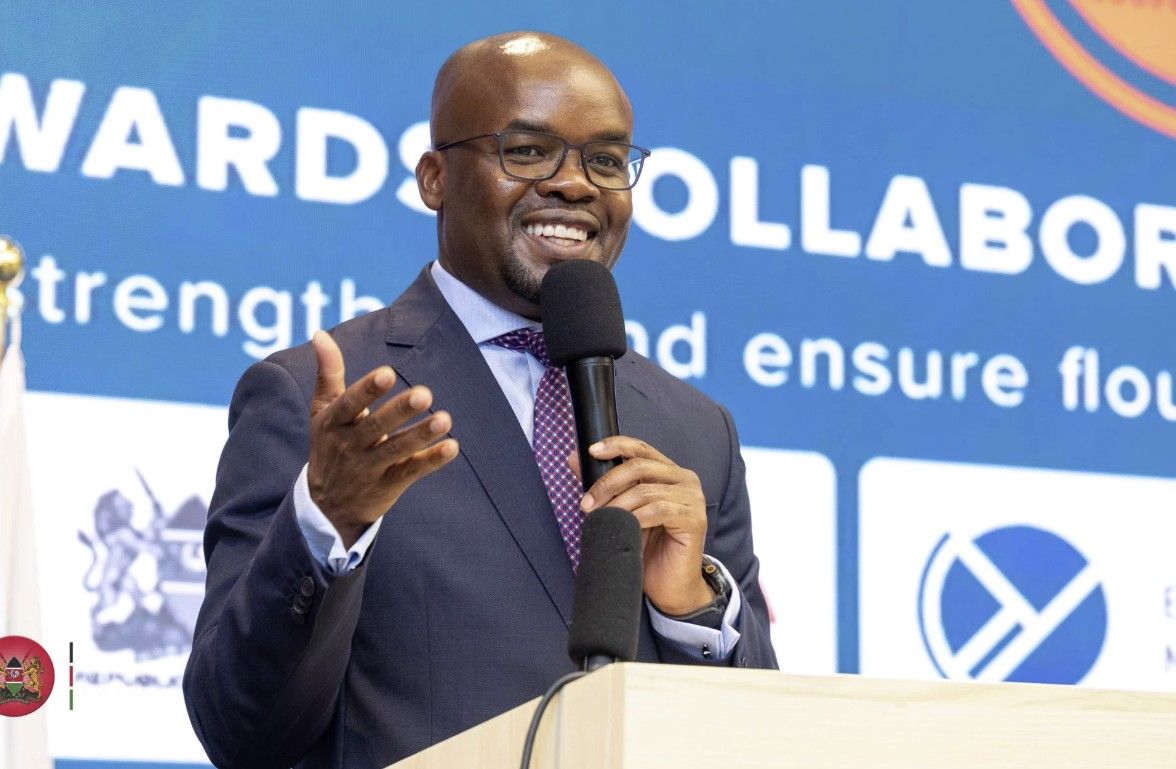
Kenya has substantially addressed 19 of the 21 actions in its Financial Action Task Force reform plan, representing more than 90 percent of the requirements, Principal Secretary for Internal Security and National Administration Dr Raymond Omollo said.
Omollo made the statement in Nairobi during the Global Counter-Financing of Terrorism (CFT) Expert Hub Conference 2026, a three-day gathering that brought together over 150 delegates from governments, non-governmental organisations, financial institutions and multilateral bodies.
The reforms, launched after Kenya was placed on the FATF grey list in February 2024, target weaknesses in money-laundering, terrorist-financing and proliferation-financing and include stronger risk-based supervision of banks and designated non-financial businesses, improved filing of suspicious transaction reports and enhanced collection of beneficial-ownership information.
Additional measures involve designating an authority to regulate trusts, aligning the targeted financial sanctions framework with FATF Recommendation 6 and revising the regulatory framework for non-profit organisations to ensure proportionate counter-terrorist-financing controls.
Omollo cited a risk assessment of 260 faith-based organisations operating in nine counties, which found 76.2 percent medium-low risk, 13.8 percent low risk, 5 percent medium risk, 3.8 percent medium-high risk and 1.2 percent high risk.
Under the differentiated supervisory framework, the 5 percent classified as high or medium-high risk will undergo enhanced on-site reviews and submit mandatory annual counter-terrorist-financing returns, while the remaining 95 percent will receive routine desktop reviews.
The government has appointed the Public Benefit Organizations Regulatory Authority (PBORA) as the sector supervisor, created a dedicated division within the authority and removed non-profits from mandatory reporting entity lists.
PBORA Director General Dr Laxmana Kiptoo said the operationalisation of the Public Benefit Organisations Act and the 2026 regulations strengthens governance, accountability and transparency in the sector.
Omollo also warned against de-risking, urging banks to base decisions on evidence rather than broad risk perceptions, to avoid restricting legitimate humanitarian, faith-based and community activities.
Christopher Likomwa, representing the Executive Secretary of the Eastern and Southern Africa Anti-Money Laundering Group, stressed the need for balanced measures that prevent terrorist financing without imposing unnecessary restrictions on civil society.
Kodjo Attisso, Coordinator of the Illicit Finance Fusion Center – Africa at the UNODC Regional Office for Eastern Africa, called for a shift from technical compliance to assessing the effectiveness of anti-money-laundering and counter-terrorist-financing interventions, highlighting evidence-based risk assessment, financial inclusion and partnerships as priorities.
Despite the progress, FATF’s October 30 2026 update still lists Kenya among jurisdictions under increased monitoring, noting outstanding work on transparency requirements for legal persons, remedial action against breaches and scaling up money-laundering investigations and prosecutions.
Removal from the grey list will require a successful on-site assessment by FATF and a favourable decision at the next FATF plenary.
Related reporting
More General News →
Chief of Staff Felix Koskei Invites Kenyans to Vote for Best State Departments

Teachers Service Commission Appoints Cheptumo Ayabei as New CEO
High Court Orders Inspector General Kanja to Reinstate Governor Natembeya’s Security Detail