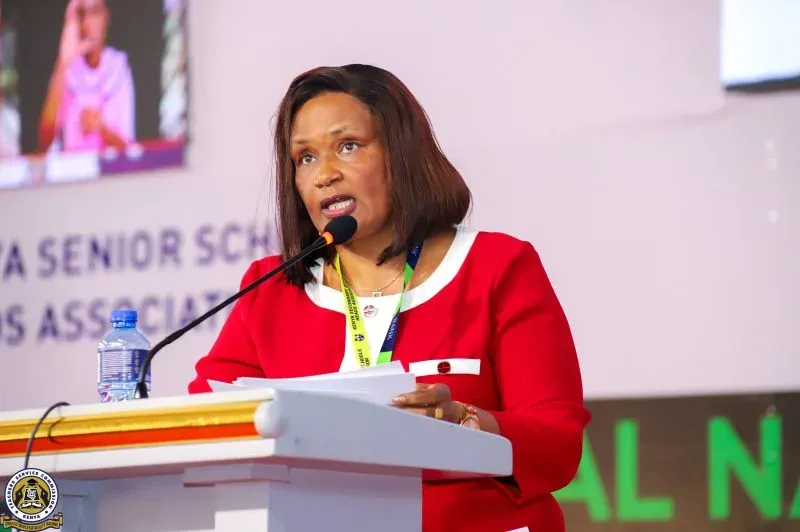
The High Court on October 29 rejected the Teachers Service Commission's request to lift conservatory orders that suspend a circular regulating teachers' conduct on social media.
The judge said petitioner Fredrick Ochieng Oduor had established a prima facie case that the circular was vague and could infringe teachers' constitutional right to freedom of expression.
In its ruling the court noted the circular failed to specify what online behaviour could attract disciplinary action, risking arbitrary enforcement, and quoted “What is clear from the circular is that the same does not sufficiently define or particularise the conduct which may expose teachers to disciplinary action.”
The court advised TSC to draft clear and specific guidelines on teachers' online conduct rather than rely on broad administrative restrictions, adding that existing laws already provide mechanisms for addressing professional misconduct.
It further stressed that any limitation on expression must have a legal basis and satisfy the reasonableness and proportionality test under Article 24 of the Constitution.
The petition also alleged that TSC did not conduct public participation or consult teachers before issuing the circular, thereby breaching Article 47 of the Constitution and the Fair Administrative Action Act; the court observed that TSC had not disputed this absence of consultation.
TSC defended the circular as within its constitutional and statutory mandate to regulate the teaching profession and discipline misconduct, but the court held that lifting the suspension at this stage would undermine the petition's constitutional questions.
Consequently the conservatory orders remain in force pending the substantive hearing, with the matter scheduled for mention on February 3, 2027 for further directions; the court also ordered parties who have not filed responses to do so before the next appearance.
Counsel appearing for the petitioner included Abdihakim Guyyo, Brance Odhiambo, Rajab Shaaban and Abdul Nassir, and the circular, issued in August 2026, sought to curb cyberbullying, harassment, intimidation and offensive content by teachers online.
Related reporting
More General News →
IEBC Shortlists Nine Candidates for CEO Position Including Former EACC Chief Halakhe Waqo
Chief Justice Martha Koome Unveils Backup Filing Plans and Training for 2027 Election Disputes

Kenya Human Rights Commission and Katiba Institute Petition High Court Over Political Violence