President William Ruto used his State of the Nation Address on November 18, 2026 to unveil a transport programme that aims to seal 28,000 kilometres of roads and dual 2,500 kilometres of highways across Kenya within the next ten years, noting that about 7,000 kilometres are already being built, including works that had previously stalled.
He listed several priority corridors such as the more than 750-kilometre Isiolo-Wajir-Mandera route passing through Modogashe, Wajir, El Wak and Rhamu, the 700-kilometre Mau Mau roads network, the Kenol-Marua dual carriageway, the Lake Victoria Ring Road linking Busia, Siaya, Kisumu, Homa Bay and Migori, as well as the Rironi-Naivasha-Nakuru-Mau Summit highway and the Kamandura-Maai Mahiu-Naivasha road.
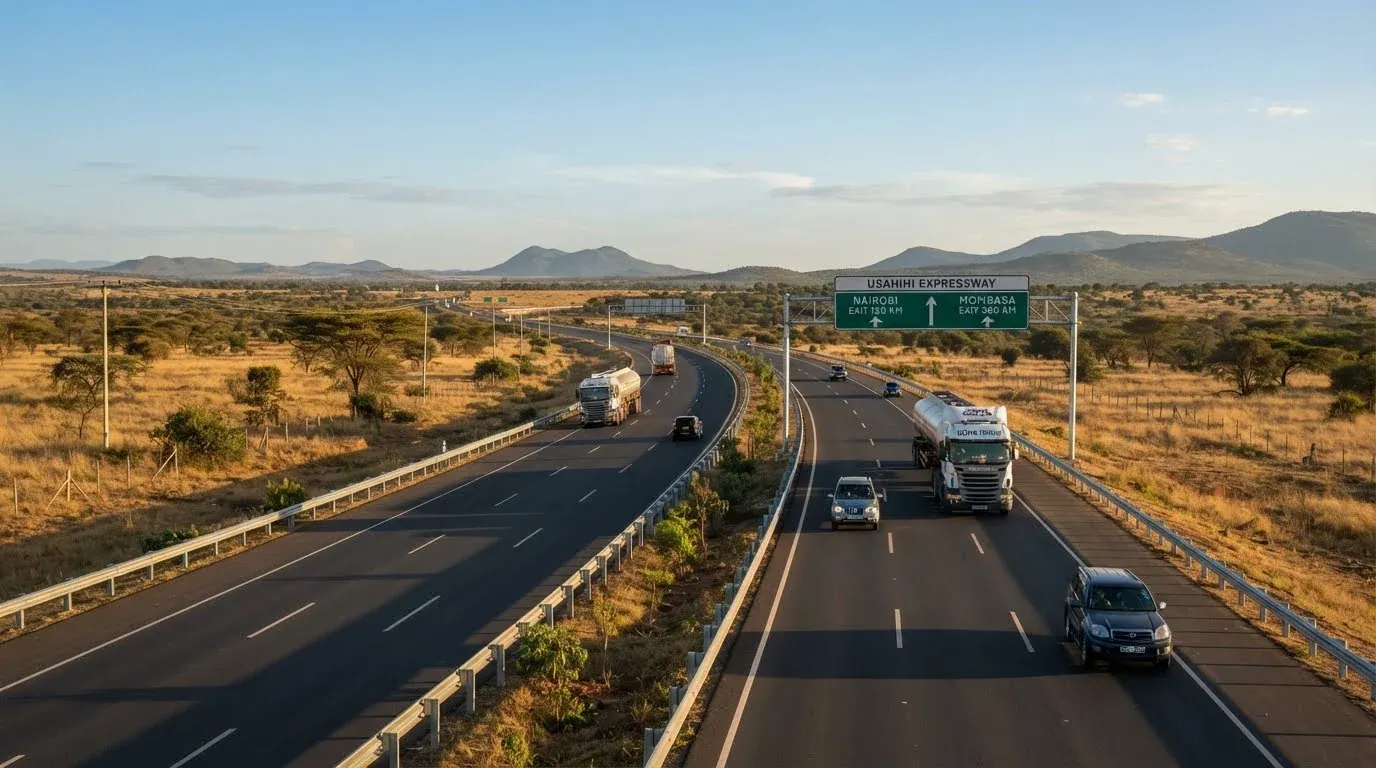
Ruto said the dualling of the Nairobi-Mombasa Highway, a corridor of roughly 460 kilometres, is at an advanced stage and will be widened to at least four lanes, with controlled entry and exit points and the possibility of operating as a toll road, though he gave no timetable or financing details.
The Kenya National Highways Authority has placed the estimated cost of the upgrade at around KSh300 billion and expects construction to last about five years, while the National Treasury is reviewing bids for a transaction adviser to assess traffic demand, engineering and environmental aspects.
The project replaces an earlier proposal for a KSh468 billion Usahihi Expressway that the Public-Private Partnerships Committee rejected in July 2025, a decision later upheld by a tribunal in April 2026.
The Motorists Association of Kenya has called for the government to make the financing structure and its impact on motorists public; sections of the corridor such as the Mombasa-Mariakani stretch and the Athi River-Machakos Turnoff are already undergoing or have completed dualling.
In the same address the president outlined the extension of the Standard Gauge Railway from Naivasha through Narok and Bomet to Kisumu and Malaba, and the modernisation of the ports of Mombasa and Lamu, alongside a KSh154.2 billion upgrade of Jomo Kenyatta International Airport.
“Our first priority is transport infrastructure,” Ruto said, adding that roads, railways, ports and airports must operate as an integrated network to cut logistics costs and position Kenya as a preferred hub for production, trade and investment.
Related reporting
More General News →
State Department for Children Services Warns Against Using Children’s Images in Online Fundraising
Dr Raymond Omollo Says Kenya Has Addressed 19 of 21 FATF Actions
EACC Launches Three-Week Corruption Risk Review of Kakamega County HR