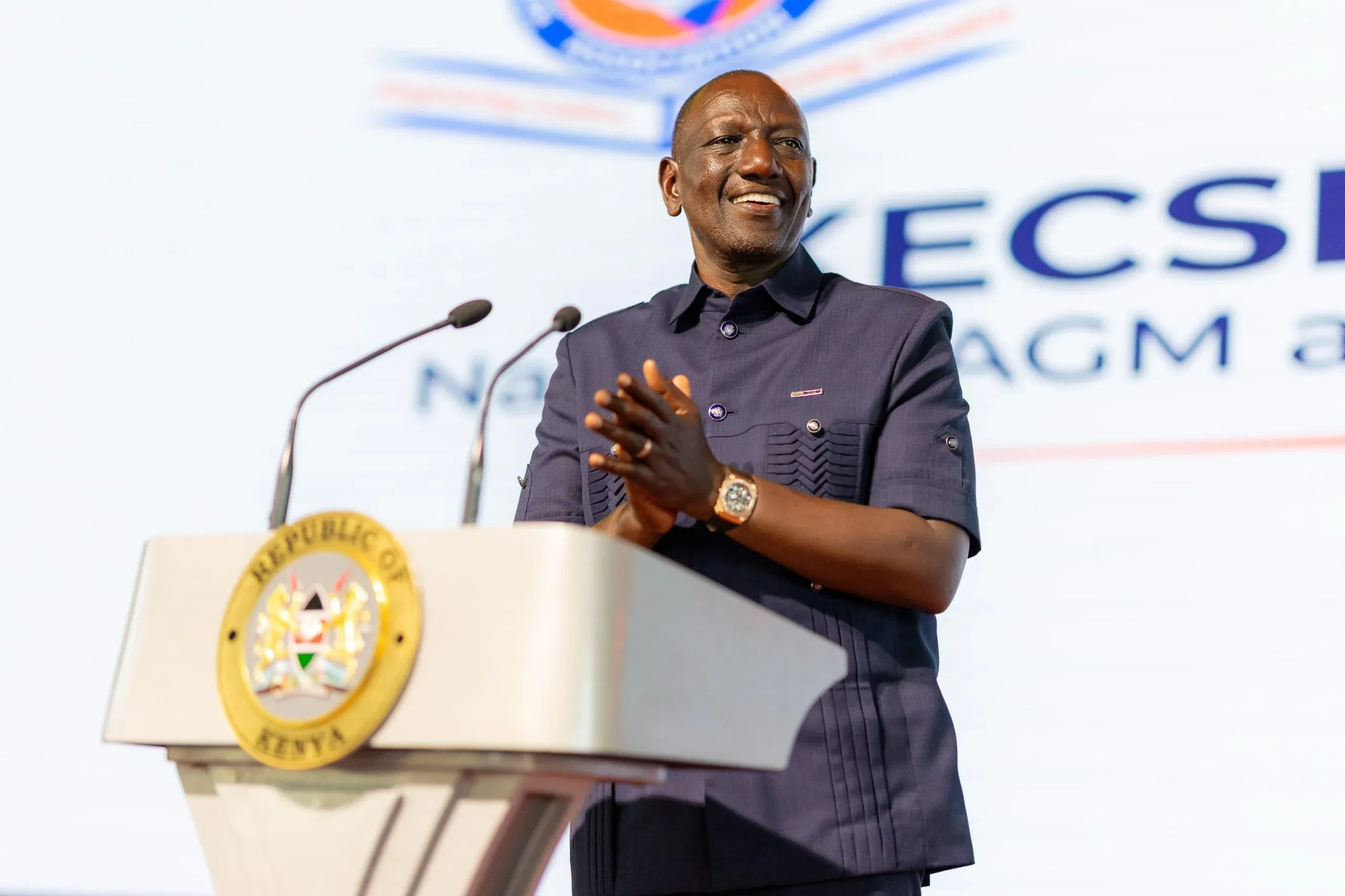
President William Ruto told a joint sitting of the National Assembly and Senate on November 18, 2026 that Kenya has printed the papers for the Kenya Certificate of Secondary Education, the Kenya Junior School Education Assessment and the Kenya Primary School Education Assessment locally for the first time in 65 years, ending a decades-long reliance on overseas printers.
“For the first time in 65 years, examination papers were printed here in Kenya,” the president said, adding that the shift will free up roughly KSh1.5 billion for other public services.
Ruto explained that the change followed his query to education officials, “The question I asked our ministerial officials is this: If we are printing currency in Kenya, why can’t we print exams in Kenya?” and noted, “And in this single undertaking, we have taken off close to a billion and a half shillings that would have been wasted.”
He also highlighted that the 2026 examination period has been conducted without any police officers at centres, stating, “We have currently undertaken examinations without the presence of a single policeman. This is how it should be, examinations are a normal part of learning, not a security operation.”
On the day of his address, more than one million KCSE candidates sat Geography Paper 2 in the morning and Physics Paper 2 in the afternoon, part of a total of 1,048,355 candidates – a 5.27 percent increase on the 995,860 registered in 2025 and the highest figure ever recorded.
The Kenya National Examinations Council (KNEC) said the KCSE examinations began with oral, practical and low-candidature papers on October 19, with the main written papers starting on November 2; the schedule runs until November 20 when Physics Practical will be held.
KNEC planned to involve 10,765 centre managers, 12,274 supervisors, 57,432 invigilators and 21,388 security officers, and introduced integrity measures such as mobile-phone bans for candidates and staff, smart storage containers and personalised question papers.
The 2026 KCSE cohort represents the second-last group under the 8-4-4 system, with the final cohort expected in 2027 before the transition to Competency-Based Education, which also incorporates the KJSEA into the new framework.
“This week, we are concluding national examinations, for the largest cohort in our history. 3.6 million learners sitting for KPSEA, KJSEA, and KCSE,” Ruto said, noting the unprecedented scale of the examination season.
Related reporting
More General News →
State Department for Children Services Warns Against Using Children’s Images in Online Fundraising
Dr Raymond Omollo Says Kenya Has Addressed 19 of 21 FATF Actions
EACC Launches Three-Week Corruption Risk Review of Kakamega County HR