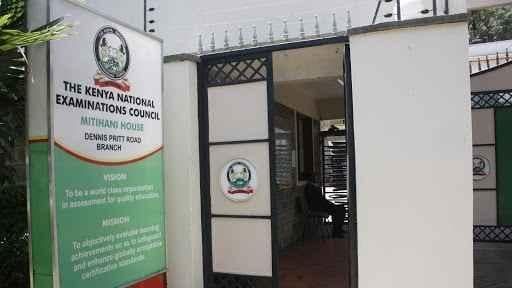
The Kenya National Examinations Council (KNEC) has opened the 2026 Kenya Certificate of Secondary Education (KCSE) examinations on Monday, October 19, after publishing the first-week timetable for oral and practical papers.
The schedule shows that oral examinations in French and German, as well as the practical component for Kenyan Sign Language, will run from October 19 to October 23, with each candidate allotted fifteen minutes. Music practical (paper 511/1) follows the same dates and time allocation, while the Arabic oral exam (paper 503/3) extends to Monday, October 26, also with fifteen-minute slots.
On Wednesday, October 21, candidates sitting the Home Science (Foods and Nutrition) practical planning session (paper 441/3) will have thirty minutes for the standard and large-print versions; candidates using Braille papers will receive one hour for the same task.
KNEC chief executive officer Dr David Njengere announced that a total of 3,634,846 candidates will sit examinations and assessments between October 16 and November 20, 2026, and that the council will engage 342,005 contracted professionals to run the field administration process. “KNEC will engage a total of 342,005 contracted professionals to facilitate the conduct and management of the field administration process,” he said.
Education Cabinet Secretary Julius Ogamba warned that any breach of examination regulations would attract legal action, stating, “Let me affirm today that we will have no mercy on anyone who will be found engaging in any form of malpractice. All candidates, centre managers, supervisors and invigilators must comply with examination regulations, failing which they will be subjected to the full force of the law.” He also highlighted the threat of El Nino rains and urged a whole-of-government response to keep the assessment process on track.
The Kenya Union of Post-Primary Education Teachers (KUPPET) issued a boycott notice on October 14, instructing its members to withdraw from supervision and marking duties unless a flat rate of KSh4,000 per day for supervisors and a minimum of KSh100 per paper for marking are paid. The industrial action threatens the Kenya Primary School Education Assessment and Kenya Junior School Education Assessment scheduled to start on October 26, and school principals, through the Kenya Secondary Schools Heads Association, have called for a tripartite meeting with KUPPET and KNEC. By Monday morning, no agreement had been reached, but oral and practical exams proceeded as planned.
Schools conducted rehearsal sessions on October 16 after a brief standoff between KUPPET and KNEC was resolved, allowing the examination process to move forward without interruption. The main written papers are slated to begin in early November and run until Friday, November 20, with Physics Paper 3 marking the final day.
Examination logistics require candidates to be present at least fifteen minutes before each paper, with late arrivals beyond thirty minutes generally barred unless special permission is granted. Morning sessions start at 8 am and afternoon sessions at 2 pm. Mobile phones, wristwatches, electronic communication devices and programmable calculators are prohibited, and answers must be written in blue or black ink, with pencils permitted only for diagrams.
The current cohort represents the largest registration in KNEC’s history, with roughly 3.6 million candidates confirmed in August after a stakeholders’ meeting chaired by Basic Education Principal Secretary John Ololtuaa. KNEC has also been recruiting qualified secondary teachers and college tutors to serve as assessors for the oral and practical components, providing on-the-job training where required. “The 2026 KCSE examination begins! Here are this week's timetables. Best wishes to all the candidates,” the council posted on its official X account.
Related reporting
More General News →
President Ruto Sets February 2027 Charter Deadline for Koitalel Samoei University and Pledges KSh3.5 Billion

Transport Minister Davis Chirchir Reports 82.2% Road Completion Ahead of Mashujaa Day
President William Ruto Reappoints Prof Simon Gicharu as KICD Chair for Three Years