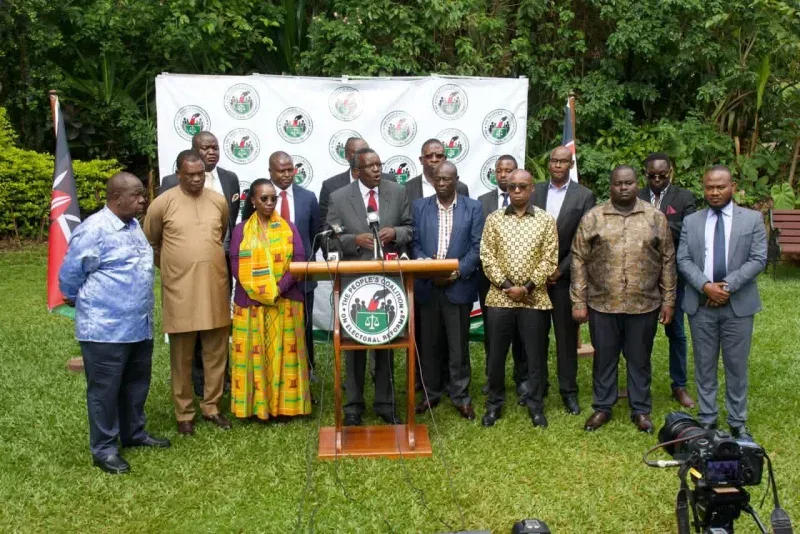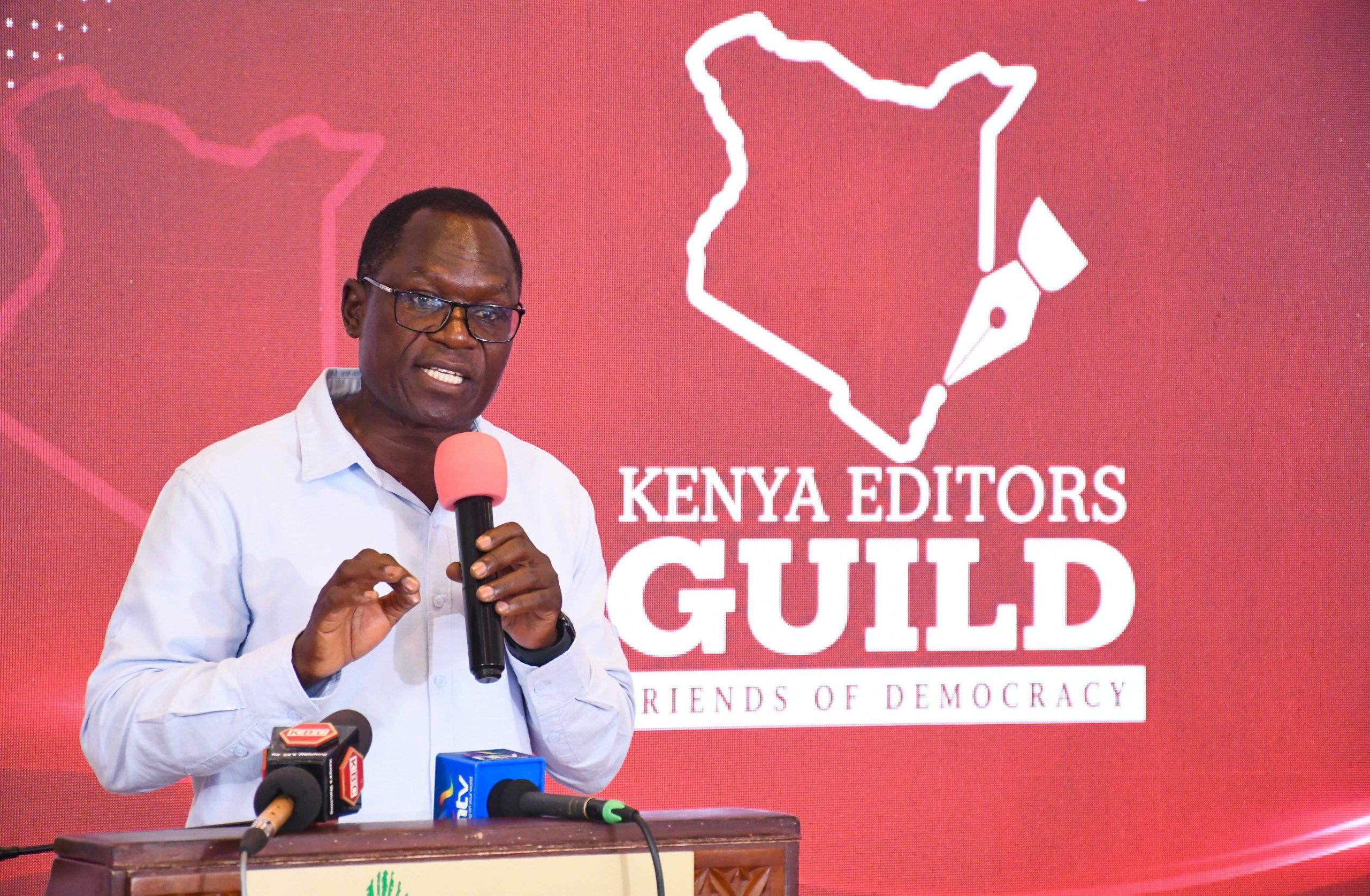
At the 9th Annual Editors’ Convention in Mombasa, Principal Secretary for Broadcasting and Telecommunications Stephen Isaboke urged editors to exercise professional judgement in political reporting as Kenya approaches the 2027 General Election.
He warned that the pursuit of headlines, ratings and digital traffic must never supersede professional integrity, public safety and national cohesion, and cautioned the media against becoming a vehicle for divisive rhetoric, ethnic mobilisation or balkanisation.
Isaboke highlighted the threat posed by artificial intelligence-generated deepfakes, synthetic audio and manipulated videos, urging newsrooms to strengthen fact-checking, clearly label materially altered content and correct inaccuracies promptly, stressing that accuracy must always take precedence over speed.
He reaffirmed the constitutional guarantees of freedom of expression (Article 33), media independence (Article 34) and access to information (Article 35), noting that these freedoms exclude propaganda for war, incitement to violence and hate speech and must be exercised responsibly.
The principal secretary called on media houses to broaden coverage beyond political contests to development issues such as agriculture, healthcare, education, infrastructure, employment, enterprise development and the digital economy, and to scrutinise government programmes.
He listed several government interventions: funding to the Higher Education Loans Board increased to KSh56.7 billion; the Public Service Internship Programme expanded to 50,000 placements by January with a target of 100,000 annually; the Affordable Housing Programme has generated 1.1 million jobs and aims for 2.5 million within three years; digital hubs and BPO initiatives intend to create two million jobs, with 1,450 hubs supporting an estimated 350,000 digital jobs; the National Employment Authority facilitated employment for 707,000 Kenyans abroad; and the NYOTA programme has trained and granted KSh50,000 to more than 130,000 youth, with a second phase targeting 200,000 beneficiaries.
He asked editors to assess whether these interventions receive adequate coverage, to expose gaps in implementation and to examine policy proposals of political actors for financing and impact on youth employment.
Independent Electoral and Boundaries Commission Vice Chairperson Fahima Abdallah urged media to promote issue-based politics, shift discourse from personalities and ethnic profiling to policies and integrity, and highlighted the media’s role in civic and voter education throughout the electoral cycle.
Kenya Editors’ Guild President Zubeidah Kananu warned that delays in official communication could create information vacuums and called for reliable communication channels between government agencies, electoral bodies and newsrooms.
British High Commissioner to Kenya Matt Baugh reiterated the United Kingdom’s commitment to media freedom and to supporting independent journalism as essential for democratic accountability.
The Star Kenya reported that the Media Council of Kenya estimates 75 percent of journalists covering the 2027 polls will be first-time election reporters, prompting Isaboke to call for training, mentorship and capacity-building programmes coordinated with KEG, MCK and IEBC.
He noted that financial pressures and the exit of experienced journalists threaten newsroom preparedness, and urged media owners to ensure fair pay, timely salaries, insurance, mental-health support and safe working conditions, as well as to address outstanding public-sector advertising payments.
Isaboke also warned editors to avoid giving platforms to inflammatory statements that promote ethnic hostility or threaten violence, emphasizing the distinction between reporting incitement in the public interest and amplifying it.
The convention, organised by the Kenya Editors’ Guild, brought together media leaders and stakeholders to discuss responsible journalism, media freedom, access to information, technological disruption and the media’s role in protecting democratic processes.
Related reporting
More Politics →
Rigathi Gachagua Denies Talks With Ndindi Nyoro, Praises Sifuna and Babu Owino
Rigathi Gachagua Accuses Government of Capturing IEBC Ahead of 2027 Election
Narok Senator Ledama Olekina Warns ODM of Political Marginalisation