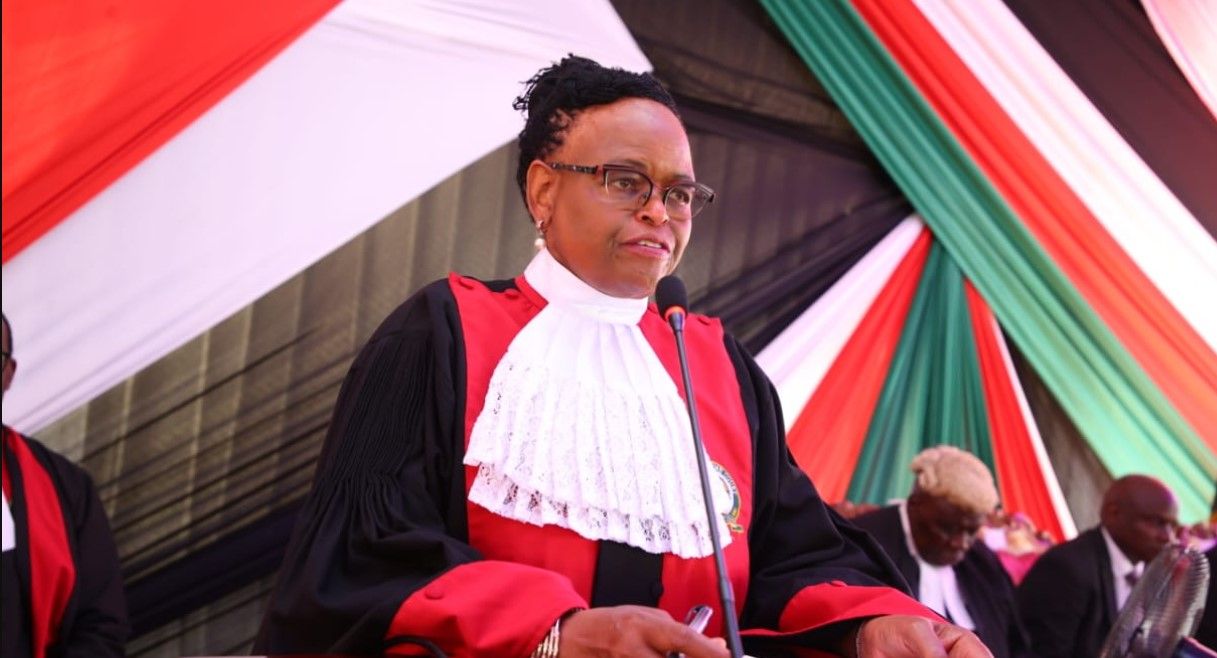
Chief Justice Martha Koome issued a statement on Thursday, November 26, condemning recent personal attacks on members of the judiciary, specifically targeting High Court Judge Christine Meoli after remarks made by Senior Counsel Nelson Havi.
In the statement, Koome, who chairs the Judicial Service Commission (JSC), said the commission had taken note of developments that threaten the dignity of judges, judicial independence and responsible public engagement with the courts, and warned that online trolling and insults undermine these principles.
Koome stressed that while Kenyan citizens have a constitutional right to question court decisions and demand accountability, criticism must be expressed through reasoned arguments and established legal channels rather than through insults, ridicule, sexist remarks or cyber-bullying, adding, “No judge should have to endure personal abuse or any manner of bullying, cyberbullying or intimidation for discharging a constitutional responsibility.”
The chief justice referred to a video from November 19 in which Havi described Judge Meoli as “moody” and subsequently complained in a letter that the judge’s scheduling of a ruling for June 17, 2027, fell outside the 30-day period prescribed by the Civil Procedure Rules, prompting Koome to intervene.
Koome also criticised a November 21 edition of The Saturday Standard that featured photographs of five High Court judges under the headline “Justice Delayed” and the caption “Bottom of the Pile,” arguing that the publication omitted crucial context from the State of the Judiciary and Administration of Justice Report (SOJAR) for the 2025/2026 financial year.
According to the SOJAR data cited by Koome, all five judges were appointed in May 2026, while the reporting period ended in June 2026, meaning each had served only about one month when their performance figures were compiled; the chief justice said this short tenure explained the relatively low number of judgments and rulings.
Koome called on The Standard to correct the misleading impression, include the omitted contextual information from the SOJAR report and issue an apology to the five judges, emphasizing that accurate and fair reporting is essential for holding public institutions accountable.
She reiterated that protecting judges from personal attacks does not shield them from legitimate scrutiny, but safeguards judicial independence and ensures that every Kenyan can obtain fair and impartial justice.
The High Court lifted a temporary order on November 20 that had blocked the release of the judges’ performance records, a move that followed a petition raising concerns that publishing the figures without clear guidelines could expose judicial officers to harassment and misrepresentation.
Related reporting
More General News →
KeNHA Announces Two-Month Closure of Lower Kabete Interchange, Details Alternative Routes
Felix Koskei Announces 50,000 Public Service Internships by January 2027
Governor Anne Waiguru Converts 405 Kirinyaga ECDE Teachers to Permanent Jobs